DCCAH: Bayard Rustin and James Baldwin, Freedom Fighters and Friends

.

James Baldwin and Bayard Rustin both had two strikes against them and really in Bayard’s case three. But I guess he didn’t strike out because the umpire felt charitable or what have you. But they were both Black and of African descent and if that is not bad enough for Caucasian racists, they were both gay as well. Which would be like someone who is an Atheist, Socialist and a Communist and perhaps even supporter of Islāmic Jihad against Americans all in the same package. These two men were considered devils by anyone who had excuse the expression, shit for brains and not smart enough to know better.

But these two men were two of the best freedom fighters that America has ever produced, because they both knew what they wanted and were intelligent. Confronting people who weren’t intelligent and saw African people as animals and devils who should still be slaves. All they wanted was the same freedom as any other American. The right to live their lives and the right not to be discriminated against based on race. To have their constitutional rights enforced as equally as Caucasian-Americans. Nothing more than nothing less and if you look at the U.S. Constitution, that is a lot of what it is about. And a big part of the American dream.

Posted in James Baldwin, Originals | Tagged , , , , , , , , , , , , , | 1 Comment

Bob Parker: ‘Watergate: 784 Days That Changed America’

Watergate 784 Days that Changed America Part 1

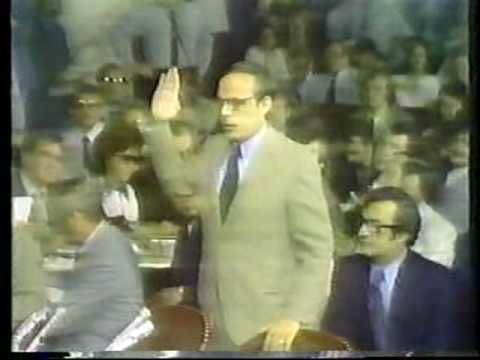
Source:Bob Parker– Former White House Chief Counsel John Dean, testifying in front of the Senate Watergate Committee, in 1973.

“Watergate 784 Days that Changed America”

From Bob Parker

Lets say the Watergate burglary was exactly that, or perhaps was done by people who were really loyal to the Nixon campaign, but not connected to the campaign in any way and never had been connected to the campaign in any way, this would’ve been nothing more than a Washington police story reported by the Washington local media.

But the thing is Watergate became a wall holding back a river of water and when the Watergate scandal broke everything that the Nixon White House was covering up also broke. Watergate was the key to opening up every illegal operation that the Nixon White House was involved in.

As bad as covering up the Watergate scandal that the White House was involved in, it was single A minor league baseball compared to what the White House was doing. The illegal break ins, planting false information on their political opponents, which is what they did to George McGovern presidential campaign, as well as the George Wallace presidential campaign. The plumbers unit itself, the White House intelligence unit that pulled off a lot of the break ins was illegal because it hadn’t been sanctioned by law.

Were there past president’s that had been involved in illegal activities and using their agencies to interfere and abuse their political opponents, I’m sure there were. But those president’s didn’t have a Watergate and had the judgement to not let scandals get out of hand and not cover them up.

They didn’t have a Watergate and they didn’t cover up a Watergate. Without Watergate, we may still not know today about the illegal activities that the Nixon White House was involved in. Third-rate burglary, sure but still one of the most important stories and scandals in American history.

Posted in Originals, Watergate | Tagged , , , , , , , , , , , , , , , , , , | 4 Comments

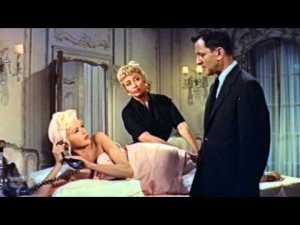
FOX Movies: Will Success Spoil Rockwell Hunter (1957) Starring Jayne Mansfield & Tony Randall

Attachment-1-732

Source:FOX Movies– left to right: Jayne Mansfield, Joan Blondell, and Tony Randall.

“A New York advertising executive is in danger of losing a major client who is a lipstick manufacturer. He saves the account by enticing a voluptuous movie queen to endorse the product and they begin an affair. The man becomes dismayed at the wild attention of the fans and retires to a quiet life as a chicken farmer.”

Source:FOX Movies

Jayne Mansfield plays Rita Marlowe in Will Success Spoil Rock Hunter and I believe and have heard that Marlowe was one of the names that Jayne considered changing her last name to after arriving in Hollywood. But instead settled for Mansfield the last name of her first ex-husband. But anyway Rita Marlowe is a star actress and Hollywood goddess who goes to New York, because she wants to improve her image. New York is the advertising capital at least of America, so not a better city to choose from.

Tony Randall plays Rock Hunter a talented and semi-successful advertiser, who hasn’t hit it big yet in the business. The firm he works for is looking for a big account that would bring them a lot of money and future clients. Rock is looking for the that one big account that would jumpstart his career and take him to the top.

It turns out that Rita and Rock are perfect for each other, because they both have what the other needs. Rita would be that account that would Rock’s firm needs. And Rock has what Rita needs which is an intelligent, successful, professional, man who would make her look good.

That is what Rock Hunter is really about. Rita and Rock make a deal with each other and do favors for each other. Rita endorses products that Rock is trying to promote for his firm like perfume. Rock pretends to be Rita’s boyfriend and appear in public with her as a couple so she can be taken more seriously in Hollywood.

This movie is also about people believing that they are obligated to be things that they don’t want to be and instead find ways to do things that they want to do instead.

This is not a great movie, but it is a very funny movie with a good message. That people don’t have to be the way that others be they should be and work in professions that others believe they should. That people can be themselves and do what makes them happy. And have to worry about their image so much.

Tony Randall as usual in this movie is very funny and the same thing with Jayne Mansfield. Who is her usual adorable, baby girl, funny self, with all her funny and adorable mannerisms.

Posted in Classic Movies, Originals | Tagged , , , , , , , , , , , , , , , , , , , , , , , | Leave a comment

Arcola Pictures: ‘Tony Rome (1967) Original Trailer’- Featuring Frank Sinatra, Jill St. John, Gena Rowlands, Sue Lyon

Tony Rome (1967) ORIGINAL TRAILER [HD 1080p]

Source:HD Retro Trailers– Frank Sinatra and Jill St. John, starring in Tomy Rome.

“The original trailer in high definition of Tony Rome directed by Gordon Douglas and starring Frank Sinatra, Jill St. John, Richard Conte, Gena Rowlands, Simon Oakland and Jeffrey Lynn.”

From HD Retro Trailers

Wow! Jill St. John, Gena Rowlands, Sue Lyon, I mean this movie is a freakin baby-face fest. Three hot sexy baby-face goddess’ in the same movie. This movie could’ve been, well garbage to keep it clean, but as long as Jill, Gena and Sue looked the way that they did and were as good as they were in the movie, I would’ve still watched and recorded and seen it over and over as much as I have already. But take the baby-face goddess’ out of this movie and you still have one hell of a detective moving involving pi’s and the police.

Tony Rome plays a former cop now turned private detective now living in Miami, who is somewhat of a underachiever and lazy as a detective. And when not working cases prefers to make his money the easy way. I mean the man lives on a boat that he won in a card game, for crying out loud. He’s a gambler and a bit of a hustler, but people around him respect him and know how good of a detective he is. And that’s how he gets his latest client, well really clients, the Klosterman’s.

This movie starts with Rome played by Frank Sinatra getting a call from Ralph Turpin his ex-partner played by Robert Wilkie, who is now the house detective at a Miami hotel. Turpin finds a young hot baby-face adorable women Diana Pines played by Sue Lyon. As drunk as Jim Morrison on a four-week binge lying dead asleep in bed. Turpin also discovers who she is by going through her identification. The daughter of the biggest real estate developer in South Florida Rudy Klosterman played by Simon Oakland. Turpin doesn’t want to drive Diana home and deal with Klosterman, because Turpin is a bit of a crook and doesn’t want any further trouble.

That is where Rome comes him because Turpin calls his ex-partner Rome down to the hotel to drive her home and not release the name of the hotel and gives him two-hundred bucks for it. Diana’s father is really upset and worried about his daughter and wants to know what is wrong with her. And hires Rome to find out. Turns out Diana is missing a diamond pin that is supposed to be worth a thousand-dollars or something, but the pin is really made of glass and worth twenty-bucks instead. Every person that Rome works for in this movie is somehow either involved in organized crime, or has friends who are.

Every time Rome gets close to something, someone dies and the evidence leads back to him. So he has both organized crime and Miami police after him. Because the mob lets say wants the pin that they believe is worth thousands of dollars, even though it is really worth a couple cheap lunches if that. But Rome keeps getting closer and keeps digging until he finally solves the case. If you like great writing, action, drama, gorgeous, baby-face adorable women and comedy, you’ll love Tony Rome because it has all of that plus a lot more.

Posted in Classic Movies, Originals | Tagged , , , , , , , , , , , , , , , , , , , , , , , , , , , , , , | 2 Comments

Stereo Oldie: Experiment in Terror (1962)

Attachment-1-720

Source:Stereo Oldie– from Experiment in Terror.

“The original theatrical trailer for the 1962 Blake Edwards suspense thriller “Experiment In Terror.” This is the trailer presented and commented on by Dan Ireland of Trailers From Hell.com video titled “Dan Ireland on EXPERIMENT IN TERROR”

Source:Stereo Oldie

Experiment in Terror is one of the best action/thriller mystery/suspense movies that I’ve ever seen and perhaps is ahead of its time, at least as far as how the bad guy, the terrorist in the movie was able to get so much intelligence on his potential victims. How he intimidated them and how he also used them.

Ross Martin plays the terrorist in the movie and he’s not someone who blows up banks, airports, houses, what have you. But is someone who has a very simple and basic goal: rob a bank to collect somewhere around hundred-thousand dollars, but only uses one employee to get him the money.

The terrorist uses Kelly Sherwood (played by Lee Remick) who is a bank teller at this San Francisco bank. And tells her: “You rob the bank for me and get me the money, or I’ll kill you and your sister”. He has so much information already on Kelly Sherwood and her sister Toby (played by Stefanie Powers) before he puts this terrorist act into action. Kelly is a young woman working at the bank. Toby is still in high school and the terrorist knows all of this and even what high school Toby goes to.

The terrorist Red (played by Ross Martin) tells Kelly that if she goes to the police or FBI, that he’ll kill her and her sister. He underestimates her and the amount of intelligence and courage that she has and she calls Red’s bluff (pun intended) goes to the FBI anyway behind his back so he doesn’t know about it, but he figures it out anyway, but doesn’t come through on his threat at least right away. So Kelly is playing along with Red and not really giving him anything, while the SF FBI led by John Ripley (played by Glenn Ford) tracks down the terrorist. This is a great movie and I’ve seen it several times.

Posted in Classic Movies, Originals | Tagged , , , , , , , , , , , , , , , , , , , , , , , , , , , , , | 1 Comment

Helmer Reenberg: ‘The 1963 Meeting in Jack Ruby’s Apartment’

The meeting in Jack Ruby's Apartment (English Version)

Source:Helmer Reenberg– This is about Jack Ruby and a meeting that he had in his apartment, perhaps about the JFK assassination.

“Assassination of John F. Kennedy, mortal shooting of John F. Kennedy, the 35th president of the United States, as he rode in a motorcade in Dallas, Texas, on November 22, 1963. His accused killer was Lee Harvey Oswald, a former U.S. Marine who had embraced Marxism and defected for a time to the Soviet Union. Oswald never stood trial for murder, because, while being transferred after having been taken into custody, he was shot and killed by Jack Ruby, a distraught Dallas nightclub owner.”

From Britannica

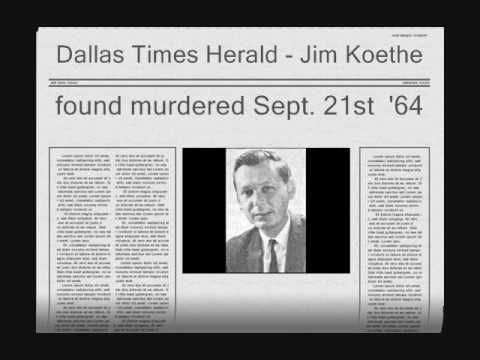
“Three attorneys and two newsmen met in Jack Rubys apartment in Oak Cliff sunday evening, November 24th 1963, after Ruby shot Lee Harvey Oswald. Bill Hunter, Long Beach Independent Press Telegram and Jim Koethe, Dallas Times Herald interviewed George Senator. Also there was the attorney Tom Howard. Earlier that day Senator and Howard had both visited Jack Ruby in jail. That evening Senator arranged for Koethe, Hunter and Howard to search Ruby’s apartment.
What happened in the appartment and what did they see or find?”

From Helmer Reenberg

Apparently there was a meeting in Jack Ruby’s apartment in the Dallas area the day after the JFK assassination. And even if we do know who was at that meeting, we don’t know what that meeting was about. Only the people there know and at least one of them is dead, that being Jack Ruby.

Here’s what we do know: Jack Ruby knew Lee Oswald prior to killing Oswald. Ruby not only had associates who did work for the Italian Mafia and perhaps other organized criminal gangs in Dallas. Oswald hated Jack Kennedy, the Mafia hated Jack Kennedy and Ruby was one of their associates and killed one of the men who knows most of it not the whole story surrounding the JFK assassination.

Which leaves people including myself to speculate do we know everything about this assassination and how many people exactly were involved. Did Lee Oswald have help, or was he by himself.

You can also see this post at The FreeState, on WordPress.

You can also see this post at The Daily Post, on WordPress. (No pun intended)

Posted in JFK Assassination, Originals | Tagged , , , , , , , , , , , , , , , , | 3 Comments

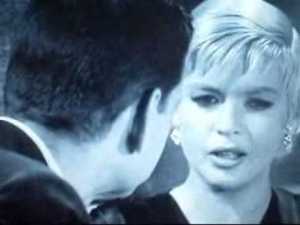
The Alfred Hitchcock Hour: Hangover (1962) Starring Tony Randall & Jayne Mansfield

Tony & Jayne

Source:CBS– Tony Randall & Jayne Mansfield

“Jayne is sooooo good in this. If you every get to see it, (It’s about a hour long and VERY HARD TO FIND) you’ll know that Jayne was a very good actress. To bad she didn’t do more roles like this. I LOVE the short hair.”

From Sam Pena

“Remembering nothing of what happened the day before, a talented, alcoholic ad man painfully reconstructs the events of what proves to have been a very bad day indeed.”

Hangover Poster

Source:IMDB– Tony Randall and Jayne Mansfield, on The Alfred Hitchcock Hour in 1962.

From IMDB 

“Hangover.” An episode of The Alfred Hitchcock Hour (Season 1, Episode 12). First air date: 6 December 1962. Tony Randall, Jayne Mansfield, Robert Lieb, Myron Healey, Tyler McVey, June Levant, William Phipps, Dody Heath. Teleplay: Lou Rambeau. Based on two short stories by John D. MacDonald and Charles Runyon. Director: Bernard Girard.

JAYNE MANSFIELD Hitchcock Hour Hangover

Hadley Purvis (Tony Randall) has a major drinking problem, one bad enough to prompt his wife to threaten divorce if he doesn’t quit. One morning he wakes up to find his wife gone; in her place, however, is another woman named Marion (Jayne Mansfield).

Now, we can all agree that worse things can happen to a man than to wake up to a woman like Marion, but Had’s problem is he doesn’t remember a thing from the day before. It’s only in little fragments that he gradually reconstructs what actually happened � and the final revelation will prove devastating …

Jayne Mansfield On 'The Alfred Hitchcock Hour'

Source:Mystery File– Hollywood Babydoll Jayne Mansfield on The Alfred Hitchcock Hour in 1962.

From Mystery File

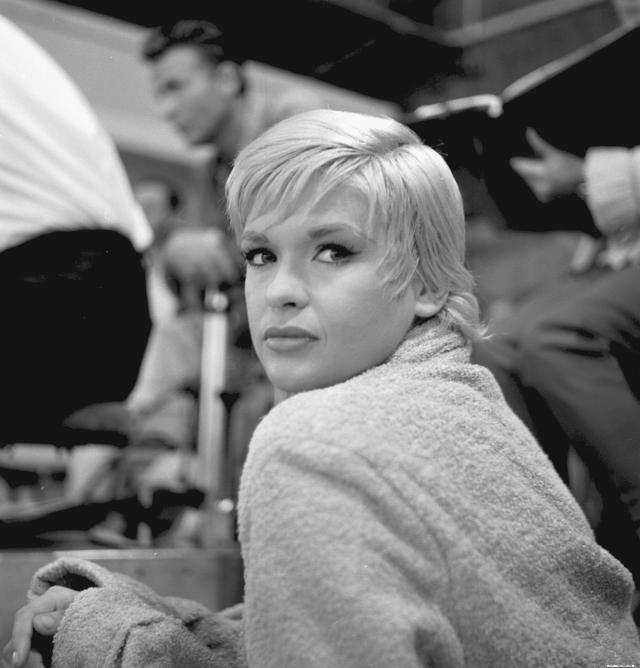
A chance to see Jayne Mansfield with short hair. Don’t worry, she’s still baby-face adorable and hot with short hair. Tony Randall plays a talented, but alcoholic advertiser who’s drinking has gone too far to the point that it costs him his job, which is a very good job and his wife. And as well as his memory where he doesn’t remember the night before. Where he gets kicked out of a bar, screws up his presentation at work for one of his clients and wife walks out on him. He also forgets about an affair he had with Marion played by Jayne Mansfield.

He actually shows up at work the next morning thinking everything is normal and that nothing incredible happened the night before. He doesn’t even remember being fired and is wondering what Marion is doing at his home the next morning. He shows up to work locked out of his office where they tell him again that he was fired. And essentially spends the rest of the day trying to figure out what happened the day before.

As Alfred Hitchcock said on this show himself, this was about showing people the dangers of alcoholism, which I’m even surprised that term was even around in the early 1960s. And would assume that people who were alcoholics were considered to be mentally weak and not people with disease that needed serious treatment. But alcoholism causes Hadley Purvis (played by Tony Randall) his job and his wife and he loses his temper and takes it out on Marion.

You can also see this post at The Daily Press, on Blogger.

You can also see this post at FRS FreeState, on WordPress.

Posted in Classic Hitch, Originals | Tagged , , , , , , , , , , , , , , , , , , , , , , , , | 2 Comments

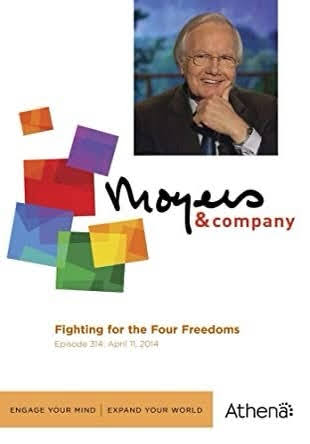
Harvey J. Kaye: ‘Fighting For The Four Freedoms’

IMG_0370

Source:Amazon– Bill Moyers interviewed Harvey J. Kaye, about his book about President Franklin D. Roosevelt.

“In January 1941, less than a year before Pearl Harbor and America’s entry into World War II, President Franklin D. Roosevelt’s State of the Union address made it clear that a fight was inevitable, a fight to preserve, protect and defend four essential freedoms: freedom of speech and religion and freedom from want and fear. Historian Harvey J. Kaye, author of the new book, The Fight for the Four Freedoms: What Made FDR and the Greatest Generation Truly Great, talks with Bill Moyers about FDR’s speech and how it was the cornerstone for the kind of progressive society Roosevelt hoped for but did not live to see at war’s end. Today, the Four Freedoms have been diminished and defiled by a society that gives money and power the strongest voice. Kaye says, “Look what we’ve done and look what we’re allowing to happen now. This cannot be the America that I imagined and most of my fellow Americans imagined.” The broadcast concludes with a Bill Moyers essay remembering his father’s reaction to FDR’s death, 69 years ago this week.

When sold by Amazon.com, this product will be manufactured on demand using DVD-R recordable media. Amazon.com’s standard return policy will apply.”

From Amazon

“Easter Sunday, 2o2o, marked the 75th anniversary of President Franklin D. Roosevelt’s death. He was just weeks into his fourth term in office when he passed away on April 12, 1945 at the age of 63. Bill Moyers was 11 years-old at the time and remembers that day well; it was the only time he had seen his father with tears in his eyes. “It was never apparent that FDR’s New Deal materially made a difference in my father’s life but this I know, and I know it for certain, he believed that President Roosevelt was on his side, fighting for common people like him…he knew that fellow in the White House was his friend and champion.”

It is not uncommon, during this time of pandemic and an economic crisis that may well surpass The Great Depression, to hear people say “We need another FDR.” If you believe America desperately needs a great surge of democracy in the face of fierce opposition from reactionary and corporate forces, then remembering and reviving the spirit of President Franklin D. Roosevelt is in order.

FDR’s 1941 State of the Union address made it clear that a fight was inevitable, a fight to preserve, protect and defend four essential freedoms: freedom from fear and want and freedom of speech and religion.

In 2014, Bill spoke with historian Harvey J. Kaye, author of, The Fight for the Four Freedoms: What Made FDR and the Greatest Generation Truly Great, about how FDR’s speech was a rallying cry to build the kind of progressive society that Roosevelt hoped for but did not live to see at war’s end. His most recent book is FDR on Democracy: The Greatest Speeches and Writings of President Franklin Delano Roosevelt.

In his conversation with Bill Moyers, Kaye says the president was able to mobilize Americans who created “the strongest and most prosperous country in human history.” How did they do it? By working toward the Four Freedoms and making America “freer, more equal and more democratic.”

He believes Americans have not forgotten the Four Freedoms as goals, but have “forgotten what it takes to realize them, that we must defend, sustain and secure democracy by enhancing it. That’s what Roosevelt knew. That’s what Jefferson knew. And no one seems to remember that today. That’s what we have to remind people of.”

From Bill Moyers

“If you believe we desperately need a great surge of democracy in the face of fierce opposition from reactionary and corporate forces, then remembering the spirit of President Franklin D. Roosevelt, who died 69 years ago this week, is in order. Historian Harvey J. Kaye talks about how FDR was able to mobilize Americans to create “the strongest and most prosperous country in human history.”
_ - 2021-11-15T174754.282

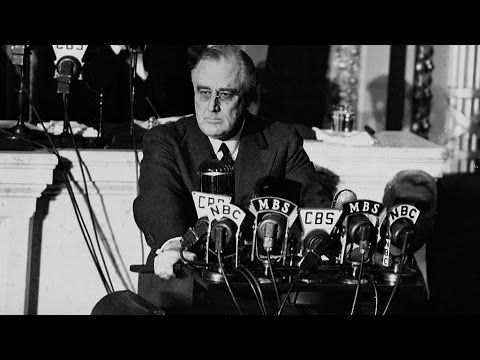
Source:Bill Moyers– President Franklin D. Roosevelt (Democrat, New York) 1933-45

From Moyers & Company

For the sake of full-disclosure, I must say it’s the President Franklin Roosevelt during his first two terms, is the FDR that I like and respect. The Progressive Democrat who inherited the Great Depression and simply wanted to get America out of it and create a public safety net for Americans who need it when times are tough for them and to deal with another economic downturn. As well as expanding more freedom to more Americans. Not creating a government so big that Americans wouldn’t need the freedom to take care for themselves, because government will do that for them.

FDR from 1933-41 was a Center-Left, mainstream, pragmatic, Progressive Democrat. Which is really what progressivism is about, as much as most Americans don’t actually understand that. It’s the FDR of the 3rd term from let’s say 1942 until he died in early 1945, that moved left and became more like a Henry Wallace Democratic Socialist

The 3rd term President FDR is where you get the Economic Bill of Rights speech that would’ve given America a Western European welfare state. Instead of the social insurance system that we have for people who actually need it, but a universal welfare state for everyone regardless of income. Which is what you get from his Four Freedoms

Posted in Book TV, Originals | Tagged , , , , , , , , , , , , , , , , , , , , , , , , , , , , , , , , | 1 Comment

Keith Hughes: What is a Libertarian?

Attachment-1-1903

Source: Keith Hughes

Source: Keith Hughes: What is a Libertarian?

Libertarians, I guess it depends on what you mean by a Libertarian. And if you asked my definition of a Libertarian, it will sound very similar to both my definition of a Conservative, in the classical sense and a Liberal in the classical sense where I am. So I’ll you give you my four examples of a Libertarian including a Liberal Libertarian and if you want to put me in that camp fine. But Gary Johnson would also be in that camp, the Libertarian Party presidential nominee in 2012, who certainly leans in that direction, but isn’t what I at least would call a Classical Libertarian.

I just gave you two types of Libertarians. The Liberal Libertarian, Gary Johnson. The Classical Libertarian, Ron Paul, I agree with Keith Hughes on that one. The Conservative Libertarian, Rand Paul who is a little to the Right of his father on national security and foreign policy and to his father’s left on economic policy. Senator Paul is more of a Federalist as it relates to social insurance the safety net. As opposed to his father who simply wants to eliminate the public safety net all together. And then there Anarcho Libertarians. People who are essentially anti-government all together. But don’t officially at least support eliminating all government.

So what do all these labels mean? Lets start with the Classical Libertarian, libertarianism in its realist sense and go from there. The Classical Libertarian is not just anti-big government all together where I am as a Classical Liberal lets say. But they are pro-small government and would essentially cut the Federal Government down to the size it was in the 1920s or so. And tell Americans to live their own lives as they see fit, as long as they aren’t hurting anyone with what they are doing. And if they get into any economic trouble and need assistance, go to their friends, family and private charity for assistance.

Now the Libertarian I actually respect and can talk to and learn from and are interested in and if I was in government I could probably work and personal know and like some of these people, are the Conservative Libertarians. Go back to the 1950s, 60s, 70s and 80s and you’ll find Barry Goldwater leading that camp. Go to whatever this current decade is called now and you’ll see Rand Paul leading this wing on the Right. People who are again anti-big government and believe in both personal and economic freedom, but aren’t looking to eliminate governmental functions they see as useful and constructive. The safety net comes to mind. But more interested in getting those programs out of the Federal Government and down to the states, locals and even privatization.

Now the Liberal Libertarian, Classical Liberal or even real Liberal, I just go by Liberal for myself. But we are in sync with the Conservative Libertarian and Classical Libertarian on freedom of choice and personal freedom issues. Don’t like big government running our economic or personal affairs for us. Don’t like the welfare state or nanny state. But we aren’t so much anti-government and look to put it down, as much as we are anti-big government. We believe in government, but we want it limited to so it works. And when it comes to helping the less-fortunate, we wants those programs to empower people as much if not more than taking care of them in the short-term so they can live in freedom as well.

The Anarcho Libertarian, think Anarchist and not much of a difference. Lew Rockwell, if you are familiar with his politics who on his blog it days pro-market, anti-state. Unless you are an Anarcho Libertarian, you get into a political discussion with them and you may think you are at a Star Trek convention, ( no offense to Trekies ) But when it comes to Libertarians, they go from the center-right where Conservative Libertarians and even Conservatives are, all the way over to people who are essentially anti-government all together. So it depends on what you mean by Libertarian.

Posted in Keith Hughes | Tagged , , , , , , , , , , , , , , | 1 Comment

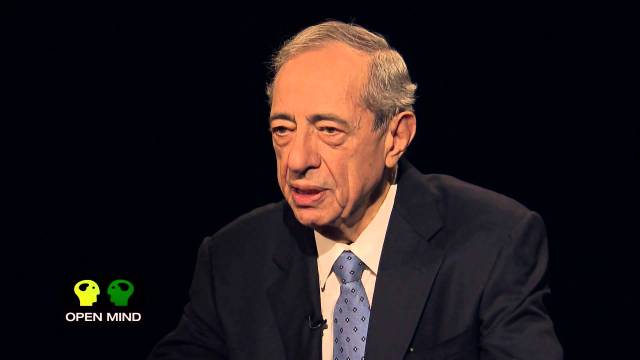
The Open Mind With Richard Heffner- Mario Cuomo- On The Death Penalty and Other Issues (October 12th, 2011)

The Open Mind - Mario Cuomo

Source:The Open Mind With Richard Heffner– Governor Mario Cuomo: Democrat, New York (1983-95) 

“Former New York Governor Mario Cuomo discusses his firm belief that the death penalty is wrong and that it is time for American to banish capital punishment.”

From The Open Mind With Richard Heffner

At risk of insulting Mario Cuomo and making Bill O’Reilly look bigger than the rat that he really is: O’Reilly was once asked his position on the death penalty and he answered that he was opposed to the death penalty because he didn’t believe it was a harsh enough punishment. And part of his opposition might be his Irish-Catholicism. O’Reilly’s alternative was essentially to make convicted murderers slaves and give them life sentences of hard labor.

I think Governor Cuomo’s alternative to the death penalty is even worst. Which would be solitary confinement for the rest of their lives. Which would be a form of cruel an unusual punishment, as well as unproductive.

Because you would be putting people who probably aren’t mentally all together anyway and putting them in a situation where they would just get worst. And acting out end up becoming a problem for the prison staff that is supposed to supervise these inmates.

As far as people in poverty in America: the more money you have, the more influence you have. The idea of one person one vote, is a technicality and in places in Chicago, perhaps not even real where dead people apparently still have the right to vote there. So what kind of influence do you think a long-term low-skilled, perhaps not even with a high school diploma unemployed person is going to have.

Or a low-skilled low-wage worker, perhaps making fifteen-thousand-dollars a year and collecting public assistance to make up for what they don’t earn, will have.

Posted in The Open Mind | Tagged , , , , , , , , , , , , , , , , , , , , , , , , | 1 Comment