Foreign Affairs: Alan J. Kuperman: ‘How Barack Obama Failed Libya’

How Obama's Libya Intervention Ended in Failure _ Foreign AffairsSource:Foreign Affairs– free at last in Libya?

“On March 17, 2011, the UN Security Council passed Resolution 1973, spearheaded by the administration of U.S. President Barack Obama, authorizing military intervention in Libya. The goal, Obama explained, was to save the lives of peaceful, pro-democracy protesters who found themselves the target of a crackdown by Libyan dictator Muammar al-Qaddafi. Not only did Qaddafi endanger the momentum of the nascent Arab Spring, which had recently swept away authoritarian regimes in Tunisia and Egypt, but he also was poised to commit a bloodbath in the Libyan city where the uprising had started, said the president. “We knew that if we waited one more day, Benghazi—a city nearly the size of Charlotte—could suffer a massacre that would have reverberated across the region and stained the conscience of the world,” Obama declared. Two days after the UN authorization, the United States and other NATO countries established a no-fly zone throughout Libya and started bombing Qaddafi’s forces. Seven months later, in October 2011, after an extended military campaign with sustained Western support, rebel forces conquered the country and shot Qaddafi dead.”

From Foreign Affairs

I supported a limited intervention of Libya that would have a coalition between America and Europe especially NATO that would establish a no fly zone over Libya as the Libyan rebels did the groundwork in Libya to knockout the Gaddafi Regime there. I was in favor of this by February 2011 and even criticized the Obama Administration for not acting soon enough.

President Obama finally makes the decision to intervene in Libya and be part of the NATO coalition that would hit Gaddafi forces in the air as the Libyan rebels did the groundwork. This was one of the most successful, cost-effective and quick military operations that America has ever been part of that ended in the early summer of 2011.

This was not Iraq 2011 where we would go in and invade the country with a hundred-thousand ground troops, knockout the government and establish our own state there to occupy the country. Why the Iraqi people would figure out what kind of country they wanted to have.

The operation in Libya was about knocking out a murderous dictator who was simply only interested in staying in power in Libya. And this is something I believe we could’ve done in Syria by now. Knocked out the Assad Regime in coalition with NATO and not have to debate and consider if we arm the Syrian rebels or not. But that is a different debate.

Libya is not a failed state now because America and Europe decided not to occupy it. Libya is a failed stated because they didn’t have the leadership to unify the country around a new government that could bring this large country the size of Saudi Arabia, Iran and Algeria physically, but with only six-million people, together and plot the course for the new Libya.

What Libya instead got was another semi-authoritarian government that wasn’t prepared to govern and defend the country. And now you have new rebels and terrorists including ISIS that Egypt of all countries has decided to intervene against and take out.

Posted in Foreign Affairs Video, Originals | Tagged , , , , , , , , , , , , , , , , , , , , | 1 Comment

Liberty Pen: ‘Harry Browne’s Social Security Solution’

FreeState Now _ Liberty Pen_ 'Harry Browne's Social Security Solution'Source:Liberty Pen– 2000 Libertarian Party presidential nominee Harry Browne.

You can also see this post at FreeState Now, on Blogger.

“From the Great Libertarian Offer (2000), Libertarian presidential candidate Harry Browne offers an innovative fix to the Social Security crisis. Liberty Pen

From Liberty Pen

I’m not sure Harry Browne understood the Social Security program and I truly mean that. (Even though he was 67 when he shot this video) Because Social Security is a true social insurance program, not a welfare state program and they are different.

The role of the welfare state is to take care of the people and meet their everyday needs for them. Which is very common in Scandinavia. The safety net or social insurance system is there for people who need financial help when they can’t financially support themselves, for whatever reasons. And in Social Security’s case there for people who didn’t have enough money to support their retirement and for people who aren’t capable of working full-time because of some disability.

So what Harry Browne is doing here is talking about converting a retirement insurance system, which is what Social Security is, into a retirement system instead. That everyone could use as their very own retirement fund. But with a libertarian instead of socialist approach to it.

The libertarian approach has to do with private accounts that I guess individuals and their employers would contribute too, depending on the program.

The socialist approach would be to make Social Security the sole retirement system and program in America. Single payer Social Security for all when it comes to retirement.

You can talk about all sorts of ways of improving pensions and the retirement system in America that is a public/private system. But some things we shouldn’t do at all because they would be bad for the system. Give the U.S. Government a monopoly when it comes to retirement in America. That would be one bad option.

And the other bad option would be to take security and insurance out of the Social Security system and make sure that is always there for people who truly need it. And instead talk about ways of improving private pensions and retirement accounts in America instead.

The other issue of the Harry Browne Social Security plan, is that it’s just another transfer of wealth. There’s that old stereotype about libertarianism, that it’s just another version of corporatism, where you transfer power not from government to individuals, but from government to corporations.

Libertarians are supposed to against transfer of wealth. Under the Browne plan, that never caught on even 15 years later, he would’ve transferred money that individuals worked for and instead of giving it back to the individuals to set up their own personal retirement accounts, he would give it to private corporations, to manage that retirement money for the individuals. That’s what’s known as a transfer of wealth, something that Libertarians are supposed to be against.

Posted in Liberty Pen, Originals | Tagged , , , , , , , , , , , , , , , | 1 Comment

The American Mind: Charles Kesler Interviewing William Voegeli: Ending The Welfare State

.

This blog has already laid out why it is against the negative income tax. Handing people who up to this point at least haven’t been responsible with their lives in too many cases to the point not they are jobless and on public assistance is not a good idea and a bad taxpayer investment. So I think that would be the bad libertarian alternative to the safety net in America. The bad progressive or even socialist alternative to the safety net in America would be to give everyone a check of lets forty-thousand-dollars a year to pay all of their bills so no one lives in poverty. Which is what is called the minimum income or national basic income.

The problem with monopolies private or public is that they don’t work. Oh you want more than that. Fine I’ll give you more since you asked. But with a monopoly you give an organization private or public the complete market in whatever they are involved in. Which means they are no longer incentivized to improve and give the best service that they can. Why should they unless they are saints or angels, because their customers have no other options to turn to. And why not charge as much as you can get away with, because again what alternatives do your customers have to turn to. And that I think is an issue with the safety net in America, that it is not a total monopoly, but it does take resources that could be used in non-profit private sector.

I don’t like the term welfare state because that implies that the state meaning the government is now responsible for their citizens welfare. No longer just their safety and protecting their freedom, but their welfare as well and responsible in seeing that everyone is taken care of and has enough food, health care, housing and everything else. I like terms like safety net and social insurance. Because these are things that people can turn to when they are in need. When they are out of work or do not make enough money to support themselves, but they are working. And that you can collect from this social insurance to help you survive in the short-term. But you are also getting assistance to get on your feet and become economically independent.

The safety net in America shouldn’t be about government running it or not having government involved at all. We as a country public and private sectors should be involved in it. Government programs helping people in need run at the state and local levels with the Feds serving as a regulator and no longer as a director. While at the same time empowering non-profits and even for-profits who want to get involved in empowering people in poverty live better lives and be able to escape poverty. That we as a country help people in need not just get by, but help them get themselves on their feet. We should look at social insurance the way we look at homeowners insurance. That when you are in trouble you have money in the short-term. But also assistance to help you get back on your feet.

The American safety net should almost be designed the opposite way it was put together in the 1930s. As close to home as possible, the public and private sectors both involved and designed to help people in the short-term, but long-term help people get on their feet. Because we are such vast country with so many people and resources government shouldn’t be so centralized and instead about empowering people an utilizing all of our people from all around the country to help people in need. So they can get by and not longer have to live in need and finally be able to live in freedom.

Posted in Originals, The American Mind | Tagged , , , , , , , , , | Leave a comment

Hezakya Mixologist: Video: CBS News Special Report: Black Power/White Black Lash, From 1966

.

To me at least Black Power wasn’t one movement, but a larger movement with several different sub-divisions. You had the more socialist if not Marxist revolutionary Black Panthers on the Far-Left with their own militia. You had Malcolm X and his movement that was sort of in the middle. That was truly about freedom and individualism for the African-American community and for them to be free to live their own lives. And you had the more social democratic pacifist movement led by Martin Luther King and his organization as well. But all of these groups essentially had similar if not the same goals, but with different tactics in how to accomplish those goals.

All three of these groups wanted power for the entire African-American community. That would not longer be forced to live under poverty, racism and have to be second-class citizens to Caucasian-Americans. I think one of the tragedies of Malcolm X being murdered in 1965 is that he and his movement I believe would’ve been a bumper between the Black Panthers and the MLK group. And perhaps without the Malcolm X being murdered maybe we don’t see the race riots that we did in 1965 and 66. We’ll never know that, but he was moderating before he was murdered in 1965 and maybe we would’ve seen that.

Black Power for the most part wasn’t about having African-Americans throwing the Caucasian community out of power in the 1960s and overthrowing the U.S. Government. It was about empowering an entire community of Americans to be able to live in their own freedom as well. And no longer forced to live under anyone else’s authority. The Black Panthers might have had more extreme leftist goals of overthrowing and entire country. But generally speaking the people in Black Power movement was about empowering African-Americans. And only using violence when it was used against them.

Posted in Classic News, Originals | Tagged , , , , , , , , , | 1 Comment

Hoover Institution: Uncommon Knowledge- Peter Robinson- Interviewing David Mamet on Conservatism

Attachment-1-555

Source:Hoover Institution– Hollywood writer interviewing David Mamet.

“This week on Uncommon Knowledge, playwright David Mamet discusses his book The Secret Knowledge: On the Dismantling of American Culture and his conversion to conservatism. Mamet explains how, by studying Jewish and Christian texts such as the Talmud and the Bible, he came to approach arguments from a new perspective that aligned itself with conservative politics. Throughout the interview, Mamet discusses his newly found conservative position on several issues, including social justice and civil rights, the decline of the family and the sexual revolution, affirmative action and race, and domestic politics and foreign policy.”

Source:Uncommon Knowledge 

The type of liberalism that David Mamet seems to be talking about an interested in is how Liberals get stereotyped by what my father calls knee-jerk Liberals. People who are actually not very liberal at all, but who wear the label because they think Progressive is a sellout and they don’t want to have to deal the negative Americans stereotypes of Socialists and socialism. Or even a further left ideology than that. That if you’re a Liberal, you’re really a European leftist ideologically and you don’t like America and what it stands for. And that is putting it simply. That’s what supposed, so-called American Modern Liberals are supposed be, at least according to the so-called mainstream media and people who I call closeted Socialists.

If you’re a so-called Liberal in America, you believe in political correctness who defines that as being against any speech that offends groups of people who you generally support. And that some language is so offensive that it must not only be talked down upon, but banned. And speaking about groups of people, that all people are members of groups. And because of that they should be treated as members of groups and not as individuals who can take care of themselves and even think for themselves. Even if a lot of members of their so-called tribe feel differently about certain issues.

If you’re a so-called Liberal, you not only support the welfare state, but you are all about the welfare state. And that people are generally stupid and can’t be relied to take care of themselves. And are going to make mistakes that the society as a whole is going to have to pay for. So why don’t we just have a government a superstate big enough to take care of everyone with taxes high enough to finance this superstate to take care of everyone. That individualism and individual success and wealth by nature are bad things, because it encourages people to go on their own and those things should be discouraged.

These are the negative and false stereotypes of liberalism that David Mamet seems to have bought into. And I would think someone as smart and as good of a writer that he is would know better than that. And perhaps has spent too much time with the Far-Left in America and now believes that everyone on the Left is part of the Far-Left. That there’s no such thing as Progressive, Socialist, Social Democrat, Democratic Socialist or Communist. That all of these political groups are liberal and all of these people are Liberals. Which is simply not true.

The other thing that I disagree with David Mamet equating liberalism and conservatism with culture. As if liberalism and conservatism aren’t just political philosophies, but they’re ways of lives as well. And then we mentioned some of the cultural stereotypes of so-called Liberals and so-called Conservatives. That if you drive a Prius, you mist be a Liberal. If you’re a NASCAR fan, you’re a Conservative. And that’s just a couple of them.

The fact is liberalism is a political philosophy and conservatism is a political philosophy. Hipsterism is a way of life and culture and a lot of modern Hipsters who are the 21st Century of Hippies, are also leftists (not Liberals) ideologically. And a lot of Rednecks and so-called Christian-Conservatives, are rightists (not Conservatives) ideologically.

But I believe it’s dangerous to judge people on what they think politically, based on what kind of music they listen too, or what they drive, how up to date they are on pop culture and new technology, or do they like guns, etc. But instead we should judge people’s politics based on what they think and how they live politically. But leave their cultural beliefs and lifestyle out of it.

Posted in Originals, Uncommon Knowledge | Tagged , , , , , , , , , , , , , | Leave a comment

Crash Course: John Green- ‘George H.W. Bush and The End of The Cold War’

George HW Bush and the End of the Cold War_ Crash Course US History #44

Source:Crash Course– with a look at George H.W. Bush.

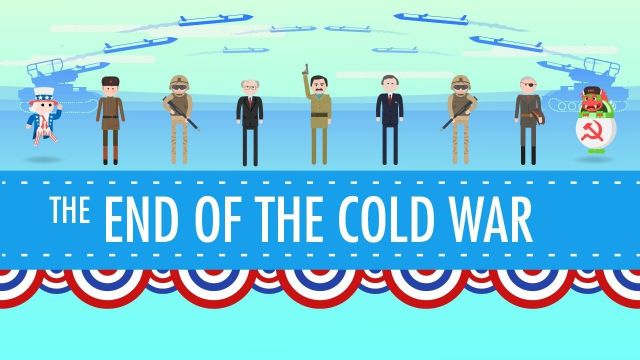
“In which John Green teaches you about the end of the Cold War and the presidency of George H.W. Bush. It was neither the best of times, nor the worst of times. On the domestic front, the first president Bush inherited the relative prosperity of the later Reagan years, and watched that prosperity evaporate. That was about all the interest Bush 41 had, domestically, so let’s move to foreign policy, which was a bigger deal at this time. The biggie was the end of the Cold War, which is the title of the video, so you know it’s important. The collapse of the Soviet Union was the biggest deal of Bush’s term, and history has assigned the credit to Ronald Reagan. We give the guy a break, and say that he helped. He was certainly expert in foreign policy, having been and envoy to China, ambassador to the United Nations, and head of the CIA. Bush also oversaw the first Gulf War, which was something of a success, in that the primary mission was accomplished, and the vast majority of the troops were home in short order. It didn’t do much to address some of the other problems in the region, but we’ll get to that in the next few weeks. Along with all this, you’ll learn about Bush’s actions, or lack thereof, in Somalia and the Balkans, and you’ll even be given an opportunity to read Bush’s lips.”

From Crash Course

George H.W. Bush is fascinating to me even if his personality comes off as more stale, which is surprising because he does have a very good sense of humor and is a very likable man. That people close to him are more than happy to let others know, but that was not the perception of him by 1992 when he ran for reelection. He was seen as stale and out of touch and someone perhaps not aware of what was going on in the country and around the world. And was seen as someone who was past his time and the country was ready for a change.

But even though I’m a Liberal Democrat I see George H.W. Bush as a successful and good president. I would give him an 8 or 8.5 as someone who was a transitional figure from a more hard-right president like Ronald Reagan at the end of the Cold War, to a Progressive New Democrat in Bill Clinton prepared to take America to the 21st Century.

President Bush was someone who took over when America was in pretty good shape at home and around the world. But because of the rising debt and deficit and interest rates and inflation and recession that was about to come in the early 1990s that he inherited, that is what defined his presidency.

In many ways the George H.W. Bush presidency is the presidency that his son George W. should’ve had. That G.W. Bush should’ve learned about and studied his father except being a former government and businessman paid more attention to domestic policy. While going back to his father’s foreign policy of strong at home militarily and economically while engaged around the world so we don’t have to even try to govern the world ourselves. Something by this time we weren’t cable of doing anyway. Instead of having this neoconservative supply side economic policy and force at all costs unilateral foreign policy.

The economic boom that America went through in the 1990s that started in 1993-94 had part to do with President Bush starting in 1990 with his deficit reduction act. That he negotiated with a Democratic Congress and the trade deals that his administration negotiated with Canada and Mexico that became known as NAFTA and GAT in 1992. The technology boom that became famous by 1995 or so with the internet and the cell phone and other devices started under his administration. As far as those devices being available to everyone. The internet and email were already up by 1992 if not 1991 and cell phones were fairly common by 1992 as well.

If you look at America’s foreign policy and how we were doing around the world, again with the end of the Cold War which meant America no longer needed such a large and costly military, which freed up other resources for other priorities. Saddam Hussein was in a box in the Middle East. Russia became an ally of America. Central America was becoming democratic and so was Eastern Europe.

President Bush didn’t try to govern the world, but to make sure we were ready to deal with all of these new allies and create new trade partners, which is what he did. His presidency was pretty successful, but not great and deserves more credit for being the president that he was.

Posted in Crash Course | Tagged , , , , , , , , , , , , , , , , , , , , | 1 Comment

BBC: ‘The Rise & Fall of Tony Blair’

Attachment-1-464

Source:Trond Repato– Tony Blair apparently meeting New York City Mayor Rudy Giuliani. Don’t ask me when and where.

You can also see this post at The Daily Press, on Blogger.

“The Rise and Fall Of Tony Blair 2007 06 23 Part 1”

Source:Trond Repato

The rise of Tony Blair I at least believe has to do with how he reformed the British Labour Party as Leader of the Opposition in the 1990s before becoming Prime Minister.

When the Labour Party lost power in 1979 to the Conservative Party, the British economy was in bad shape because it was over-centralized, the economy was over-centralized and was too socialist with the U.K. Government owning so much of the economy and trying to run British industries themselves. The U.K. Government by 1979 owned something like seventy-percent of the economy.

When Tony Blair became Prime Minister in 1997 and the Labour Party which was New Labour took over they didn’t move to renationalize industries and perhaps nationalize British industries that weren’t under government control and ownership before.

Blair Labour didn’t reform the British welfare state by saying that people who were physically and mentally able to take care of themselves and work, no longer had to do that if they even if they were uneducated. He kept in place a lot of Prime Minister Margaret Thatcher’s economic polices in place instead. And perhaps offended a lot of people in party who were much further to the left of him by doing that.

New Labour is Tony Blair and Tony Blair’s creation. They were out of power for eighteen-years from 79-97 because the British people remembered the state of the economy when Labour left power in 1979. And they also remembered how the British economy finally took off and became the economic power that it is today in the late 1980s and early 1990s. And didn’t want to put Socialists in power that try to take the country back to where it was in the late 1970s.

So Tony Blair’s challenge when he became Leader of the Labour Party in 1994, was to change the perception of the Labour Party so it was no longer seen as Marxist, so socialist and central government oriented.

Tony Blair is a student of Bill Clinton and the New Democrats in America. Someone who didn’t want to transform his party into a conservative party. But someone who wanted his party to be a center-left party and not a far-left party. Someone who wanted to use government to empower people to be able to take control over their own lives and live in freedom. And not have to live off the welfare state or be forced to live off of the welfare state indefinitely. Blair wanted his party to be seen as a party that would defend the country and protect everyone’s freedom. And was very successful in doing that.

Posted in Originals, U.K. Labour | Tagged , , , , , , , , , , , , , , , , , , , , | 1 Comment

Mark Russell: ‘Takes a Look Back at 1984’

Attachment-1-485

Source:Mark Russell– Political satirist Mark Russell on 1984.

“Mark Russell Looks Back at Campaign 1984”

From Mark Russell

1984 was almost unfair for the Democrats because they had no one who can beat Ronald Reagan and they probably knew that going in. If you look at where the country was in 1980 and where it was in 1984, it certainly wasn’t good, but the country was feeling much better than it was in 1984 than in 1980.

Imagine waking up with a head cold or the flu and then waking up the next morning with a cold: you aren’t feeling great, the next morning with the cold and perhaps a stuffed nose and cough, but at least the headache is gone and you’re no longer vomiting every hour, were able to sleep the whole night. Well, that is how the country felt in 1984 with Ron Reagan compared with 1980 with Jimmy Carter.

1984 was what the what the hell year for Democrats: “Hey, I can’t win so I might as well run for president, because what do I have to lose”. Which I believe was one of Walter Mondale’s campaign themes that year: “Vote for me, what do you have to lose?”

1984 was for Democrats what 1964 and 96 was for Republicans. The country not feeling great, but much better off than it did four years earlier. And when that is the case the party in power tends to get reelected. And if that party holds at least one chamber of Congress as well, they not only hold their majority in the House or Senate, but tend to add to it as well. Which is what Senate Republicans did in 84.

It is too bad for Democrats in 84 because they had at least two good candidates. And if Gary Hart was just able to communicate what he believed in 84, the Mondale line of “where’s the beef” doesn’t play as well or is even used. Because Democrats tended to like Gary Hart and did other Americans, but with Mondale they knew him and knew where he was on the issues. He was the safe choice especially considering they knew he wasn’t going to win anyway, but at least Fritz wasn’t going to embarrass them.

Ron Reagan was something special as a politician and when things were going well under his leadership or at least perceived that way, he was almost impossible to beat. Which is what Democrats found out in 1984.

Posted in Mark Russell, Originals | Tagged , , , , , , , , , , , , , , , , | 1 Comment

David Hoffman: ‘What The 1960s Did To America’

Attachment-1-532

Source:David Hoffman– I believe these are members of Students For a Democratic Society. But don’t quote me on this.

“David Hoffman: What The 1960s Did To America”

From David Hoffman

The 1960s was truly a revolution for American culture and politics. We go from a very conservative collectivist period from the 1940s and 50s to a period where all sorts of groups of Americans were standing up and demanding their freedom. And the freedom to live their own lives for the very first time in their lives. And from that sense at least the 1960s was a very positive time with so many new Americans now wanting and obtaining freedom over their own lives. And a bad time for the conservative establishment that wanted to keep things as is.

The 1960s you have the civil rights movement which was very positive. And not just for African-Americans, but for Latin-Americans, women of all races and ethnicities, as well as gays. And for Americans of all backgrounds now being able to live their own lives the way they want to. And no longer feeling the need or having to live the lives of their parents and grandparents. The 1960s you also have the anti-war movement which led to America finally seeing that the Vietnam War was wrong and that we couldn’t win it.

The negative aspects of the 1960s was of course the violence. We lost two great political leaders in John F. Kennedy and Robert F. Kennedy. We lost two great civil rights leaders in Martin L. King and Malcolm X. The rise of crime in that decade, the rioting and division of that decade. Things fifty-years later we’re still going through and haven’t recovered from. But revolutions tend not to be all peaceful. There tends to be some casualties in revolutions and the 1960s was no exception to that.

We go from a very stagnant and status quo decade of the 1950s to a revolutionary decade of the 1960s. Where not a lot of new things seemed extreme, except to the establishment that again wanted to keep things as is. Because they benefited most from that America and also believed that was the way for all Americans to live. And if America had to do all over again I believe it would and that it would’ve needed to be done. Because of all the Americans who were denied freedom in America simply because of who they were.

Posted in New Left, Originals | Tagged , , , , , , , , , , , , , , , , , , | Leave a comment

CBS News: Special Report- Malcolm X: The True Story (1992)

82380

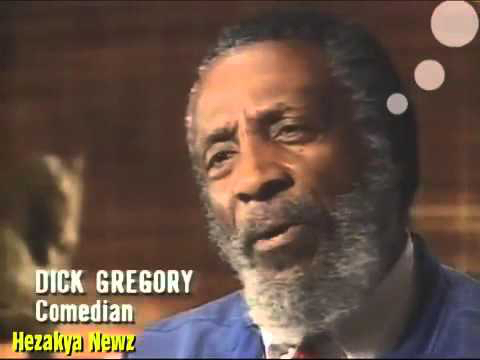
Source:CBS News– Comedian and left-wing political activist Dick Gregory

Source:CBS News

The real story of Malcolm X is of a man who came from a modest but not a bad upbringing who didn’t finish high school who got into trouble as a young man and became a thug and did time in prison. It’s in prison where he becomes educated and who actually became a prison inmate who was rehabilitated and became educated in prison. He was a man who became a better man in prison and able use what he learned to become a productive member of society and was able to build a good life for him outside of prison as short as his life was when he was murdered in 1965.

Malcolm X first became part of the Black Power movement in the 1960s. Not the Black Panthers, but African-Americans who wanted in Malcolm X’s movement who wanted to empower African-Americans to be able to take control of their lives and live in freedom. If Malcolm X was a racist when he first became part of this movement in the late 1950s and early 1960s using hatful language and slurs towards Caucasian-Americans, he wasn’t a racist when he died. He learned that not all Caucasians as he said were racists or White Devils. That there were good Caucasians as their were bad Caucasians like any race of people.

Malcolm X as an African-American leader was not a thug. But a leader who was about empowerment of a race of people in America who even though were officially free under law and no longer slaves, were overwhelmingly dependent on public assistance. Who trapped in poverty and in bad schools and not having the opportunity for a real future and being able to live in freedom. Malcolm X wanted to empower all of these Americans to be able to take control over their own lives and live in freedom. He wasn’t interested in integration for integration’s sake, but freedom for a community of Americans. Whether that meant desegregation or separation from the rest of the country.

Posted in Classic News, Originals | Tagged , , , , , , , , , , , , , , , , , , , | Leave a comment