Reform Party: Nicholas Hensley: Governing by Finding Common Ground is Irrational & Deserves The Public Interest

Source:The New Democrat 

I hope the title of this post is long enough, otherwise the hell with it. But I agree with the notion of this blog from the Reform Party that governing simply shouldn’t be about compromise. That even with a divided government with two parties that do not like each other which is putting it very mildly and certainly do not trust each other that both sides at the end of the business day still have a responsibility to not only govern, but to govern well.

And in divided government like today that means taking the best from both sides and putting into a package that works. And throwing out the garbage from both sides instead of just splitting the difference on each key issue. As if that is governing even when trying to go half way on each issue may not and in most cases does not result in a good end result. And there are plenty of examples going back to the early 1980s when the Federal Government became very partisan with a new Conservative President in Ronald Reagan, with a Conservative Republican Senate. To go with a Progressive Democratic House where they managed to govern very well with divided Congress’s.

It is not so much the art of the compromise that should try to be reached. But the art of the consensus. What do both sides want and on a lot of key issues both sides tend to have the same end goals. And after that has been established now where are both sides, what would each side do if they were completely in charge. In other words what is the opening offer from both sides so we know where both side is. And after that has been established you look to the common ground.

You find that and you put that in the final package and then after that you look for victories from both sides. The good from each side and put their ideas alone on certain key issues. For example the 1996 Welfare to Work Law is a perfect example. Republicans wanted time limits and work requirements in the new Welfare system. Democrats wanted job training, education and childcare for people on Welfare. What happened is both sides won and the final bill had job training, education, childcare, time limits and job requirements.

You take the good from both sides and throw out the things that probably wouldn’t work. Or that both sides simply can’t live with. Meaning both sides get their victories, but do not get everything they are looking for. Instead of just splitting the difference and running for the middle on the key issues. And that is how you get good government in a divided government.

Posted in Independents, The New Democrat | Tagged , , , , , , , , , , , | Leave a comment

American Thinker: Christopher Chantrill: ‘The Four Freedoms: 75 Years of Liberal Betrayal’

american thinker_ daniel payne - Google SearchSource:The New Democrat 

I’ve seen a lot of dumb blog posts before that have close to absolutely no truth in them. But this post from Christopher Chantrill is right up there. It is nothing more than partisan right-wing talking points about what liberalism is supposed to be about and what Liberals are supposed to believe in. First of all, if you do not believe in Freedom of Speech even as it relates to negative speech about groups of people, or even hate speech about groups of people, you are not a Liberal. Because liberalism is built around Freedom of Speech and Association for all. Without fear of government especially the central government bringing down negative consequences towards you.

As far as the religious aspect from Mr. Chantrill, just to be nice. There are of course Atheists and even religious bigots in America who use their free speech rights to put down religion in America even if they aren’t big fans of free speech in America. And there are fundamentalist religious believers who use their free speech rights to put down other religions. Even if they aren’t big fans of free speech either. But the Atheists tend to be on the Far-Left people who worship the central state instead. And people on the Libertarian-Right who worship their notion of liberty instead.

To have Liberals who don’t believe in free speech, you would have to a Conservatives who don’t believe in private enterprise. Those things simply do not go together, meaning you can’t be a Liberal who doesn’t believe in free speech and you can’t be a Conservative who doesn’t believe in private enterprise. Now people can call themselves whatever the hell they want to. That is also part of our free speech protections. But for me to take you seriously as far as how you label your own politics, you have to believe in and practice the values of that philosophy. And not just use the label.

Posted in American Thinker, The New Democrat | Tagged , , , , , , , , , , | Leave a comment

Richard Nixon Presidential Library: ‘New Federalism: Returning Power to The People’

New Federalism_ Returning Power to the People (2013) - Google Search

Source:Richard Nixon Presidential Library– President Nixon’s OMB Director Richard P. Nathan.

Source:The New Democrat

“August 08, 2011: Nixon administration officials discuss RN’s national policy to transfer power from the federal government to state and local governments.

Location: Richard Nixon Presidential Library

Participants:
Edwin Harper, Nixon White House Domestic Council Assistant Director;
James Falk, Nixon White House Domesctic Council Associate Director;
Richard Nathan, Assistant Director of the Office of Management and Budget under President Nixon;
Shirley Anne Warshaw (moderator), Professor of Political Science, Gettysburg College.

Organized by Nixon White House Associate Director Geoffrey C. Shepard, the forums are co-sponsored by the National Archives and the Richard Nixon Foundation.”

From the Richard Nixon Presidential Library

I think to understand what Richard Nixon’s vision for what they called the New Federalism, you have to understand the political climate of the 1960s, the 1970s, and even the 1950s, when Richard Nixon was Dwight Eisenhower’s Vice President. And then you also have to understand what the Republican Party was like back then as well. Otherwise the New Federalism, the concept of a public safety net coming from a Republican President, will look very alien and foreign to you. It might look like a hip-hopper at a Mississippi country music festival, or something so out of place like that.

During the 1960s, we had President John F. Kennedy’s vision for the New Frontier, where he wanted to use the Federal Government to help people in need, help themselves. Then we had President Lyndon’s B Johnson’s Great Society, where they believed so American  should have to go without and that it was the job of the Federal Government to make sure that everyone is taken care of.

When Richard Nixon becomes President in January, 1969, he didn’t come back to Washington to destroy the New Deal or Great Society. He didn’t have the power to do that with a Democratic Congress (House and Senate) with solid majorities in it. And he didn’t thinking eliminating those programs would be good politically or on policy grounds either. But he believed as a Republican that the country needed a choice and not have a Republican President that governs as a Progressive Democrat.

This might sound hard to believe with Watergate, the plumbers and all the constitutional civil liberty violations that the Nixon White House was guilty of in the early 1970s. But ideologically, Richard Nixon was a Progressive Republican. He had a lot more in common with Theodore Roosevelt, Thomas Dewey, Dwight Eisenhower, Nelson Rockefeller, then he ever had in common with Robert Taft, or Barry Goldwater, or Ronald Reagan. Nixon believed in progress and using government to help create that progress. But he wasn’t a Socialist either or even a Democratic Socialist.

The New Federalism is the Progressive Republican vision of the public safety net in America, where you would have public programs available for people who truly need them, but they would be designed to move people out of poverty, with educational and work requirements, as well as time limits on then. And they would be run by the state and local government’s. But by the Feds, unlike with the Great Society and New Deal.

Posted in Richard Nixon Presidency, The New Democrat | Tagged , , , , , , , , , , , , , , , , , , , , , , , , , , , , , , , , , | Leave a comment

The New Republic: Noam Scheiber: ‘Raising the Minimum Wage Isn’t Just Good Politics: It’s Good Economics’

Noam Scheiber_ Raising The Minimum Wage is Not Just Good Economics_ It's Good Politics (2014) - Google Search

Source:The New Republic– supporters for raising the minimum wage.

Source:The New Democrat

“The minimum-wage debate follows a predictable pattern any time it flares up in the media: Liberals say it’s a moral outrage that people can toil away at full-time jobs and still live in poverty. They nod at the overwhelming public support for raising the minimum wage as a way to shame reluctant politicians. Conservatives, for their part, insist that all the minimum-wage talk is just self-defeating do-gooder-ism: great for making Upper-West-Siders feel righteous, a lot less so for helping the people they claim to care about. In the real world, conservatives argue, raising the minimum wage costs jobs that the poor and young desperately need. At which point liberals mumble defensively and retreat to their original talking points, if they respond at all.

Monday’s New York Times piece on the renewed push for a minimum-wage increase is a handy case in point. The writers of the story—a nice, scoop-filled piece of reporting—talk about the issue’s potential to split Republican elites from the party’s voters, in classic wedge fashion. Intriguingly, they suggest it could goose turnout among young people and minorities, two Democratic-leaning groups that often vanish during midterm elections. And, of course, the story includes a de rigueur warning of doom and destruction from House Speaker John Boehner–“Why would we want to make it harder for small employers to hire people?”—which goes largely unanswered by anyone on the left.

Well, that’s no good. Yes, the politics of the issue sufficiently favor Democrats that they can ignore the GOP’s economic argument—Republicans may resist, but that will only help Democrats on Election Day. But as White House adviser Dan Pfeiffer correctly points out to the Times, the hope isn’t just to retain a few Senate seats. It’s to improve people’s lives.

If they’re serious about doing that, Democrats can’t cede the intellectual fight. They have to expose the House GOP position for what it is—water-carrying for business, particularly the fast-food restaurateurs who are leading employers of minimum-wage workers and donate overwhelmingly to the GOP. Until that happens, Republicans will be able to hold out with a patina of respectability among mainstream journalists and commentators, who largely accept the GOP’s job-killing claims.

When they engage at all on the job-market consequences of boosting the minimum wage, Democrats frequently cite a study by economists David Card and Alan Krueger1 from 1994, which looked at a (then) recent increase in New Jersey. After surveying over 400 similar restaurants in New Jersey and Pennsylvania, Card and Krueger found that the hike had no effect on jobs, contra the Cassandra-like freak-out from fast-food proprietors.

The paper was regarded as ground-breaking and, for its troubles, immediately got labeled “controversial” by the mainstream media thanks in part to persistent grumbling on the right. But in fact what made the paper so innovative wasn’t the conclusion per se, which other studies had arrived at. (For that matter, even when you tallied together all the studies that found a negative impact on employment, the effect that was very small. Recent studies have affirmed this.) What made it innovative was the methodology, which so cleanly tested the proposition. By comparing restaurants in New Jersey with restaurants just across the Delaware River in Pennsylvania, Card and Krueger were basically able to compare like with like, with the exception of the minimum wage law whose effects they sought to isolate.2 It was about as close to a laboratory experiment as you get in economics (other than, uh, these guys).

Even more relevant to the current discussion, however, was the rationale for why moderately raising the minimum wage wouldn’t kill jobs, as most of us might expect. After all, it’s one thing to look at a bunch of businesses and notice that they’re not cutting back. But unless there’s a compelling explanation for why our intuition on this is wrong, it’s hard to consider the study definitive. Even a study as well-designed as Card and Krueger’s could be flukish, or corrupted by hidden forces that aren’t evident to the authors or readers. Who knows, maybe McDonald’s managers in New Jersey are just unusually altruistic (though having patronized several fine Garden State dining establishments, I consider this to be extremely unlikely).

The bottom line is that backing the numbers with sound logical arguments is an important insurance policy against flukish-ness, and Card and Krueger identify a few. The first is that employers simply pass along the higher wages to customers rather cutting back on workers. And because the cost-increase tends to be small, and because customers accept the fairness of raising the minimum wage, they don’t buy fewer hamburgers or pizzas than before. As it happens, Card and Krueger found solid evidence that this was going on, as have many others.

Before any conservative starts hyperventilating, it’s worth pointing out that this isn’t true of all industries, or even all employers in industries where it regularly happens. (In fact, Card and Krueger were skeptical of this story in their New Jersey study, before warming to a version of it in a subsequent book.) But this does happen a fair amount, and often in very pronounced ways.3 And the phenomenon goes a long way toward explaining why minimum wage laws frequently have so little net effect on jobs: If, in response to a minimum wage hike, some employers add a few workers while others cut back a bit, then it makes sense that the overall effect might hover around zero.

None of which is to say I expect the average Democratic pol to start lecturing minimum-wage denialists about monopsony employers any time soon. But if enough of us in the trenches band together and retake the intellectual high-ground, victory is likely to come a lot sooner.

I say this because even if the political resonance of the minimum wage issue helps Democrats wildly exceed expectations in 2014, they’re unlikely to retake the House. And, unfortunately, House Republicans have repeatedly showed they can hold out against public opinion for long stretches of time. What even they can’t do, however, is hold out against both public opinion and the received Beltway wisdom, as last fall’s shutdown fight demonstrated. The way to force Republicans to cave when public opinion won’t do the trick is to deprive them of any pretension to seriousness.”

From The New Republic

“Howard Dean, S.E. Cupp, Hilary Rosen & Kevin Madden debate raising the minimum wage.”
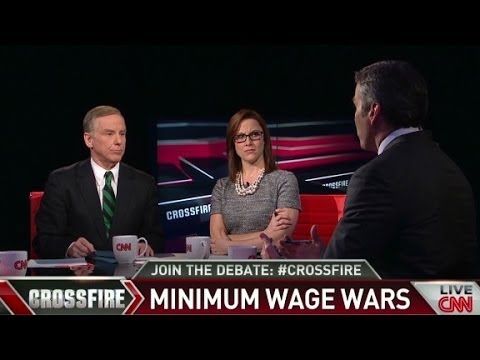
CNN: Crossfire: Minimum Wage WarsSource:CNN Crossfire.

From CNN

There are both good political as well as economic reasons for raising the minimum wage in America. If it is done right and I’m going to give you an example of why it make sense to raise the minimum wage in America.

Raising the minimum wage in America if it is done right, makes so much good sense that I can give you two good examples from both a political, but as well as an economic example and give you both of them from the Right even though I’m a Liberal Democrat.

The political example would be this: Imagine you are Joe or Mary taxpayer in America and you work very hard for a living just to pay your bills and raise your kids and you are a little angry about that and feel overtaxed, because here you are playing by the rules and doing everything you can to pay your own way. But you are also paying taxes to pay for people who don’t pay their own way because they are low-skilled. You probably feel like you have an extra burden to pay to go along with yourself and your family, even though you are not getting any extra money to pay for that burden.

As a result, low-skilled workers work low-skilled minimum wage jobs and have to collect public assistance in order to survive. Because these low-wage employers are able to pass their employee costs onto you. And have you make up the difference for these workers housing, groceries and health care. But you raise the minimum wage to ten, twelve dollars and hour with a break especially for small employers and you keep their public assistance benefits where they are now, now these low-skilled workers can pay more for their costs of living. And Joe and Mary Smith (or whoever) and many others won’t have to pay as much in taxes to make up the difference.

The economic example is pretty simple: You want more people working and fewer people collecting Unemployment or Welfare Insurance, then working has to pay more than not working so people are incentivized to work for a living. And not collect public assistance checks for a living instead. You raise the minimum wage to ten or twelve dollars an hour with a thirty percent tax break for employers especially for small employers and you have employers pay their share of the public assistance costs with like a payroll tax.

And tell employers they can get all that money back if they instead just pay their low-wage employees those costs. Or train them so they can move up in their organization or a combination of both. Now employers won’t be able to pass their employees costs on to the backs of average Joe and Mary taxpayer (or whoever) and many others and you would be able to cut the middle class tax burden in this country. The politics for Democrats are very good here.

And this would be a very good way to get Democrats to the polls in 2014 and get organize labor to help them out. It is actually good politics for Republicans as well if they are truly interested in reaching out to the working class. And not just there to carry the water for the wealthy and corporate America. Because they could say they are in favor of this as well so we can cut the taxes for average workers.

It’s not just the minimum wage, but every physically and mentally able adult in America should be incentivized not just to work, but to pay their own away. No physically or mentally able adult in America should be able to collect more from public assistance and not working, then working any full-time job. What you would make in a week working a full-time minimum wage job, should be more then what you would get from a Welfare check and not working at all. We should not just raise the minimum wage to a working wage, but subsidize the employment of low-income, low-skilled workers, to encourage as many Americans as possible to make it in America on their own.

You can also see this post at FRS FreeState, on Blogger.

Posted in Originals, TNR | Tagged , , , , , , , , , , , , , , , , , , , , , , , , , , , , , , , , , , , | 2 Comments

Crooks & Liars: Richard Eskow: Was This The Social Contract’s Comeback Year?

Source:The New Democrat 

When it comes to things like Social Security, Unemployment Insurance, Welfare Insurance, Medicare. Public Housing, Food Assistance to use several examples, I prefer the term safety net or a public social insurance system or PSIS. Which are insurances that people who need them can collect when, well they need them. But if you able to take care or yourself and you have what is called economic freedom that is the ability to pay your own bills and be self-sufficient in life with money left over to spend in things you want, then that is essentially the American dream.

Then that is exactly what you and this is how a safety net or PSIS would be different from what is called in Europe especially in Scandinavia a welfare state. Where these are all sorts of public program funded through taxes there to take care of people. I as a Liberal Democrat do not want to have to live off of government or anyone else if I’m able to take care of myself. That would be just one example that would separate me from a Democratic Socialist or a Social Democrat. Someone who bases their political philosophy on what government can do for people when it comes to economics.

If you want to use the term social contract, fine I’ll go along with that. But what I’m really in favor of when it comes to American capitalism is individual economic power. Again which is another way of saying economic freedom. And what I would like to see in this country and perhaps even go back to is an economic power system that is there for all Americans to be able to take advantage of to create their own economic freedom.

And this is where government plays its biggest role along with regulating predatory behavior. And this comes from making quality education and job training available for everyone universally to everyone K-adulthood if needed. So as many Americans as possible have that individual economic power or people power to be able to take care of themselves. And live a good life however they define that for themselves without having to use public assistance or private charity. In order to pay their own way and bills.

If you are talking about having a federal government so big especially as it relates to economic policy that it is designed to meet a lot if not most of people’s economic needs, you are no longer talking about a safety net or a social insurance system, but a welfare state. A socialist superstate big government at about as big as it can without nationalizing the entire economy and outlawing private property all together. And that is not what I’m in favor of.

Posted in New Left, The New Democrat | Tagged , , , , , , , , , , | Leave a comment

Thom Hartmann: ‘Follow the French on the Millionaire Tax’

.
Source:The New Democrat

You want everyone paying their fair share of taxes at all economic levels. Which is one of the reasons why I’m in favor of what I call the Progressive Consumption Tax. Which would accomplish most of that especially by eliminating all the wasteful tax loopholes in the tax system, including corporate welfare. But you don’t want taxes so high on anyone that it discourages people to be productive and successful. And gets them asking the question, “why should I work hard and be productive when Uncle Sam takes most of the money that I make anyway?”

We do not want taxes so high to that point which is what we saw in the late 1950s and early 1960s, with a recession, followed by weak economic and job growth. Similar to what we’ve grown through the last five years. And even though the Great Recession wasn’t a result of taxes being too high, taxes that are too high can play a role in creating recessions with people not having enough money to spend to create strong economic growth. And what we saw as a result in the mid 1960s was a Progressive Democratic president in Lyndon Johnson and a Democratic Congress with Conservative Republican help, is cut taxes across the board for everyone. Which contributed to an economic boom of the mid and late 1960s.

Posted in The New Democrat, Thom Hartmann | Tagged , , , , , , , , , , , , , , , , | Leave a comment

American Thinker: Trevor Thomas: Neal Boortz, Libertarianism & Moral Government

american thinker_ daniel payne - Google SearchSource:The New Democrat 

Barry Goldwater- “I want big government out of the bedrooms, boardrooms and classrooms”. This is what conservatism is about, conserving freedom for the individual. Familiar with individual freedom, well that is what it is. That the state meaning government whatever the level should but out of the personal affairs of the individual and that the individual is then responsible for their own decisions in life.

People for good and bad are held accountable for their own decision and we do not have to bail out bad or stupid mistakes of others that others have nothing to do with. And so we hold people accountable for their own decisions in life. So when people make good decisions, they are rewarded for it and get to keep most of the rewards for those good decisions. But when people make bad decisions, they are then held accountable for their own decisions instead of forcing taxpayers to pickup up the tab for that bad decision-making.

That is still the definition of the Conservative and what conservatism is. The Barry Goldwater/Ronald Reagan school of Classical Conservatism which is the real Conservatism in America. Which is about conserving freedom for the individual when it comes to politics. And how much better off would the Republican Party be today if they stayed with that conservative philosophy. And had they not got in bed with the Christian-Right with their brand of big government. Trying to force their religious views through government on the rest of the country.

Sure the religious-right was helpful to the Republican Party in the 1980s and 1990s. And to a certain extent in the 1970s helping to reelect Richard Nixon as President of the United States. But the Democratic Party still dominated both chambers of Congress in the 1970s and dominated a lot if not most of the state governments as well. The GOP would be better off today because Americans tend to want big government out of their wallets. But we want big government out of our lives as well.

Now here’s the definition of a religious or Christian-Conservative. Coming from either Reverend Pat Robertson or Reverend Jerry Falwell. Someone who believes that government should be based on their fundamentalist Evangelical Christian view of the bible that is anything they view as wrong or immoral, shall be illegal ,or at least looked down upon in the strictest terms by government especially the Federal Government. And the Conservative columnist Jonah Goldberg has the correct term for the religious-right and calls them nationalists when it comes to social issues.

Christian Nationalists in America do not believe in states right at least as it relates to social policy in this country. But instead their interpretation of the Bible dwarfs state government and perhaps even the Federal Government. That any activity viewed as wrong or immoral by the Christian-Conservative, shall be illegal. Even if the activity is between consenting adults and not hurting anyone. So there you have it the political Conservative or Conservative Libertarian, the Barry Goldwater or Ronald Reagan and their real Conservative followers.

Versus the religious-right or Neo-Right that really has only been around since perhaps the mid 1960s. And if it wasn’t for my differences between Conservatives or Conservative Libertarians on economic, foreign policy and national security, I would probably be a Conservative instead of a Liberal myself. And you can see how they are much different from the Christian-Right or Neo-Right in America.
.

Posted in American Thinker, The New Democrat | Tagged , , , , , , , , , , , , , , , , , , | Leave a comment

ABC Sports: MLB 1986-ALCS-Game 5-Boston Red Sox @ Anaheim Angels: Full Game

.
Source:The New Democrat 

Perhaps the best MLB playoff game at least in my lifetime. And the biggest choke in my lifetime at least in MLB with the Angels blowing a 3-1 series lead with the opportunity to win the American League Championship at home with their offense, defense and pitching. And they simply didn’t close the door to a team they probably should’ve beaten at least in six games if not five. Wally Joyner not in the Angels lineup certainly hurt them in-game 5. But you got to know that they had the Red Sox beat in the ninth inning with their closer Donnie Moore who was lights out most of the 1986 season on the mound. He makes a bad pitch to Dave Henderson and that forces the game to extra innings. But Joyner would’ve been a big force in the Angels lineup in-game 6 and 7, when the Red Sox blew out the Angels at Fenway Park.

Posted in ALB Classic Games, The New Democrat | Tagged , , , , , , , , , , , , , , , , , , , , , , , , | Leave a comment

The Majority Report: ‘Epic Debate Rematch: Sam Seder vs. Libertarian Radio Host Matt DiGeronimo’

Epic Libertarian Debate Rematch_ Sam Seder vs_ Libertarian Radio Host

Source:The Majority Report– Sam Seder vs Matt DiGeronimo.

“After another libertarian challenge was issued, a new epic debate between Sam and Libertarian radio host Matt DiGeronimo takes place on everything from Nazi’s to the minimum wage and why minimum wage increase would be nothing but good…

From The Majority Report

It sounds to me that Sam Seder was debating a Conservative Republican from the 1980s and 70s. Before the religious and neo-right took over the GOP. Who was anti-big government who didn’t want big government in their classrooms, boardrooms and bedrooms. As the old saying goes but wasn’t anti-government all together who believed in commonsense regulations. By government of the private sector like some labor and environmental laws. Instead of a modern Libertarian who tend to sound anti-government all together.

I believe Sam Seder clobbered Matt DiGeronimo at least in the minimum wage of this discussion. Matt DiGeronimo trying to make the case that if we eliminated the minimum wage. That these low-skilled workers who tend to work the minimum wage jobs would instead use these jobs. Like internships to get other jobs. Well if you haven’t even finish high school. How would this job get you a better job. But besides that what happens if you eliminate the minimum wage. The labor costs of employers now gets shifted to the tax payer. Joe and Mary tax payer and others who are simply working to pay their bills and raise their families. Who can’t afford a tax increase now would see their taxes go up which would be bad for the. Economy while employers would see their labor costs go down at the cost of the people. They need to buy their products and keep them profitable and in business.


Posted in Originals, Sam Seder | Tagged , , , , , , , , , , , , , , , , , , | Leave a comment

The Hampton Institute: Josh Hatala: ‘The Socialist Party of America: A Historiographical View’

The New Democrat_ The Hampton Institute_ Josh Hatala- 'The Socialist Party of America_ A Historiographical View'

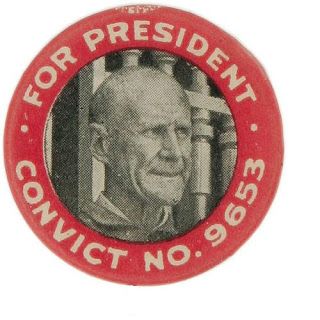
Source:The New Democrat – Socialist Party presidential candidate, Eugene Debbs.
Source:The New Democrat 

“The Socialist Party of America: An Historiographical View.” Originally from Joshua Hatala from The Hampton Institution, but the link for his article seems to have been deleted.

From The Hampton Institute

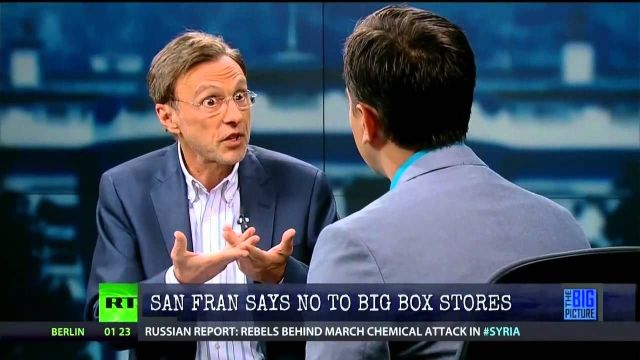
“Russia Today host Thom Hartmann invited Libertarian Republic Editor Austin Petersen to debate the merits of San Francisco’s city council voting to push chain store retailers out of the area. Hartmann questioned whether it was valid for citizens to vote if they don’t want certain businesses in their area.”

_ - 2021-04-09T172516.937

Source:Austin Peterson– debating Thom Hartmann about socialism.

From Austin Peterson 

Where I disagree with Josh Hatala on this where I could probably make this whole post about, is that there are still two somewhat viable democratic socialist parties in America: Democratic Socialists USA and the Green Party, as well as many leftist Democrats who are mainly in the Democratic Party for political reasons in order to get elected and be active in a major leftist party, even a center-left party. Socialism has failed as far as producing a major social democratic party that can compete and beat Democrats and Republicans on a regular basis.

But you got to know that U.S. Senator Bernie of Vermont (the only self-described Socialist in Congress) is a Socialist, as well as several members of the so-called Congressional Progressive Caucus, both in the House and Senate that Senator Sanders is a member of. But most of the members of the CPC prefer to be viewed as Progressives because of the negative stereotypes that come with being viewed as a Socialist or even a Social Democrat.

Socialism hasn’t failed in the sense that their ideas have failed or are considered too extreme. At least what would be viewed as mainstream both in America and in Europe that is democratic socialism, that combines both capitalism, a vibrant private sector, but that is heavily taxed and regulated to fund a very large welfare state to provide a lot of the services that people need to live well. From education to healthcare that is common in Scandinavia. A long with a safety net for people who are unemployed and so-forth. That is basically Scandinavian or Nordic capitalism, which is the mainstream form of socialism in Europe.

But even in America where capitalism was basically invented, we have a socialist component to our economic system as well in the form of our safety net for people who can’t take care of themselves. Who are out-of-work or can’t afford services that they need in order to survive like health insurance and food, even if they are working. It is just that our national social insurance system is a lot smaller in America than it is in Scandinavia.

It is not that so much that socialism has failed in America, because the democratic form of it that I just explained is alive and well. Just look at the popularity of Social Security, Unemployment Insurance, Medicare and Medicaid. All of which could and have been labeled specially by their opponents and proponents as well as socialist programs.

It is Marxism or Marxist socialism, where the state essentially is responsible for running the entire economy and to large extent the people’s lives, that has failed everywhere that it has been tried. Which is why most of the world has moved away from it.

Posted in New Left, The New Democrat | Tagged , , , , , , , , , , , , , , , , , , , , , , , , , , , , , , , , | Leave a comment