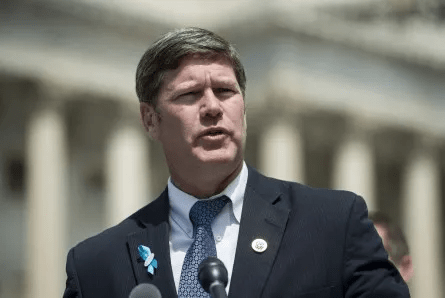
Real Time With Bill Maher: Representative Ron Paul (2008)

Attachment-1-318

Source: Celebrity Universe-Bill Maher & U.S. Representative Ron Paul R, Texas

Source:Celebrity Universe

Based on this interview and the fact they were talking about Rudy Giuliani the way they did, I would have to think this show was done in 2007-08, when Representative Paul ran for president the second time. And I mention that because Bill Maher I believe was still calling himself a Libertarian back then. And I think he even called Ron Paul his political hero. How four years or less can really change your political philosophy, or at the very least how someone displays what is supposed to be their politics.

Because Maher is still pretty liberal when it comes to free speech and defending the right to speak hate and say really insulting things and is still anti-political correctness. And some other key social issues involving civil liberties and personal freedom. But he’s way over the left now on economic policy and even calling for caps on how much money Americans should be allowed to make. And that we need a European sized superstate to take care of everyone. And that government should be completely running things like health care, health insurance, education and I’m sure some key areas of the economy.

I’m not sure how someone can say that government should stay almost completely out of people’s affairs as long as we aren’t hurting people, which is where Bill Maher was 7-8 years ago, can then say that government doesn’t mind the business of the people enough. And that we have too much choice and individualism to manage our own economic affairs at least. Wait, I got it, I know how someone can do that because it has been done before. Just ask Arianna Huffington. Who made a very similar political transition just 10-15 years ago.

Posted in Originals, Real Time | Tagged , , , , , , , , , , , , , , , , , , , , , , , , | 2 Comments

TNT: Nixon & Kissinger (1995) Starring Beau Bridges & Ron Silver

Attachment-1-951

Source:TNT Films– Ron Silver as Henry Kissinger.

“Story of how Kissinger worked to try and end the Vietnam crisis while Nixon maneuvered to keep his political image strong until election time.”

Source:TNT

I saw this movie last night in preparation for this post and I gotta admit, I like this movie more than I did twenty-years ago when I saw it for the first time.

20 years ago, I guess I was under the impression that this movie was simply about the relationship of President Richard Nixon and his top foreign policy and national security adviser Henry Kissinger. And I guess that would’ve been interesting enough, but this movie is much deeper than that. They cover most of 1972 and the Nixon Administration trying to end the Vietnam War one way or another that year. And before Election Night 1972 if all possible.

This movie is basically about the last days of the Vietnam War. When the end of that war was declared and when both countries were officially no longer at war. And after the war was officially over in late 1972 or early 73, the last two years became about how to successfully get all American personal out of Vietnam and prepare for our next relationship with the new Communist Republic of Vietnam. And Henry Kissinger who at this point was President Nixon’s National Security Director, the head of the National Security Council and not Secretary of State yet, was in charge of these negotiations.

This movie also covers the personal and professional relationship of Nixon and Kissinger. How Nixon being the paranoid man that he was and how jealous of all the good publicity that Kissinger was getting. While the American press was never a fan of Dick Nixon and him becoming President of the United States didn’t help the press in how they felt about him.

According to this movie, the Nixon White House wanted to use Kissinger and take advantage of what they brought to the White House, but at the same time make it look like Kissinger was just taking orders. And not actually running foreign policy.

This is a very good, but unfortunately short movie about two of the most fascinating and brilliant people to ever serve in the U.S. Government.

Posted in Originals, Richard Nixon | Tagged , , , , , , , , , , , , , , , , , , , , , , , , , , , , , , , | Leave a comment

CBS News: Mike Wallace- 1964 Interview of Minister Malcolm X

bef11274-f181-4e0f-8591-62076e425186

Source:CBS News– CBS News, interviewing Minister Malcolm X, June, 1964.

“Malik Shabazz aka Malcolm X (1964) – Interviewed in his home on June 8, 1964 by Mike Wallace of CBS News. Aired the following day on CBS Morning News.”

Source:1st Gen Refugee

Malcolm X made perhaps the most honest and truthful statement he ever made in life in this interview late in the interview, when he said in response to Mike Wallace’s question: “Have any death threats been made against you?” With Malcolm saying: “Yes, I’m probably a dead man already.”

I believe Malcolm was already moving away from the Nation of Islam anyway and moving in the direction of separation of the races in America might not be necessary after being exposed to Caucasians and people of other races in Mecca.

But then to basically accuse the Leader of the Nation of Islam Elijah Muhammad of not just having bastard children, but having bastard children with multiple women, would be like an Iraqi in 1990 or something running to the streets of Baghdad and calling for the death of Saddam Hussein. There are certain things you don’t make public if you want to continue to be healthy and stay alive. Especially when you live in a dangerous environment to begin with. When you’re not just taking on the establishment, but taking on the establishment of your own community.

Elijah Muhammad did live multiple lives. The man in public as being this morally superior man who could guide the African-American community and show them how to live and improve themselves, was a different man in private. To the point that he cheated on his current wives, had multiple wives, fathered multiple children with multiple women at the same time. And perhaps even ordered hits on people that he saw as threats to his leadership, including Malcolm X.

Posted in Malcolm X, Originals | Tagged , , , , , , , , , , , , , , | 1 Comment

Foreign Affairs: Michael T. Klare: ‘Hard Power, Soft Power & Energy Power’


American Oil

Source:FRS FreeState– An example of energy power

“The debate over whether U.S. interests abroad are better served by hard power—coercive means such as military force—or soft power—less aggressive means of persuasion, such as diplomacy, economic aid, and propaganda—is perennial. Since becoming president, Barack Obama has emphasized soft power, suggesting that an over-reliance on military force has alienated many of the United States’ friends and allies without achieving much in return. But many Republicans, and even some Democrats, accuse him of overcorrecting and, in turn, inviting bad behavior from the likes of Syria’s Bashar al-Assad and Russia’s Vladimir Putin. For all their finger-pointing, both parties have, in reality, come to embrace an intermediary approach—what can best be called “energy power.”

From Foreign Affairs

“In the 2013 Report Card for America’s Infrastructure, America’s Energy sector was awarded a “D+”. To learn more about America’s grades and to download the 2013 Report Card for America’s Infrastructure, please visit:ASCE.”

From ASCE

I’ve been thinking about this myself, but up until now have never gotten around to blogging about this. But what if in response to Russia invading Ukraine and threatening to cut off Ukraine and Europe from oil and gas that Europe desperately needs, America and Canada and perhaps Mexico stepped in and said, “we’ll give you what Russia has given you to make up for what they cut off and give it to you at cheaper rates. In exchange you continue to enforce current economic sanctions on Russia, as well as impose new ones.”

Russia is already headed for recession this year and if it wasn’t for their energy sector they would already be there. Because they don’t have much else going for their economy other than their energy and military sectors. They have a very education system and produce a lot of well-qualified workers, but who can’t get good jobs because of President Putin’s unwillingness or inability to develop the rest the Russian economy. While we are also helping Ukraine develop their own military and economy and be able to ditch Putin’s Russia.

Whether you’re talking about hard power which tends to be the neoconservative response to foreign crisis’, or soft power which tend tends to be the liberal response and to a certain extent energy power as well, none of them are silver bullets that can stop military conflicts on their own. Unless you not only have overwhelming force and use it and aren’t too concern about the lost of innocent lives as a result. But what I prefer as a Liberal is Smart Power where you put all of your options on the table and use the best of what you have to work with. And not become overly dependent on any one form of response.

Posted in Foreign Affairs Video, Originals | Tagged , , , , , , , , , , , , , , , , , , | Leave a comment

Sam Seder: Philip Mirowski: ‘How Neoliberalism Survived The Financial Meltdown?’

How Neoliberalism Survived the Financial Meltdown (w_ Philip Mirowski)

Source:Sam Seder– talking about Chicago Mayor Rahm Emanuel. (I presume)

“Professor Philip Mirowski author of Never Let a Serious Crisis Go to Waste: How Neoliberalism Survived the Financial Meltdown, explains the intellectual history of Neo-liberalism, what Neo-liberals believe, making capitalists think differently, the role of think tanks in Neo-liberalism, the mythology of market supremacy, how Facebook teaches you to be a Neo-liberal agent, shaming and Neo-liberalism, how policy movements are built, climate and the affordable care act and Neo-liberal power and how the left can respond to Neo-liberal dominance.

From the 6/26/14 episode of the Majority Report

This clip from the Majority Report, live M-F at 12 noon EST and via daily podcast at:The Majority Report.”

From Sam Seder

To me at least neoliberalism and libertarianism at least when it comes to economics are different things. Economic liberalization where you’re talking about decentralization of the central state and privatizing state-owned industries and companies and empowering people to own property. That is different from saying that the state should simply get-out-of-the-way and just worry about criminals who physically hurt innocent people and steal their property and that sort of thing.

And then move up to the mid and late 1990s economic liberalization has been about empowering people at the bottom and near-bottom and struggling working class to move up and live in economic freedom as well. Through things like education, job training, infrastructure, trade, targeted tax cuts to the struggling middle class and people in poverty. Eliminating unnecessary red tape and that sort of thing.

Today’s so-called ‘Modern Liberals’ who are really the New Socialists, people who aren’t Marxists, but still Socialists because of the amount of involvement they want government to have in the economy hate these policies. Because it means less power for the state and more freedom and choice for the individual.

The New Socialist or Social Democrat wants the power to be in the hands of the central government on behalf of the people to be used for everyone’s benefit. Under the theory when we are more collectivist less individualistic, we move better as a society, than when the people have the freedom to fail or succeed.

Posted in Originals, Sam Seder | Tagged , , , , , , , , , , , , , , , , , , , , | 3 Comments

Roll Call: Emma Dumain: ‘New Democrat Coalition Wants Bigger Role in Party’s Message’

Centrist New Democrats Want Bigger Role in Party's Message - Roll CallSource:Roll Call– U.S. Representative Ron Kind (Democrat, Wisconsin) one of the leaders of the New Democrat Coalition in the House.

You can also see this post at FreeState Now, on Blogger.

“Members of the New Democrat Coalition have struggled for years to make their centrist message heard in the larger, and distinctly more left-leaning, House Democratic Caucus.

The 46 self-described “moderate” and “pro-growth” House members in the coalition say they agree with the rest of their caucus on “90 percent of the issues” — it’s the remaining 10 percent that’s harder to summarize.

How difficult? Rep. Derek Kilmer, D-Wash., shares a joke he tells about the group to illustrate the point.

“The New Dems’ message doesn’t fit on a bumper sticker,” he told CQ Roll Call. “So I said we should stand on the steps of the Capitol and shout, ‘What do we want? A comprehensive approach to job creation that includes tax reform, investments in infrastructure and a pro-growth budget that invests in our future! When do we want it? Well, we want to work in a collaborative way to bring people together!’

“I should probably have thrown education in there, too,” Kilmer added. “That would be a part of the chant, too.”

The New Democrat Coalition members have long bemoaned their exclusion from the leadership table that’s typically — especially now — skewed to the left.

But with Democrats of all stripes evaluating what went wrong in the 2014 midterms and wondering how to win back seats in 2016, members of the group see an opening to really be heard — and hopefully taken seriously.

That’s why, for the first time in its nearly 18-year history, the group is putting out a comprehensive legislative agenda.

The two-page document, obtained early by CQ Roll Call, lays out what the New Democrats think the party needs to do to compete in moderate swing-districts around the country, where Democrats have suffered major losses.

“There is a role for us to play,” said New Democrat Coalition Chairman Ron Kind of Wisconsin. “We’ve got to have a more active role and meaningful voice, or these districts are going to be harder and harder to defend going forward.”

The two-page document, obtained early by CQ Roll Call, lays out what the New Democrats think the party needs to do to compete in moderate swing-districts around the country, where Democrats have suffered major losses.

“There is a role for us to play,” said New Democrat Coalition Chairman Ron Kind of Wisconsin. “We’ve got to have a more active role and meaningful voice, or these districts are going to be harder and harder to defend going forward.”

The New Democrat Coalition’s “American Prosperity Agenda” highlights policy areas that mainstream Democrats have largely glossed over. The “innovation” platform urges members to talk about ways to ensure the United States “lead[s] in the next great discoveries” and “become[s] the global magnet for the world’s top talent.”

Then there are the areas where members of the Congressional Progressive Caucus — who currently make up the largest demographic of House Democrats — are likely to flat-out balk.

The New Democrat Coalition says the party ought to “fix the tax code to create American jobs and help American businesses compete” — or support a tax overhaul that would be friendly to the business community, which progressives increasingly regard with skepticism.

The members often use phrases preferred by Republicans, such as “lower regulatory obstacles” and “hold our schools accountable for results.”

And then there’s the reference to Trade Promotion Authority, an issue that is already dividing House Democrats and could be the source of some of the biggest intraparty fissures in recent memory.

The Blue Dogs also were frequent thorns in leadership’s side. The New Democrats say they don’t want to be that, either.

But many stakeholders say the coalition needs to be more aggressive when it comes to fighting against campaign tactics they say have cost Democrats their majorities in both chambers, and they hope the “American Prosperity Agenda” is a step in that direction.

“Look,” said Jim Kessler, a co-founder and vice president of policy for Third Way, an outside group that works closely with the New Democrat Coalition. “I think on the one hand, there’s never been more interest in what the New Dems and moderates are saying within the caucus and throughout Washington. At the same time, there’s never been more hostility.”

Kessler said that while the New Democrats want to “govern,” the progressives represent the “advocacy wing of the party that often times is happy having the fight rather than coming to some sort of conclusion.”

Will Marshall, president of the Progressive Policy Institute, said that House Democratic leaders ultimately have a responsibility to represent the ideology of the majority of their members.

“The leaders have to reflect the caucus, right? And numerically speaking, the people in the caucus now have the lefter-tilt,” Marshall explained. “To the extent that there’s resistance [to the New Democrats], I don’t think it comes from the leaders as it does from the left wing of the party. Folks that are in very safe Democratic districts, very urban districts that produce supermajorities, people who are not vulnerable, they’re just under a different set of incentives and frankly they have closer ties to groups that are happier with the party’s status quo than the moderates are.”

New Democrats speaking with CQ Roll Call wouldn’t insert themselves into the fray. “It’s awfully easy when you don’t win an election to start turning on each other,” Kind said.

New Democrat Whip John Carney of Delaware just hopes the “American Prosperity Agenda” proves to be a useful tool, in many ways, in the months ahead.

“We’re developing a vision and something that we can all rally behind and understand,” he said. “Here’s what we’re all about. Here’s our area of focus. These are a series of things that we bring to the table and our caucus can build on, our common values and objectives.

“It’s a message we can take to constituents back in our own districts,” he said. “We can use it to pick up districts as we try to expand our caucus.”

From Roll Call

“Congressman Jim Cooper and the New Democrat Coalition urge bipartisan action to address our fiscal situation.”

CNN 11-15-12_ Cooper urges action on _fiscal cliff_Source:Jim Cooper– and the House New Democrats.

From Jim Cooper

If you look at the two-party system in America, you’ll see a Democratic Party that’s supposed to represent the center-left (not left-wing) coalition in America and a Republican Party that’s supposed to represent the Center-Right (not right-wing) coalition in America. And by in-large that’s still true even today.

There are still more Progressives (in the classical sense) in the Democratic Party, than in the Republican Party. And there are still more Conservatives (in the classical sense) in the Republican Party, than in the Democratic Party. But two-party system are the key words here. Not every American is either a Progressive or Conservative, politically. We are a lot more ideologically diverse than that and you see that both in the Democratic Party and in the Republican Party.

Pre-1970 or so and you can go back as even 1965, the Democratic Party was essentially made up of center-right Liberal Democrats and center-left Progressive Democrats in the North. And you had right-wing, Dixiecrat, Neo-Confederate Democrats in the South.

The center-right in the Democratic Party, were the JFK Liberal Democrats and people like Senator Henry Jackson (Democrat, Washington) people who were very pro-civil rights and believed in a safety net for people who truly needed it, but were also very strong believers in liberal democracy (which is why they’re Liberal Democrats) and were very hawkish on foreign policy and national security. The so-called Neoconservatives, who are Progressive Republicans today, were Liberal Democrats in the 1960s and 1970s.

Thanks to the mainstream media and their ignorance of political philosophy and terms, as well as Far-Left Democrats who call themselves Liberals, The New Democrat Coalition in Congress today, who are mostly in the House, but who have a few members in the Senate as well, get called centrists or moderates. But in actuality, they’re JFK Liberal Democrats, who get called Neoconservatives or centrists today by the so-called mainstream media and others.


Posted in Originals, Roll Call | Tagged , , , , , , , , , , , , , , , , , , , , , , , , , , , | 1 Comment

AEI: ‘Representative John Delaney’s American Infrastructure Fund proposal: An Idea Whose Time Has Come?’

U.S. Representative John Delaney, D, Maryland

Source:AEI– U.S. Representative John Delaney: Democrat, Maryland.

“Although most politicians on both sides of the aisle support increased investment in US infrastructure, few agree on the source of necessary funds. In his keynote address at AEI on Tuesday, Representative John Delaney (D-MD) outlined his Partnership to Build America and Infrastructure 2.0 bills, which combine infrastructure funding with a plan to tax profits earned by US corporations in foreign countries. According to Rep. Delaney, his proposal would bring corporate money back to the United States and would stimulate economic growth through improved infrastructure.
One thing that actually has bipartisan support in Congress and in the rest of Washington is the need for infrastructure investment. Except for perhaps Libertarians everybody wants to do it and understands the needs for it and it really is just a matter of how to finance it. Because now need in the trillions of dollars in new infrastructure investment in this country according to the U.S. Core of Engineers. And that number just gets higher and more expensive the longer we wait or simply do nothing because of gridlock.”

From AEI 

“In January, Representative John Delaney (D-MD) introduced a bipartisan bill to create a leveraged American Infrastructure Fund, a wholly owned government corporation capitalized by taxes on repatriation of foreign profits at a favorable rate. He has since expanded the proposal to make the tax on foreign profits mandatory and to use the revenue for the financially challenged Highway Trust Fund and for the Infrastructure Fund. According to the bill, the Infrastructure Fund could issue debt with up to a 15:1 leverage ratio and extend credit up to $750 billion “with no profit motive,” but credit would “not be backed by the credit of the United States.”

During this AEI event, Rep. Delaney presents and discusses his proposal, which he has described as “a natural deal.” A panel of experts examines the issues involved in combining foreign profits and infrastructure finance in this fashion and whether the proposal indeed represents an idea whose time has come.”

American Infrastructure Fund proposal_ An idea whose time has come_

Source:AEI– the American Enterprise Institute, in Washington.

From AEI

One thing that actually has bipartisan support in Congress and in the rest of Washington is the need for infrastructure investment. Except for perhaps Libertarians everybody wants to do it and understands the needs for it and it really is just a matter of how to finance it. Because now need in the trillions of dollars in new infrastructure investment in this country according to the U.S. Core of Engineers. And that number just gets higher and more expensive the longer we wait or simply do nothing because of gridlock.

I like Representative Delaney’s idea of huge new infrastructure investment and we need to go real big and into the trillions in one bill. And do that over a 5-10 year period, because again we are going to have to pay for this upfront and if that means new revenue, you want to stretch that out so you don’t have raise a lot of new revenue real fast. And take a lot of money out of the economy upfront when the economy finally starting to recover fast. You also want to raise the money in a way so more jobs are sent out of the country as a result to avoid paying taxes.

So I don’t like Representative Delaney’s way of paying for infrastructure for a couple of reasons. One, it would send more jobs oversees by raising taxes on business’s. Two, it’s not just business that uses our infrastructure. We all do as a country and because of that we should all pay for it. And pay for it in a way that it doesn’t hurt people especially the less-fortunate in the country. I like the idea of bringing in business to finance these projects. But not through taxation and instead incentivize them to invest in infrastructure projects.

Which is why I’m in favor of what is called a National Infrastructure Bank. Which would be a non-profit independent corporation that would be in the sole business of prioritizing infrastructure projects and deciding what should be built and repaired. And then going to the private sector to get people to invest in the projects that the investors would get back in profits from the people who use the projects. The bridges, roads, airports, schools and everything else.

We should have a two-track plan to rebuild America. One that is upfront and takes care of current and older infrastructure needs. Which could be financed from oil and gas revenues, alcohol, tobacco and hopefully one day soon marijuana taxes. And that could be handled through Congress simply passing a large highway bill that would cover those projects and costs over that 5-7 year period.

And then long-term we need to finance infrastructure as well and that is where the NIB could come in. And could handle anywhere between 100-200 billion-dollars a year in infrastructure in this country. And when was the last time America invested that much money in infrastructure. The 2009 American Recovery and Investment Act, which was emergency legislation to deal with the Great Recession.

Posted in AEI Video, Originals | Tagged , , , , , , , , , , , , , , , , , , , , , , , , , | 1 Comment

NORML: U.S. Congress: Legislation Introduced To Get The Feds Out of The Marijuana Enforcement Business

Source:NORML

Representative Jared Polis has been against the War on Drugs and in favor of marijuana legalization as long as I’ve known of him and I believe he was elected to the House in 2007. And has worked with Ethan Nadelman and other anti-drug war groups in Colorado the state he represents and other places. So Representative Polis is not a Johnny-come-lately to marijuana legalization. Someone trying to seem hip or cool with young voters who are against the drug war and are in favor of marijuana legalization. He has a long consistent record on this.

All Representative Polis and Representative Earl Blumenauer another Democrat, but from Oregon would do, is get the Feds out of the business of criminalizing marijuana. So if another city or state decides to legalize marijuana the people there who choose to get involved in marijuana, adults that is won’t have to worry about the Feds arresting them for that. Even if marijuana is already legal in their state. Thats all I’m asking for really is to get the Feds to butt out and worry about Federal matters and see what the states do on this issue.

What I and Jared Polis are in favor of is exactly what the drug warriors are against both the Neoconservatives and Progressives. Because you get the Feds out-of-the-way and similar to same-sex marriage you’ll see several states move to legalize because not they won’t have to worry about the Feds arresting their people as a result. Because a lot of states especially big states like Texas that have high prison populations are already looking at legalizing or at least decriminalizing marijuana because of the high cost of having so many low-level non-violent offenders in prison. Who don’t represent a security threat to their state.

Posted in Congress, Originals | Tagged , , , , , , , , , , , , , , , , , , , , , , , , , | Leave a comment

Foreign Policy Journal: Paul Craig Roberts: The Neoconservative Threat to International Order

Attachment-1-1082

Source: Foreign Policy Journal – Paul C. Roberts-

Source:Foreign Policy Journal

This is going to sound somewhat partisan at least from a Neoconservative’s perspective and if that is the case you’re more than welcome to way in on this and attempt to contradict me. But then I’ll get to Europe where I believe there is a lot of common ground on both the Left and Right when it comes to foreign policy and national security.

The reason why we are dealing with all of these independent terrorists groups now that are free to flow everywhere in Africa, the Middle East and Eurasia is because of the 2003 War in Iraq. ISIS didn’t exist pre-Iraq and yes the War in Afghanistan was something we had to do because the Taliban in Afghanistan were subsidizing and protecting the terrorists who were responsible for 9/11. And even though it has taken a long time thanks to the War in Iraq and Afghan corruption that mission is starting to finally pay off. As that country is finally stabilizing and their economy is finally moving.

The Middle East was a fairly stable area pre-War in Iraq. And as horrible as the Saddam Regime was there and most people including myself are glad he’s no longer running that country and even dead, you didn’t have terrorists in Iraq killing Americans before the war. And you didn’t have terrorists occupying Northern Iraq and Northern Syria. Which would be ISIS today because the central government’s in both countries were strong enough to secure their countries even if they were horrible to their people.

You also didn’t have a jealous Vladimir Putin as President of Russia thinking who needed to make his own power play because of what America was doing to countries that were close to Russia. Part of President Putin’s justification for invading Ukraine has been that he doesn’t believe America should be the sole power in the world that can act unilaterally even in their own interests. The world was a much safer place in 2002 pre-Iraq when our main security threat was Al-Qaeda, a nuclear armed North Korea that still can’t even feed its people. And a potential terrorist state in Iran getting nuclear weapons.

Now where there I believe there is bipartisan agreement, lets look at Europe. Part of the rise of Russia has to do with the fall, or at least steep decline in Europe. Where only Germany as far as a large country in Europe has a healthy economy. But Europe is falling in population and young people and gaining in older people. Because they don’t take in many immigrants each year unlike America and as a result their social democratic economic systems are collapsing. Britain, France, Spain, Italy and Greece all drowning in high debt, and deficits, unemployment. Greece having to take a bailout package that is actually larger than their national economy to stay afloat. And have just elected a new socialist government that’s against austerity.

But if that is not bad enough for Europe, as their populations and economies continue to decline, so does their militaries. Where NATO is essentially just made up of America now as far as real military threat. And to a certain degree Britain, France and Germany to some extent. Europe is more than capable of responding to Russia in any way themselves at least as far as resources, but has chosen not to. Wouldn’t be great to go back to 2002 and far as the security situations for the Western world, but subtract George W. Bush for Al Gore and only be dealing with Afghanistan right now. But we of course can’t go back in time.
Secular Talk: The O’Reilly Factor- Bill O’Reilly Grills Vice President Dick Cheney

Posted in Neoconservative, Originals | Tagged , , , , , , , , , , , , , | Leave a comment

The American Prospect: Robert Kuttner: ‘The Libertarian Delusion’

Attachment-1-1604

Source: The American Prospect– Free markets aren’t everything

Source:The American Prospect

Just to start off about the so-called free market and if we’re going to talk about the free market we might as well talk about Santa Clause since neither one of them exists. As much as Libertarians and so-called Conservatives talk about the free market, that is not what they’re talking about since their market wouldn’t be free. Sure, perhaps from government regulations, but non-regulated market is not a free market. Especially if government is subsidizing that market through taxpayer-funded subsidizes.

The other thing about the so-called free market is that business is just part of it. Government is another part, workers are another part and consumers perhaps the most important part of the market. Because without consumers where would business get the resources to do anything and pay their workers. Where would government get the resources to do, well anything. So when you say the free market should set wages, prices and anything else. Are you saying that government, business, workers and consumers should all come together like a Congressional conference committee and decide what the wages and prices should be? Or are you talking about something else.

When Libertarians or Conservatives talk about the so-called free market they sure as hell aren’t talking about bringing the whole market together do negotiate those key issues. They are talking about getting government out-of-the-way so business’s can make these decisions for themselves. Under their so-called free market there would be no such thing as organized labor or collective bargaining. Because again business would have the power and be free to make all of those decisions themselves. So as long as we’re talking markets free or otherwise let’s be clear and factual about what we are talking about.

So what type of market are we talking about if we’re not talking about a free market? We’re talking about the private market and private enterprise. Which is what produces most of the products that we all consume, pay for and generally enjoy and tend to pay for at affordable rates. And everyone whose to the right of a Marxist meaning the Democratic Socialist all the way over to the Libertarian on the Right believes in some form of a private market. It all depends on what type of private market and how big it should be. How much it should be regulated and how much it should be taxed. With the Democratic Socialist the market would be the smallest and most regulated. With the central government being the dominant player. With the Libertarian the private market would be the biggest and not regulated or taxed at all.

And since we all want a private market, well everyone except for the Marxist, it’s just a question to what degree. And for me as a Liberal I want a huge market with as much freedom and choice and consumers with money to spend as possible. That is regulated and taxed yes, but to protect consumers and workers from predators. And to provide government with the resources that it has to have to provide the services that only it can provide and that it does well. Security, law enforcement, regulations, education, infrastructure, safety net and job training for our low-income low-skilled adults so they can also live in freedom and off of government dependence.

The libertarian idea of the market is basically government go home. Other than protecting the borders and stopping criminals that hurt people. The social democratic idea of the market is that government provides most of the essentials that people need to live well in life. With private enterprise being for things that are more luxury items and things we would use recreationally and transportation. But that the central government provides us with most if not all the essential insurances that we need in life. That people would be free not to take responsibility over their own lives and not to have to make choices. I want an educated society that is protected from predators with everyone having the knowledge to be able to manage their own lives themselves both from an economic and personal perspective.
Liberty Pen: John Stossel- The Free Market & Income Inequality

Posted in New Left, Originals | Tagged , , , , , , , , , , , , , , , , , , , , , , , | 1 Comment