Democracy Journal: Rich Yeselson: What New Left History Gave Us

Attachment-1-1029

Source: Dissent Magazine 

Source:Democracy Journal

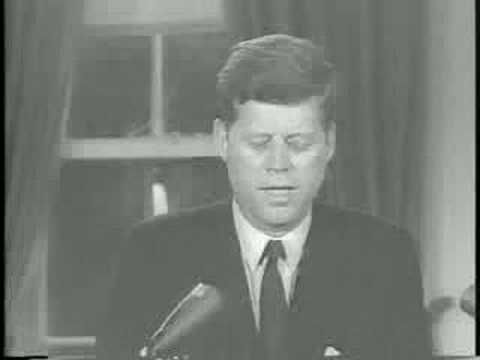
For someone whose really interested in liberalism instead of socialism, than I suggest you read about John F. Kennedy and Wendell Willkie. Because back in the early 1960s and really through that decade even with the emergence of the New-Left in the late 1960s, there was a common term on the Left called Cold War Liberal. Someone who believed that liberty was worth defending. That you needed to be both strong at home with as many people as possible who were doing well who were economically independent. With government having a responsibility to see that as many people as possible could live in freedom. But that again liberty was worth defending and you needed to be strong enough to defend yourself and help other countries who wanted freedom as well. Jack Kennedy was a Cold War Liberal.

Pre-1967 or so that was not just how liberalism was seen, but what it actually was and I at least argue that it still is. That liberalism hasn’t become a statist ideology with a welfare state in our economic lives and a nanny state in our personal lives. That what happened was the New-Left in America instead hijacked liberalism and took it away from the Center-Left where it has always been in America since the creation of the Federal Republic. And made it look like a Far-Left statist ideology that it is seen as today by way too many Americans. The New-Left comes on the scene with their socialist statist anti-military and law enforcement, establishment movement. Looking to tear down a lot of the things that has made America great.

The history of the New-Left is that of a socialist Far-Left movement that wanted and still wants to completely transform the American way of life and form of government. Bring Scandinavia to America, cut in half if not eliminate the American military. And create a central government good and big enough to take care of the people. Where individuals and states would no longer have to do that because Uncle Sam would step in and do that for them. The New Left of the 1960s is why there are New-Left publications like The Nation, Salon, AlterNet, TruthOut, TruthDig and many others today. Because the New-Left and the sons and daughters of the New-Left are around to give them that audience. And why we also have a Green Party today.
Sam Seder: Cliff Schecter- The Rise of The New Left

Posted in New Left, Originals | Tagged , , , , , , , , , , , , , | Leave a comment

Reason Magazine: Why Medicare Will Always Need Fixing

“Over the last 14 years, Medicare’s Sustainable Growth Rate formula—the SGR, which was passed in 1997 as a way to keep Medicare spending growing in line with the economy—has scheduled deep cuts to physician reimbursements on 17 different occasions. On each of those occasions, Congress has avoided the cuts by passing a patch—a temporary postponement of the payment reductions called for by the SGR that is always referred to by the same name: the doc fix.

Sometimes a doc fix would last a year or so. Sometimes a doc fix would last just a few months. But no longer how long it lasted, it always ended the same way, with Congress once again staving off deep reductions to physician payments by putting together a financing package—always the biggest challenge—and, usually at the very last minute, passing another one.

The cuts called for by the SGR created an odd situation: On the one hand, it made physicians understandably anxious by scheduling major reductions to their Medicare payments (usually in the range of 25 percent) every year or so. On the other hand, the repeated patches meant that practically everyone assumed, not unreasonably, that Congress would never really let the cuts go into effect.

Source:Reason Magazine

This is really about adding onto the Affordable Care Act of 2010. Which I supported then and I support now, but even great legislation which the ACA even with its best supporters doesn’t qualify as, at least yet need to be improve and reformed from time to time. But to talk about the so-called doc fix that is part of Medicare first and the I’ll get into expanding Medicare. But the doc fix is what is known as the physician payments from Medicare to doctors who take Medicare patients. It is very expensive because Medicare only takes senior citizens. Not exactly the most healthy members of our society. And as a result their health care can be very expensive. Which is one of the problems with Medicare.

The doc fix I believe is fairly simple to fix in practice, but harder to get passed into law, because it would mean that Congress wold have to take on people they aren’t comfortable taking on. The special interests that made it possible for them to be in the House of Representatives or Senate. Instead of paying doctors based on how much health care they give their patients, we could pay them based on their outcomes. Pay for quality care instead of quantity care. Subsidize doctors based on how healthy their patients are and encourage them to take steps to prevent their patients from having to have expensive health care in the future by taking care of themselves upfront. Instead of paying doctors based on how unhealthy their patients are and how much health care they have to give as a result. Similar to education, we should pay for performance, not pay for simply showing up to work.

Now another way to cut the costs of Medicare is to have more people on it. Young healthy people meaning and doing what we should’ve done in 2010 as part of the Affordable Care Act and putting in the public option. Making Medicare available to everyone and giving non-senior adults the option of taking Medicare as their health insurer for themselves and their kids. Which could be paid for simply by the people who use it. You wouldn’t have to expand the payroll tax because the new customers would pay for their own Medicare out-of-pocket and through their employer. Which would expand health insurance coverage, but also cut the overall costs of Medicare, because we would have younger healthier Americans on it including children.

We wouldn’t have to expand the Federal Government to cover the Medicare public option. We could allow for the states to set up their own Medicare systems under basic national standards. Not designed to run the states programs for themselves, but to see that Medicare dollars are used simply for that and nothing else. That their Medicare program remains non-profit and public and that it is treated no worse or better than private non-profit health insurers. This is something that we would’ve done 5-6 years ago. It passed in a Democratic House of Representatives and could’ve passed in a Democratic Senate under what is known as budget reconciliation. Where it only take fifty-one votes for final passage and not sixty. And something we should do now.

Posted in Originals, Reason | Tagged , , , , , , , , , , , , , , , , , , , | Leave a comment

American Enterprise: Arthur Brooks & Robert Doar: Welfare Reform & Lessons From The United Kingdom

Source:AEI

I don’t agree with U.S. Senator Jeff Sessions on much if anything. But C-SPAN was covering the Senate Budget Committee markup yesterday and I saw part of that as the committee was voting on amendments to Senate Republicans budget plan for this year. Senator Sessions Republican from Alabama had a Welfare amendment to the Republican budget. And his basic point which I think is sound was that its been about twenty-years since Congress passed Welfare Reform. And twenty years since they worked on major reforms to our social insurance system. And its time for Congress to reexamine our federal Welfare programs.

When Republicans won back the House of Representatives in 2010 and took over in 2011 there was that famous Ryan budget. Offered by Representative Paul Ryan then Chairman of the House Budget Committee and now he’s Chairman of the Ways and Means Committee. A big part of House Republicans deficit reduction strategy had to do with the American safety net. They argued that since the Great Recession America has spent billions of dollars on our public assistance programs. And these programs have grown so much in size and since we now have this deficit and debt, its time to cut back on them. Of course not realizing or acknowledging that the reason for the growth in those programs has to do the Great Recession itself. Not because Americans have quit work to jump on Welfare.

I’m all for reducing the size and need of our social insurance system. But you don’t do that by cutting and running or slashing and burning. You just make the problems worst and make people desperate who are simply looking to survive. What you do is you move those people off the those programs and into the workforce with good jobs. You make work pay and pay more than not working and that means increasing the minimum wage for workers and making that higher than what would someone get whose on Welfare and is not working. You don’t just make education and job training available for low-income workers and non-workers. But you make them requirements that if you’re on Welfare that part of what you’re going to do while you’re on Welfare is finish your education. Whether you’re working or not.

The way to reduce Welfare spending is to have fewer people in poverty. You do that by having a larger middle class and more people who are economically independent. That comes through things like more economic development and infrastructure investment in low-income communities. Education and job training for low-income workers and non-workers. Making work pay and pay than not working. Increasing today’s minimum wage for workers and applying the old minimum wage to non-workers on Welfare. Which will send a great message to people especially with kids. That they can make more money working than not working even at service jobs and still collect the public assistance they need. Including education to be able to move up and get out of poverty. That is how you reform Welfare.

Posted in AEI Video, Originals | Tagged , , , , , , , , , , , , , , , , | Leave a comment

Foreign Affairs: Graham K. Brown & Arnim Langer: Lessons From Affirmative Action Around The World

Affirmative Action

Source: Foreign Affairs Magazine

Source:Foreign Affairs

Imagine fifty-years ago when the U.S. Government under the Johnson Administration had a federal policy designed to empower racial and ethnic minorities in this country who were stuck in poverty that was built around infrastructure, education and job training. That all of that money, or at least some of it that went into the Great Society was put into low-income communities. Things like roads, bridges, schools, health care centers, job training centers, incentives for economic development. Are we still looking at an African-American poverty rate of thirty-percent today and a Latino-American poverty rate of twenty-five percent today?

Fifty-years later after affirmative action, who’s benefited from it the most part. Caucasian-American women who were already doing well. And Asian-Americans who were already doing well. Latinos are doing better, but a lot of them have come to America and started their own business’s. And some of them have benefited from affirmative action. Like the kids of immigrants and others. And yes African-Americans no longer have a poverty level of fifty-percent and that is a good thing. But at thirty-percent it is still twice that of the national average. About the level they were fifty-years ago. Twice that of the national average.

So what we’ve done as a country with affirmative action is to tell Caucasian men and women as well, as well some Asian-Americans, that they are already doing very well in this country. And because of that they are going to be denied access in some cases like at college and federal contracts, so people who aren’t doing as well and in many cases aren’t as qualified for those opportunities to have that new access so they can do better as well. And a lot of African and Latino-Americans have taken advantage of that access that they wouldn’t of gotten except for affirmative action. But at the expense of Caucasians and Asians who were more qualified going in.

I’m all for empowering people of poverty regardless of race and ethnicity to do well in America. That is something I believe as a Liberal, liberating people from poverty. But there’s a right way to do that and a wrong way. And the wrong way to empower people who are struggling at the expense of people who are doing well and have taken advantage of the opportunities they were given in life by working hard and being productive. What you do with people who are struggling is give them opportunities to get themselves out of poverty. You invest in their communities with new economic development. You give them education and job training opportunities so they can get themselves the skills that they need to get a good job. You modernize their schools, roads, bridges and everything else that communities have to have to be strong.

And when you invest ins struggling communities, you invest in inner cities and rural areas. And you don’t make those communities even poorer by building new public housing projects in those communities, so you have more poor people moving in there. And even few property owners and leaving the schools there without the resources that they need to give their students a good education. You instead put public housing projects in economically successful areas. So the residents there can immediately get the resources that they need to be able to live a good life. Where their kids can go to good schools. While you’re tearing down or renovating the public housing projects in poorer communities as part of a community rebuilding plan.

We could’ve been doing these things fifty-years ago when economic times were good and weren’t running up huge debts and deficits. Even with the Vietnam War, instead of affirmative action. Instead concentrating so many poorer Americans in one community where they are dealing with bad schools for their children. Where the parents of these kids haven’t finished school themselves in many cases. Where they are dealing with high crime and criminal gangs. Because when business’s leave communities crime tends to move in. Because the resources aren’t there to fight crime in an effective way. And with a better more proactive and even more liberal approach to economic inequality, we could be dealing with much lower poverty rates in this country.
Associated Press: Asian-Americans Weigh in On Affirmative Action

Posted in Foreign Affairs Video, Originals | Tagged , , , , , , , , , , , , , , , , , , , , | Leave a comment

Salon: Opinion: Mike Conrad: America’s Anti-Liberal Myth: Why Democrats Learned The Wrong Less From 1984

U.S. Vice President Walter Mondale

U.S. Vice President Walter Mondale


Salon: Opinion: Mike Conrad: America’s Anti-Liberal Myth: Why Democrats Learned The Wrong Lesson From 1984

Just correct some of the things that Mike Conrad said. Walter Mondale lost badly in 1984 to Ronald Reagan winning just one state and just over forty-percent of the popular vote not because he was seen as too liberal or too Far-Left. But because he was President Jimmy Carter’s Vice President. President Carter if you remember back in 84 and before that was one of the most unpopular president’s in at least modern American history. 1984, after some really bad economic times in the late 1970s and early 80s, was a year when the American economy started bouncing back. Even with the debt and deficits going up, but people were going back to work with strong economic growth again.

Which meant President Reagan could point how things are now going well, meaning 1984 and say something to the effect, “its morning in America again. Our long national economic nightmare is finally over. People are going back to work and earning a good living again. With the cost of living going down again. Oh by the way, remember 1978-79 and 80 and President Jimmy Carter? Do you really want to go back to that again? And oh by the way, my opponent Walter Mondale was President Carter’s Vice President.” Fritz Mondale was actually a pretty mainstream progressive to liberal politician. A New Democrat even like Jimmy Carter. And didn’t lose badly because of his own politics. But the politics and political activists of the Far-Left flank of the Democratic Party. That he had to have to work with to have any shot of winning in 1984.

The lesson from 1968 with Hubert Humphrey, 1972 with George McGovern, 1980 with Jimmy Carter, 1984 with Fritz Mondale and 1988 with Mike Dukakis, all presidential elections that the Democratic Party lost in landslides, except for 1968 is that when the Far-Left runs the party and the leadership needs their Far-Left flank to win, Democrats lose. Because there’s a limit to what Americans expect government to do for them. Especially if they have to pay high taxes to pay for it. Americans tend to like having the freedom to manage their own affairs. And don’t want their government taxing them to the point that their individual decision-making would no longer be an option for them. Because now government is going to do that for them.

Liberalism didn’t lose in 84, but socialism did to the point that Democratic Party regrouped and reformed its message especially economic message. And instead of talking about a government that taxes enough and big enough to take care of everyone, especially the poor, that the message became about how can government help people help themselves. This started in 1988 and I know Governor Mike Dukakis lost forty states, but that had to do with the fact that he wouldn’t defend himself against clear bogus charges from the Bush Campaign. Not because of his message, because his message was about opportunity and freedom. The man ran on Welfare to Work in 1988.

And by 1992 the Democratic economic message was the Opportunity Society with Bill Clinton. Using government not to try to take care of everyone and making dependents of everyone, but using government to empower people in need to help everyone who needed it. Governor Clinton said that Welfare shouldn’t be free. But an investment in human capital and potential. That Welfare should help people in need pay their short-term bills. But help them get on their feet so they can pay their bills themselves with a good job. Infrastructure, education, job training, things that lead to opportunity for people to get the freedom to take care of themselves and manage their own lives. Classical American liberal values of opportunity built around education and work that leads to freedom.

Democrats win when they talk about education, job training, infrastructure, opportunity with the goal in mind to empower people to be able to live in freedom. And paying for these things in a fiscally responsible way that doesn’t hurt anyone especially middle class and low-income Americans. We lose when we don’t respect hard-working Americans tax dollars. Or when we put down people for being successful and wealthy. As if owning your own business and being able to put money away for the future is a bad thing. Or run on big government with all sorts of new programs designed to take care of people so they don’t have to take care of themselves. These are the lessons of 1984, if you want to pick one year. But 68, 72, 80 and 88 would also be good years to choose as well.

Posted in Democratic Party | Tagged , , , , , , , , , , , , , , , , | 1 Comment

Secular Talk: Video: U.S. Senator Tom Cotton First U.S. Senate Floor Speech

.

I saw about twenty-minutes of Senator Tom Cotton’s first U.S. Senate floor speech. (Thank God for C-SPAN) And twenty-minutes was about all as I could take from the freshman Senator, who sounded like a freshman in his first ever Senate speech. You would think a military veteran who served in the Iraq War, would have a hell of a lot more intelligence and knowledge about American foreign policy and national security. But maybe that is a topic of a different debate. But his first speech was about American foreign policy and national security. Which is perfectly legitimate especially from a military veteran. But all he had I guess thanks to the Heritage Foundation, was neoconservative talking points. Which I’m about to get into.

I’ve argued before that the Neoconservative is not conservative. Conservatives move cautiously and shows a lot of restraint, especially fiscally. One of the big points about being conservative is that you move, you know conservatively. The Neoconservative is right-wing Utopian. With all sorts of grand utopian ideas about how how great the world would be if America just ran it. And tends to see money as no object that their grand world strategy is such a wonderful thing that you don’t even have to pay for it. Because if anything it will pay for itself. The Iraq War and the Afghanistan War are excellent examples of that. For the first time America decided not to pay for its war operations upfront. And we’ve paid for it ever since on our national debt card.

The Neoconservative judges military strength by the size of the military budget. Doesn’t sound very conservative does it. That the more you spend on your military the stronger your military is. That it is not about what you spend when it comes to your military budget and what you spend it on and what you get from that spending, but how much you spend. And the Neoconservative also judges military strength by the size of the military budget in relation of gross national product. So the Neoconservative would say, “ten years ago we spend six-percent of our GDP on the military and now we spend 3.8%. So based on that our military is now weaker, because the budget is smaller.” Instead of judging the military by the capability of the military. What we are capable of doing now, as opposed to back when. Are we stronger and more capable in these areas, based on what we are actually able to do.

Senator John McCain, whose also a military veteran and a decorated one, is called and criticized by the Left, especially the Far-Left as a Neoconservative on foreign policy. And part of that is accurate as for as his belief in the use of force and military strength. But one of the reasons why he has so much bipartisan respect in Congress and on the outside is because he’s also one of the first members of Congress to point out military waste in the budget. Like when a senator or representative sticks in funding for a plane that can’t fly, that the military didn’t ask for, he’ll point that out and even name the member who put in that amendment on the Senate floor. That is why he can get away with a lot of his neo-con positions on the military, because he’s someone who knows what he’s talking about.

According to the Neoconservative, there’s no such thing as military waste. That every part of the military budget is sacrosanct. And even if there’s something not working properly with the military budget, it’s because its underfunded. I mean they almost sound like Social Democrats or Socialists even when it comes to how they prioritize the spending that they love. If a public school is not working well, or a social program is not performing well, the Socialist will automatically say, “it’s because its underfunded. That if we just spend more money on it and raise taxes that will fix the program.” The Neoconservative takes that same logic, but implies it to military spending instead of social welfare spending.

Just look at Senator Cotton’s speech and I suggest you watch the whole thing. That you could do either on C-SPAN’s website or go to the Senator’s website and you could watch it there. He goes through the military budget and how little we are spending here and there. And as a result we are now weaker when it comes to our national defense. Because back in the day we spent more money on this defense program or that one. According to Senator Cotton, instead of laying how capable we are here and there and what are military is physically capable of doing now. I’m sure a lot of Neoconservatives love him, Dick Cheney and others may encourage him to run for president in 2020. But that is not how you judge government budgets military or otherwise. You judge them based on capability and results. Not by how much you spend.

Freshman

Freshman

Posted in Congress | Tagged , , , , , , , , , , | Leave a comment

Liberal Values: Ron Chusid: ‘Al Gore As The Liberal Alternative To Hillary Clinton?’

Source:Liberal Values

I’ve blogged several times even within the last year that the Democratic Party needs to challenge Hillary Clinton with a center-left liberal challenger. And if Hillary does end up as the Democratic nominee for president, she’ll need that challenge as well for her to the strongest presidential candidate in the fall of 2016. That gets here out of this run for the middle mushy-middle shell that she’s in right now. Where she doesn’t take any strong stances on anything other than traditional Democratic women’s issues.

Not sure that person is Al Gore. For one, he doesn’t seem to want to do it. He didn’t have a very good experience in 2000 even though he came damn close to winning that election. And he’s sort of remembered as losing a presidential election that he could’ve won going away had he simply ran a smart presidential campaign. He ran bad campaign at least up until the convention that year and still came close to winning that election. But at least part of that had to do with who he was running against. And that voters weren’t sold on George W. Bush at least not until the end.

I don’t see Al Gore as someone who wants to go through that again. “Hey, you’re the guy who lost to that idiot. If you could’ve only of beaten that idiot, you could’ve saved America eight years of hell. From a president who simply wasn’t up for the job.” That is sort Vice President Gore’s legacy right now because of how he ran in 2000 and who he lost to. And all the dumb mistakes that he made to little things like rude behavior at the presidential debates. Debates that he won handily at least on substance.

Hillary should get a challenger and she should get a liberal challenger. But a real liberal challenger and not someone who’s a self-described Democratic Socialist in Senator Bernie Sanders. The country is simply not ready for someone that Far-Left as President. Or someone who reminds America of Senator George McGovern. Like Senator Elizabeth Warren whose always putting down American business’s and wealth as if those are bad things that some Americans have become really successful. And now have a lot of money.

I agree with Ron Chusid about Senator Ron Wyden. One of my favorite Liberal Democrats in Congress. And I think Senator Wyden will at least look at a presidential run. My former Governor Martin O’Malley, will run and comes from one generation up from Hillary and would represent a fresh young handsome liberal democratic face. Who was a successful government of a major state in Maryland. And a successful mayor of a big city in Baltimore. Someone with real world experience and success as an executive and knows how to work with people and get things done. Who would be able to appeal to young Democrats that the party will have to have in big numbers. With real liberal credentials as a two-term governor. And there a few others, but those would be Hilary alternatives that I would be looking at.

Posted in Democratic Party, Originals | Tagged , , , , , , , , , , , , , , , , , , , | Leave a comment

Democracy Journal: Robin Marie Averbeck- ‘The History of American Liberalism’

John F. Kennedy

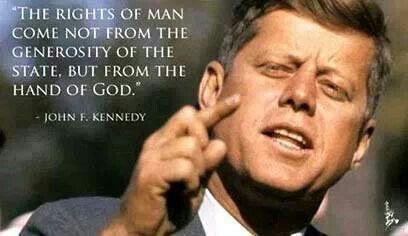
Source:LuAnn Yri– President John F. Kennedy, talking about our individual rights.

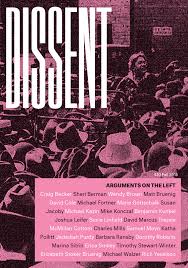
“Rich Yeselson’s essay “What New Left History Gave Us” [Issue #35] is not merely about what New Left historiography did, but what contemporary historians of the liberalism birthed by the New Deal—historians like myself—are currently doing. According to Yeselson, we are less likely to judge “the hegemonic liberalism of the post-New Deal order” as harshly as the generation of New Left historians, who viewed that liberalism as complicit in building and maintaining racial and economic inequality. Recent generations, on the other hand, have seen the havoc that the ideological right can wreak, and accordingly have developed a more sympathetic take on liberalism, while focusing most of their attention on accounting for the rise of conservatism.”

From Democracy Journal

“John F. Kennedy speaks on his income tax cut that he wants to present to Congress in January next year (partial newsreel).”

Income Tax Cut, JFK Hopes To Spur Economy 1962_8_13

Source:Universal Newsreels– President John F. Kennedy, speaking in favor of tax cuts, in 1962.

From Universal Newsreels

The history of American liberalism really goes back to the founding of the Federal Republic and even before that to the American Revolution. Where we broke away from a dictatorial British Monarchy in the United Kingdom to build the first ever liberal democratic federal republic. You want to know about and understand American liberalism, read the U.S. Constitution and Bill of Rights. The U.S. Constitution at least being something that today’s so-called Modern Liberals ( Socialists, really ) would throw out and replace. And perhaps not just replace at all so they can build their socialist collectivist centralized state. With a big centralized government big enough to take care of everyone.

American liberalism is about basic fundamental American liberal values of freedom, individual rights, opportunity, liberation, empowerment, education and responsibility. Liberalism is not libertarian or socialist or even social democratic, but it’s liberal. Built around again common American liberal values of opportunity and freedom. That everyone should have the opportunity to obtain freedom in life. And not have to be dependent on government or others to take care of them. And this starts with things like infrastructure and education, which leads to the opportunity that everyone needs to live in freedom in life.

The old American political stereotypes use to be that the Liberal believes in personal freedom. And the Conservative believes in economic freedom. And they would compromise to see that the state especially the federal state doesn’t become so big that it threatens either personal or economic freedom. But in the last fifteen years or so at least when it comes to Liberals, we are stereotyped as people who not only don’t believe in economic freedom and perhaps not even private enterprise, if you read a lot of the so-called liberal publications today, but that we aren’t fans of personal freedom either. And that we need a government big enough to manage our economic and personal affairs. A welfare state plus a nanny state.

The facts are that if you’re truly a Liberal, you believe in both economic and personal freedom. The ability for the individual to manage their own economic and personal affairs. With the education and knowledge to have the freedom to make those decisions for themselves. We don’t want big government interference in our economic and personal lives. We want government to come in to see that everyone can get themselves the tools that they need to live in freedom. Again infrastructure and education, plus good parenting is where freedom comes from. And then after that it is up to the individual to make the most out of the good opportunities that they get in life.

Liberals wrote the U.S. Constitution and the Bill of Rights and we created the American safety net. A public social insurance system for people in need to help them get by in the short-term while they are getting themselves on their feet and able to take care of themselves. We didn’t create superstate, a welfare state big enough to take care of everyone. Which is something that the so-called New-Left, ( Far-Left, really ) at least by American political standards wanted to create in America in the late 1960s. That Democratic Socialist presidential candidates Henry Wallace and Norman Thomas wanted to create in the 1940s and 50s.

The Liberal believes in opportunity and freedom. That the job of government is to protect everyone’s freedom until they give that up by taking an innocent person’s freedom. Protect freedom for those who already have it and deserve it. Expand freedom for those who don’t have it yet and need it. The so-called Modern Liberal, whose really a Socialist or Social Democrat at least everywhere else in the developed world, believes in equality. That everyone should be equal and not have so much or so little compared with everyone else. And that it’s the job of government especially the central government through wealth redistribution to see that everyone is equal. But that is not liberalism, but a form of democratic socialism that is much further left than American liberalism.

Posted in Classical Liberalism | Tagged , , , , , , , , , , , , , , , , , , , , , , , , , , , , | 2 Comments

The Atlantic: Opinion: Russell Berman: U.S. Representative Chris Van Hollen Ditches The House For a Shot at The Senate

U.S. Representative Chris Van Hollen, D, Maryland

U.S. Representative Chris Van Hollen, D, Maryland


The Atlantic: Opinion: Russell Berman: U.S. Representative Chris Van Hollen Ditches The House For a Shot at The Senate

Just to start off, I’m a big fan of Representative Chris Van Hollen. I’ve hoped that he would at least look to run statewide in Maryland at least since 2011 when Democrats lost the House of Representatives. Had he run for Governor of Maryland last year, he’s probably Governor right now, instead of Conservative Republican Larry Hogan. Lieutenant Governor Anthony Brown ran a bad campaign in a very Democratic state and lost to someone who ran a very good campaign. I consider Representative Van Hollen to be the star of the Democratic Caucus in the House and believe the House is simply too small of a stage for him. Especially serving in the minority where Democrats are now thirty seats away from the majority.

But lets look at some of the differences between being a U.S. Representative and a U.S. Senator and especially in Chris Van Hollen’s case. And how running for Senate will change his political landscape. Representative Van Hollen is currently the Ranking Member of the Budget Committee. If it were to snow in hell in 2016 and Democrats were to win back the House, Van Hollen becomes Chairman of that committee. As well as having a real opportunity to be the next Democratic Speaker of the House. Which might not be until 2020 at the earliest, especially if the next President is also a Democrat. But Senate Democrats have a real shot, perhaps 50-50 or better of winning back the Senate in 2016.

Which means that Van Hollen as Senator Chris Van Hollen could go from being in the minority even the ranking committee member, top Democrat on the House Budget Committee, to a freshman Senator with experience in the House Democratic Leadership, whose also a real policy wonk. Who could start of his first Senate term in the Democratic Leadership. As Harry Reid’s chief political adviser or something, perhaps caucus chairman. Unless you’re in leadership in the House or a leader on one of the full committees, Chairman or Ranking Member, it is very easy to get lost in the House. Especially if you’re in the minority, because you have 435 Representatives who don’t represent a state, but a section of a state. Where the majority rules on everything and where the minority isn’t even allowed to offer amendments and substitutes to bills that the majority writes them self, most of the time.

But as a Senator, you’re not just one vote, but a real decider. Where not just your leader needs to listen to you and take you seriously, but the leader of the other party may need to consult you as well. Especially if you’re trusted and respected by at least your caucus. Because the Senate Leader and Minority Leader both need votes. The Leader needs sixty on almost everything and generally doesn’t have it with just their caucus The Minority Leader generally needs forty-one to stop whatever the majority wants to do by them self and generally has that with just their members. But to pass a final bill the Minority Leader needs to get sixty as well. A lot of their members and work out an agreement with the Majority Leader to get the other votes.

And because of how the Senate works which many times looks like two competing lawyers working out settlements with each other, each member is very important. Each member can say to their leader or the leader of the other party, “look, I know you need my vote on this. I can help you if you agree to do this for me.” Like supporting an amendment or putting new language in the bill. But if you’re in the House, all you really have is the ability to vote yes or no for the most part. And if you’re in the minority, you’re voting no on a lot of bills that are going to pass anyway. Which becomes the ultimate losing cause.

Chris Van Hollen is someone who could potentially be the next Secretary of Treasury, Secretary of Housing or Commerce, U.S. Trade Representative, Attorney General of the United States, Vice President and even President at some point. There’s so much potential for him as a public servant because of his background and knowledge. And being a member of the minority in the House of Representatives, even a senior member is simply too small of a stage for him. If not the Senate in 2016, then maybe the cabinet under a Democratic President in 2017. He’s more than ready to take the next step in his public service career. And its time that he makes this move.

Posted in Congress | Tagged , , , , , , , | Leave a comment

The Heritage Foundation: William J. Bennett & Robert White: Going to Pot, Why The Rush to Legalize Marijuana is Harming America

.

You know, if I was a lawyer and I was listening to Bill Bennett and Bob White give their presentation about marijuana, I would probably conceive every point that they made about marijuana. Other than why they say marijuana should continue to be illegal. I would say all of their points about the negative effects about marijuana are probably right. I would just conceive all of that, but then my point about what they are saying would be, that the arguments that you are making against marijuana can be made about alcohol and tobacco. Probably especially alcohol as far as short-term negative side-effects. Tobacco’s danger is more long-term.

And that is really my point about marijuana legalization. I’m not a fan of marijuana and wouldn’t use it for anything other than maybe the food. But at the same time just because marijuana is not for me, doesn’t mean I should tell others they can’t have it either. I look at marijuana the same way I look at legal narcotics including prescription drugs. Is locking people up in prison and giving them permanent criminal records simply for possessing or using a drug that has similar side-effects as alcohol, worth it not? I have to say no just on that alone, but I can give other reasons regarding personal freedom, freedom of choice, anti-big government and anti-nanny state reasons why marijuana should be legal as well.

And my criminal justice reason for legalizing marijuana has to do with how many people we incarcerate in America and how many of those people are in there because of the War on Drugs as users. And marijuana being a big cause for that as well. Good productive non-violent Americans serving prison sentences for simply being caught with marijuana, or being caught having marijuana in their system. Money that could be spent dealing with violent offenders and violent inmates in this country. Money that could also be used for education and other infrastructure priorities. Things we desperately need in this country. Or could be used to reduce taxes across the board.

The War on Drugs and War on Marijuana in particular perhaps, is the ultimate big government Uncle Sam nanny state knows best for the entire country what people should be allowed to do with their own bodies and how they can live their own lives. Marijuana legalization supporters aren’t calling for a federal law to legalize marijuana everywhere and push the states out-of-the-way. They are fighting this battle and I agree with them here, state by state and taking federalist approach in how marijuana is legalized. And the Obama Administration at least to a certain extent is helping the states who decide to legalize. Which is not to lock up people for simple marijuana possession or usage in states where it legal.

The drug warriors are the Mike Bloomberg nanny statists in this debate. Except when it comes to marijuana there are nanny statists on the Right and Left. Neoconservatives and Progressives Right and Left who believe they know what its best for people to put in their own bodies and how they should live their own lives. And what the anti-drug warriors are saying is, “enough! Why are we locking up people for what they put in their own bodies when they aren’t hurting anyone else? Especially when what they put in their bodies has similar side-effects as alcohol?” As well as saying that marijuana doesn’t come without any negative side-effects. Which is why it should regulated and taxed like alcohol as well.

Posted in Book TV, Originals | Tagged , , , , , , , , , , , , , , , , , , , , , , , , , , , , | Leave a comment