ABC Sports: MLB 1985- Detroit Tigers @ Baltimore Orioles: 1st Innings

The New Democrat_ ABC Sports_ MLB 1985- Detroit Tigers @ Baltimore Orioles_ 1st InningsSource:ABC Sports– Orioles outfielder Lee Lacy.

Source:The New Democrat

“1985-07-01 ABC MNB – Tigers at Orioles. ABC Monday Night Baseball.”

From Classic MLB

Going into this game, this looked like a great game, especially for ABC Sports prime time Monday Night Baseball, with Don Drysdale and Tim McCarver with the call of the game. Both teams having great lineups, the game at Baltimore Memorial Stadium, early July, when it’s hot and humid as hell in Baltimore and in the rest of the State of Maryland, and the Orioles had Scott McGregor pitching for them.

But after 1983, the Orioles starting pitching started falling and they became most a power-hitting team, that hit a lot of home runs and scored a lot of runs, especially at home. They added outfielder Fred Lynn, who they got from the Anaheim Angels (as I call them) and added outfielder Lee Lacy, Mike Young, to go along with Eddie Murray and Cal Ripken, to of the best all around players in all of MLB at this point.

But as good as the Orioles offense was in the mid 1980s, their starting pitching was perhaps just as bad, with just Mike Boddicker being the only consistent started that they had.

Orioles ace Jim Palmer retires after the 1984 season, Scott McGregor and Mike Flannagan’s arms were failing them. And when you pitch at Baltimore Memorial Stadium and those other American League ballparks that have short porches and hot and humid summers, you can’t afford to throw hanger after hanger and expect to succeed, especially when you are also walking a lot of hitters as well. Orioles pitcher Dennis Martinez was up and down. When he was up, he was an all star and perhaps Cy Young contender. When he was off, he would struggle to get out of the 3rd inning.

Like I said, this looked like a great matchup going in. But when Scott McGregor was off and he was pitching against a good team, like the defending World Series champion Detroit Tigers, the were Orioles generally got blown out or won it in a slugfest.

Posted in Orioles Classic, The New Democrat | Tagged , , , , , , , , , , , , , , , , , , , , , , , , | Leave a comment

Ruth Roman: Love Has Many Faces (1965)

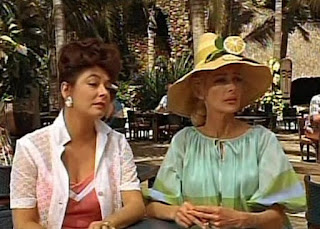
Ruth Roman_ Love Has Many Faces (1965)Source:The Film Experience– left to right: Ruth Roman & Virginia Grey.

Source:The New Democrat

“I’d be hard pressed to relay what actually happens. There’s are a couple of American cougars played by the fabulous Ruth Roman and Virginia Grey stalking the beach looking out for hot young studs to ensnare. Unfortunately, all the resort has to offer is the skimpily clad middle aged lothario Hugh O’Brian pimping his wares and trying his best to steal Kit from her former gigolo husband. Quite why these gorgeous rich women are travelling all the way to Acapulco to hook men with all the allure of a Missouri car salesman is not explained.”

From The Film Experience

Before I really get started here, I must really confess and say that I’ve had a long distance crush on Ruth Roman for literally ten years now, July or August of 2013. I got FIOS-TV at home and my TV package expanded and METV became part of that package and I caught here on an episode of The Untouchables, from I think the 3rd season. A year or so later, I see her in the film Love Has Many Faces on TCM.

I’ve always thought Ruth Roman was beautiful, very cute, adorable, really, with those eyes, cheeks, facial expressions, sexy voice, shape, she reminds me a taller, sexier, Elizabeth Taylor, but not quite as adorable, but almost no one is.

Similar to Kim Novak, Ruth has always been underrated and under appreciated, maybe that’s because she’s a very cute, beautiful, brunette, instead of a beautiful, overly adorable, immature blond. And when you are from the World War II Generation, especially in Hollywood, it’s Hollywood blonds that get the most attention, not the brunettes, even when the brunettes are built like Ruth Roman.

As far as Love Has Many Faces and this scene: Margo (played by Ruth Roman) and Irene (played Virginia Grey) are a couple of middle aged, perhaps early middle aged, single, wealthy, boy hungry women, who I guess are vacationing in Acapulco, Guerrero, Mexico. They look like easy targets for Hank (played by Hugh O’Brien) and Chuck. (Played by Ron Husmann)

Margo might be love starved and perhaps even lonely, but she’s not stupid or immature or naive. When they meet, Hank calls her and Irene: “Vagabundos en la ciudad en Mexicana(feminine)” which translates into tramps on the town in Mexican Spanish. But he says it like it’s a complement.

Margo responds by saying: “Irene, he just called us tramps”

with Hank saying: “I thought you don’t speak Spanish”

with Margo replying: “Why, because I said so?”

Hank and Chuck are career gigolos who are down in Acapulco looking for wealthy, single women, who are lonely and tare here to make them feel good and give them a good time. There’s another line where Irene asks Margo: “What do you think they’re saying about us?” with Margo replaying: “Unfortunately, something like, take your pick.”

This is a really good film for Ruth Roman because she’s on the beach and you see how beautiful, cute, and sexy she is, but the role she’s playing as an independent woman, who loves her freedom and is not going to let anybody, especially a 40 year old gigolo, who lives in shack and has a 30 gigolo as his roommate, take that away from her. And she doesn’t an excellent job.

Posted in Hollywood Goddess, The New Democrat | Tagged , , , , , , , , , , , , , , , , , , , , , , | Leave a comment

Baltimore Memorial Stadium: ‘Rise & Fall’

Memorial Stadium Baltimore_ Rise and FallSource:Forgotten Places with a look at Baltimore Memorial Stadium.

Source:The New Democrat

“The story of Memorial Stadium”

From Forgotten Places

“Memorial Stadium was a multi-purpose stadium in Baltimore, Maryland, that formerly stood on 33rd Street (aka 33rd Street Boulevard, renamed “Babe Ruth Plaza”) on an oversized block officially called Venable Park, which was a former city park from the 1920s. The block was bound by Ellerslie Avenue to the west, 36th Street to the north, and Ednor Road to the east. Two stadiums were located here; a 1922 version known as Baltimore Stadium or Municipal Stadium (or sometimes Venable Stadium) and, for a time, Babe Ruth Stadium in reference to the then-recently deceased Baltimore native. The rebuilt multi-sport stadium, when reconstruction (expansion to an upper deck) was completed in mid-1954, would become known as Memorial Stadium. The stadium was also known as “The Old Gray Lady of 33rd Street,” and also “The World’s Largest Outdoor Insane Asylum” when used by the Baltimore Colts.[6] the latter which was coined by Cooper Rollow.”

From Wikipedia

As someone who grew up in Bethesda, Maryland, just 40 miles south of Baltimore, I had an opportunity to see a lot of Oriole games growing up and I’m old enough to remember at least hearing about the Colts in the early 1980s, when I was just starting to get into sports as a young kid.

Bethesda is literally next door to Washington, but Washington didn’t have an MLB franchise for most of the 1970s and the 1980s, so the Oriole which were just about a 50-60 minute drive (depending on traffic) were the local baseball team for most Marylanders. So I got to see a lot of Orioles games growing up in the 1980s and early 90s as a kid and got to go to several Orioles games, when they were still in North Baltimore at Memorial Stadium.

When I think of Baltimore Memorial, I just think of a great old ballpark, that was a lot of fun to be at. Perhaps not so much fun to get to, at least coming from Washington, because you have to get to the city first, which might not be so bad, but then you have to get to the stadium as well, which could be another 40-60 minutes, because the stadium is in the north of the city, it’s a big city, and you have to deal with the traffic.

Baltimore Memorial was just a big, fun, old ballpark to be at:

Beautiful sight lines as far as what surrounded the ballpark, with no upper deck porch, so you always had a great view of the sky

The grass field and hill, the trees, the old houses beyond the outfield wall of the ballpark,

The food was always good

The seats were close to the action, as well as on the the ground level, unlike at the cookie-cutter stadiums

The fans were great and were always loud

The place looked beautiful during the day and night

Short porches but with high walls and no foul territory down the lines, which made it a great ballpark for extra base hits and for players with good speed, but it also had deep gaps and a deep center field, so pitchers could be successful there

The garden in the left field foul territory

Maryland crab cake sandwiches from the Chesapeake Bay and perhaps Maryland Cream of Crab Soup as well.

Yes, Baltimore Memorial Stadium was officially a multi-purpose stadium because different sports franchises from different sports, also played there. The Orioles shared Baltimore Memorial with the Colts for 30 seasons from 1954-83, there was an NASL soccer franchise there briefly in the 1960s, with the Bays.

But similar to Cleveland Municipal, Milwaukee County, Shea Stadium in Queens, New York, Atlanta Fulton Stadium, Candlestick Park, the Oakland Coliseum, Anaheim Stadium, Jack Murphy Stadium, Baltimore Memorial was always a baseball first stadium, that could accompany other sports, but perhaps not very well, because it was a natural baseball park.

So in this sense, at least, Baltimore was better off the the Colts leaving in 1984 because it gave them the opportunity to make Baltimore Memorial look as beautiful as possible for baseball and get the city’s act together as far as building a football stadium, that was just for football, which is one reason they were able to get the Ravens from Cleveland, in 1996.

Posted in Orioles Classic, The New Democrat | Tagged , , , , , , , , , , , , , , , , , , , , , , | Leave a comment

Frank DiStefano: ‘William Jennings Bryan & His Amazing Populist Campaign’

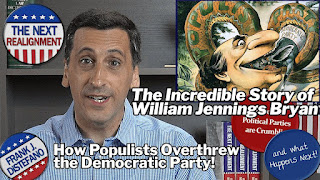
Frank DiStefano_ 'William Jennings Bryan & His Amazing Populist Campaign'Source:Frank DiStefano talking about populist Democrat William J. Bryan.

Source:The New Democrat

“In 1896, a thirty-six-year-old former Congressman named William Jennings Bryan walked into the Democratic National Convention and amazingly emerged the Democratic nominee for president. He proceeded to throw out his party’s agenda, divorce himself from its leadership, and all-but merge it into a popular third party called the People’s Party, or the Populists.

In this episode, we talk about the incredible 1896 presidential campaign that transformed American politics, destroying America’s stagnant Gilded Age political parties obsessed over the resentments of the Civil War and launching new versions focused on the new problems of industrialization.

We talk about the populist revolt of unhappy family farmers and workers that created one of America’s most successful third parties, the People’s Party, that elected governors and senators and won electoral votes for president.

We talk about the Panic of 1893, America’s second worst economic depression in history, and how it energized the issue of bimetallic money policy, or “Free Silver,” meant to give relief to farmers now drowning in debt, all at the expense of wealthy people and banks.

Most important, we tell the story of William Jennings Bryan and his revolutionary presidential campaign that, in one dramatic election, permanently changed American politics and made him kingmaker of the Democratic Party for a generation. It also soon forced reform in the Republican Party, as it transformed under the Progressive Movement into the progressive Republican Party of Teddy Roosevelt.

The 1896 election is the most dramatic and cinematic story in all American political history. It’s the story of how a young man from the middle of America tapped into new issues at a time of disruptive change, launching a campaign that permanently changed America. In one election campaign, America threw off the Gilded Age’s decay and launched a new Populist and Progressive Era in which it reformed its institutions, began addressing its neglected issues, and set itself up to grow into a prosperous great power.”

From Frank DiStefano

“The People’s Party, also known as the Populist Party or simply the Populists, was a left-wing[2] agrarian populist[3] political party in the United States in the late 19th century. The Populist Party emerged in the early 1890s as an important force in the Southern and Western United States, but collapsed after it nominated Democrat William Jennings Bryan in the 1896 United States presidential election. A rump faction of the party continued to operate into the first decade of the 20th century, but never matched the popularity of the party in the early 1890s.

The Populist Party’s roots lay in the Farmers’ Alliance, an agrarian movement that promoted economic action during the Gilded Age, as well as the Greenback Party, an earlier third party that had advocated fiat money. The success of Farmers’ Alliance candidates in the 1890 elections, along with the conservatism of both major parties, encouraged Farmers’ Alliance leaders to establish a full-fledged third party before the 1892 elections. The Ocala Demands laid out the Populist platform: collective bargaining, federal regulation of railroad rates, an expansionary monetary policy, and a Sub-Treasury Plan that required the establishment of federally controlled warehouses to aid farmers. Other Populist-endorsed measures included bimetallism, a graduated income tax, direct election of Senators, a shorter workweek, and the establishment of a postal savings system. These measures were collectively designed to curb the influence of monopolistic corporate and financial interests and empower small businesses, farmers and laborers.

In the 1892 presidential election, the Populist ticket of James B. Weaver and James G. Field won 8.5% of the popular vote and carried four Western states, becoming the first third party since the end of the American Civil War to win electoral votes. Despite the support of labor organizers like Eugene V. Debs and Terence V. Powderly, the party largely failed to win the vote of urban laborers in the Midwest and the Northeast. Over the next four years, the party continued to run state and federal candidates, building up powerful organizations in several Southern and Western states. Before the 1896 presidential election, the Populists became increasingly polarized between “fusionists,” who wanted to nominate a joint presidential ticket with the Democratic Party, and “mid-roaders,” like Mary Elizabeth Lease, who favored the continuation of the Populists as an independent third party. After the 1896 Democratic National Convention nominated William Jennings Bryan, a prominent bimetallist, the Populists also nominated Bryan but rejected the Democratic vice-presidential nominee in favor of party leader Thomas E. Watson. In the 1896 election, Bryan swept the South and West but lost to Republican William McKinley by a decisive margin.

After the 1896 presidential election, the Populist Party suffered a nationwide collapse. The party nominated presidential candidates in the three presidential elections after 1896, but none came close to matching Weaver’s performance in 1892. Former Populists became inactive or joined other parties. Other than Debs and Bryan, few politicians associated with the Populists retained national prominence.

Historians see the Populists as a reaction to the power of corporate interests in the Gilded Age, but they debate the degree to which the Populists were anti-modern and nativist. Scholars also continue to debate the magnitude of influence the Populists exerted on later organizations and movements, such as the progressives of the early 20th century. Most of the Progressives, such as Theodore Roosevelt, Robert La Follette, and Woodrow Wilson, were bitter enemies of the Populists. In American political rhetoric, “populist” was originally associated with the Populist Party and related to left-wing movements, but beginning in the 1950s it began to take on a more generic meaning, describing any anti-establishment movement regardless of its position on the left–right political spectrum.”

From Wikipedia

When we’re talking about William Jennings Bryan and populists, I think we need know what it means to be a populist and what populism is. Populist is not a separate political faction and populism is not a separate political ideology, similar to nationalist and nationalism. You can’t label someone a populist like you would be calling someone a liberal, conservative, progressive, socialist, etc.

A populist is just someone who speaks to ordinary Americans who have to work hard to support themselves, who come from ordinary communities, have ordinary backgrounds, and have ordinary income, etc.

The Democratic Party has or had a populist wing of blue-collar workers, who were very pro-labor. Most of those folks had just a high school diploma as far as education and needed their union job to support themselves and their families and be able to help their kids go to college, if that’s what they wanted to do.

The Republican Party has had, really since the late 1960s, a populist wing primarily of very fundamentalist religious voters, who have similar education and work employment backgrounds as the populist Democrats, but tend to differ with those Democrats on social issues.

The populist Democrats are primarily just interested in economic issues and being able to save their jobs and keep their jobs in America, but generally don’t push the social issues.

What William Jennings Bryan was 130 years ago, was basically a Populist-Progressive Democrat. And what that means, is that he’s someone who represented and spoke to populist Democrats, but had a Progressive agenda to help people who were struggling, just to be able to continue to survive, but also to help them move ahead. America as a country in the 1890s and 1900s, was moving from being almost an exclusively rural and blue-collar country, to an industrialized country, with more big cities and metro areas and bigger big cities and metros, where in many cases you needed more than high school diploma to succeed in America and make it in America on your own. That’s what William J. Bryan’s 1896 presidential campaign was about.

Posted in Progressive, The New Democrat | Tagged , , , , , , , , , , , , , , , , , , , , , | Leave a comment

Joe Pyne: Christine Jorgensen Interview (1967)

Joe Pyne_ Christine Jorgensen Interview (1967)Source:Richard Remembers Joe Pyne– Hollywood actress Christine Jorgensen on Joe Pyne, in 1967.

Source:The New Democrat

“CHRISTINE JORGENSEN relates her discovery and transformation. It was the first chapter in a new outlook towards the transsexual phenomenon. She is the author of ‘Christine Jorgensen A Personal Autobiography’ [apostrophes added around book title].” reads on the film can from which this clip was converted from.”

From Richard Remembers Joe Pyne

“Christine Jorgensen (May 30, 1926 – May 3, 1989) was an American trans woman who was the first person to become widely known in the United States for having sex reassignment surgery. She had a successful career as an actress, singer, and recording artist.

Jorgensen was drafted into the U.S. Army during World War II. After she served as a military clerical worker, Jorgensen attended several schools, worked, and pursued a photography career.[4] During this time, she learned about sex reassignment surgery and traveled to Europe, where in Copenhagen, Denmark, she obtained special permission to undergo a series of operations beginning in 1952.[5]

Upon her return to the United States in the early 1950s, her transition was the subject of a New York Daily News front-page story. She became an instant celebrity, known for her directness and polished wit, and used the platform to advocate for transgender people.

Jorgensen often lectured on the experience of being transgender and published an autobiography in 1967.”

From Wikipedia

I think you already have a pretty good idea who Christine Jorgensen is, (unless you skipped over the 1st five paragraphs) so I’m going to get into Joe Pyne (figuratively) and talk about his show a little bit and then talk about this interview a little bit as well.

If you are from my generation (Generation X) or are older, you probably have at least some idea who Morten Downey Jr. was and the tabloid, attack, talk shows, that followed in the 1990s, that also lead to partisan, political attack, TV shows on cable in the 2000s. The format of these shows was basically to either bring on someone that the host really loves, respects, and admirers and then watch the host spend 10-20 minutes kissing the guest’s ass (perhaps literally) on national TV.

Or, bring on a guest that the host has no respect for, completely disagree with that person and then spend the next 10-20 minutes trying to beat the hell out of that person (perhaps not literally) on national TV. And if the guest has any self-respect whatsoever, well, then they probably don’t go on that show at all, but if they have a little self-respect for themselves, they’ll stand up for themselves and make the host look like the asshole that they are, on national TV and that makes for entertaining TV.

Joe Pyne in the 1950s and 60s, with his syndicated radio and TV shows, was basically the forerunner for Morton Downey JR, in the 1980s and Bill O’Reilly in the 1990s and 2000s. They both admired and looked up to Joe Pyne and used him as inspiration for their own careers.

As far as this interview, this was very different from a normal Joe Pyne interview, but this is only about a 3 minute clip, so maybe it got worst. And what Pyne really just does here is let Christine Jorgensen just talk about her own personal experience as a transgender woman, something that in the 1960s, as was as common hurricanes in Wisconsin, in January, or the Detroit Lions playing in the Super Bowl, politicians telling the whole truth on national TV. So what she’s doing here, took a lot of courage, especially to talk to someone like Joe Pyne, about her own transgenderism.

Posted in Hollywood Goddess, The New Democrat | Tagged , , , , , , , , , , , , , | Leave a comment

Poppy Harlow: Chris Christie: Donald Trump Knows He Lost To Joe Biden

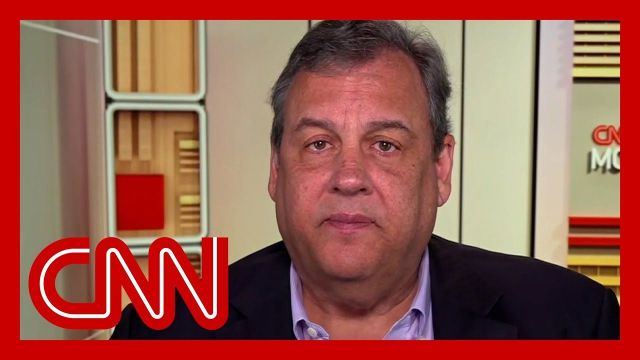
Chris Christie_ Trump knows he lost to Joe BidenSource:CNN– former New Jersey Governor & 2023 Republican presidential candidate Chris Christie, talking to Poppy Harlow.

Source:The New Democrat

“GOP presidential candidate Chris Christie joins Poppy Harlow on “CNN This Morning” to discuss his candidacy in the upcoming election, and to take a look back at the 2020 presidential election between Joe Biden and Donald Trump.”

From CNN

I think there are a few interesting points here:

Poppy Harlow asked Chris Christie essentially whose worst: Donald Trump or Joe Biden as President. And Chris Christie ducked it like someone was firing a machine gun at his face (I guess the Governor has great political reflexes, even for a big man) and basically said: “That’s like asking me would I rather drown or be strangled” after she kept pushing him on that.

Just the way Governor Christie has been attacking former President Trump and President Biden, makes it pretty obvious that Christie thinks Trump is a bigger threat to the country and I’m sure the Republican Party, than the current President. He attacks Trump on issues of the former President’s character, (or lack of character) or honesty, (or lack of honesty) or the fact that he believes that Donald Trump believes that he’s not accountable to anyone. But he attacks President Biden based on policy and not calling the President a liar, bad man, etc.

Chris Christie has the reputation as being straight-forward, honest, holds no punches, you know, things that Americans say that they want in politicians, but then vote for and reelect people who lie about their height, shoe sizes, what they like to eat, as well as what they do in office and try to cover up whatever trouble that they may get in while in office and before in office. And during this interview, Governor Christie comes off more as the former politician whose trying to get back into power, then the guy whose running to shake things up in Washington.

Senator Mitt Romney (who I like a lot more than presidential candidate Mitt Romney) wrote an article arguing that Republican donors should essentially make a decision and just give money to the most electable Republican presidential candidates (who are not named Donald J. Trump) and try to narrow the Republican presidential field that way and get it down to 3-5 Republican candidates against Trump by Iowa, instead of 10-15, so the 2023-24 Republican presidential primary season, doesn’t look like Donald Trump’s latest political reality TV show: Who Wants to Replace Donald Trump.

I think Senator Romney is right here. The problem is how do you do that. How do you convince 5-7 Republican presidential candidates who are at 3-5% in the Republican polls, that they’re simply not ready for national prime time and they should just get out and leave it up to Nikki Haley, Tim Scott, and maybe Mike Pence, to try to take down Donald Trump, or at least severely weaken him in Iowa and New Hampshire. Once a career politician has the presidential political bug, it might take an army of exterminators to get rid of that bug.

Posted in CNN, The New Democrat | Tagged , , , , , , , , , , , , , , , , , , , , , , , , , , , , , , , | Leave a comment

Movie Clips: Goldfinger (1964) ‘Goldfinger’s Last Flight’

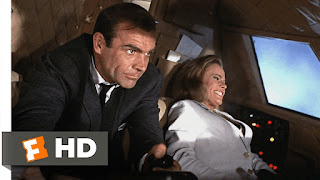
Movie Clips_ Goldfinger (1964) 'Goldfinger's Last Flight'Source:Movie Clips– left to right: James Bond (played by Sean Connery) & Pussy Galore (played by Honor Blackman). Perhaps your eyesight is keen enough to tell who is who on your own.

Source:The New Democrat

“CLIP DESCRIPTION:
Thinking that the adventure is over, Bond (Sean Connery) is surprised to find that his inflight service will be provided by Goldfinger (Gert Frobe) and a loaded gun.”

From Movie Clips

If you are familiar with these action/comedy films and action/comedy TV shows, the bad guy or girl, is never really dead. (Exceptions to every rule) And no, I’m not talking about in real-life. They are just dead until they make some miracle reappearance later on, that’s explained in their next appearance.

Mr. Goldfinger (played by Gert Frobe) should’ve been dead at the Battle of Fort Knox (ha, ha) between his men and the U.S, Army at that base. Goldfinger is not your average criminal. (Also in the news: the Rolls Rolls Royce is not your average car) So of course Goldfinger can’t be dead, until the last scene of the film, unless they just want to show Bond and his Pussy in a love scene making out. But this is James Bond, so they can’t end a great film with something predictable. There has to be some final battle where just the good people survive.

Another thing about this scene, is how adorable Honor Blackman was. As soon as Goldfinger pulls the genius play of firing a gun in a small airplane, (which is as intelligent stepping in front of a moving bus with your eyes closed) they go to Pussy, Galore (played by Honor Blackman) who really was a damn good pilot in this film (as she said) trying to prevent the plane from crashing. And the first thing I thought of, was Fly Baby, Fly. Which is exactly what she was.

Posted in Classic Movies, The New Democrat | Tagged , , , , , , , , , , , , , , , , | Leave a comment

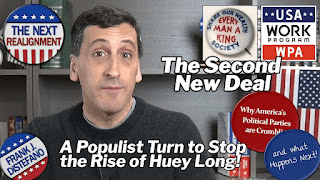
Frank DiStefano: ‘The Second New Deal!: FDR Turns Populist to Stop the Rise of Huey Long’

Frank DiStefano_ 'The Second New Deal!_ FDR Turns Populist to Stop the Rise of Huey Long'Source:Frank DiStefano talking about the so-called 2nd New Deal.

Source:The New Democrat

“In this episode, we talk about how Franklin Roosevelt pivoted to a Second New Deal to head off the populist challenge of Huey Long.

Roosevelt by 1936 was under assault from a populist backlash to his First New Deal. Many traditional Democrats, mostly working people, had come to believe Roosevelt’s progressive First New Deal program was a sell-out to corporations and national elites that didn’t actually help people like them. They had come to see Roosevelt as another rich man in league with his wealthy friends, and his New Deal program as useless. The found a champion in Louisiana Senator Huey Long.

Long was a strident populist who had overthrown his state’s political and social elites to become Louisiana’s political boss with a ruthless political machine subject only to him. He eagerly used his office to punish perceived opponents and seize wealth from those he despised, where he then showered it on the working people of his state. He created a staggering public works program with hospitals, roads, and schools funded by attacking wealthy elites. Now in the Senate, Long was taking his program national.

A Democrat and originally a New Deal supporter, Long was now attacking Roosevelt at every chance he got with his own relief program he called “Share Our Wealth.” In contrast to the technocratic First New Deal, Long proposed caps on the income to millionaires, a national income, and free tuition. He claimed it would make “Every Man a King.”

Nor was Long alone. Another former New Deal supporter, the popular radio priest Father Charles Coughlin, was also now attacking Roosevelt on the radio to his millions of listeners with similar complaints. There was also a doctor in California, Francis Townsend, who had become a national celebrity proposing a national old age pension program he called the Townsend Plan. When Roosevelt failed to embrace it, Townsend had turned against him too.

Roosevelt and his New Dealers started to get worried as the next election loomed. They anticipated Long was gearing to challenge Roosevelt for the presidency, and given this national popular backlash to his administration they feared he might actually win. It was time to pivot to a new program, a populist Second New Deal to head off Huey Long.

The First New Deal had been a progressive program to manage the national economy. The Second was a populist one. It included things like a new agency, the Works Progress Administration, putting people directly to work. An old age pension program called Social Security modeled on the Townsend Plan. An order that corporations pay out profits as dividends. A tax bill with a punishing high rate of 79% meant to target just one man, John D. Rockefeller.

It worked. Roosevelt won renomination and another term in the presidency in 1936. But now he presided over a very different Democratic Party, one with a novel party philosophy. It combined the progressive ideals of the First New Deal with the populist ones of the Second, forged into a a new party ideology we call New Deal liberalism. Over Roosevelt’s years in office, this new philosophy settled into a new party ideology where has remained ever since.

We usually just call it liberalism.”

From Frank DiStefano

“During the first 100 days of Roosevelt’s presidency in spring 1933, Long’s attitude toward Roosevelt and the New Deal was tepid.[138] Aware that Roosevelt had no intention of radically redistributing the country’s wealth, Long became one of the few national politicians to oppose Roosevelt’s New Deal policies from the left.[note 11] He considered them inadequate in the face of the escalating economic crisis but still supported some of Roosevelt’s programs in the Senate, explaining: “Whenever this administration has gone to the left I have voted with it, and whenever it has gone to the right I have voted against it.”[140]

Long opposed the National Recovery Act, claiming it favored industrialists.[141] In an attempt to prevent its passage, Long held a lone filibuster, speaking for 15 hours and 30 minutes, the second longest filibuster at the time.[142][143] He also criticized Social Security, calling it inadequate and expressing his concerns that states would administer it in a way discriminatory to blacks.[144] In 1933, he was a leader of a three-week Senate filibuster against the Glass banking bill, which he later supported as the Glass–Steagall Act after provisions extended government deposit insurance to state banks as well as national banks.[145][146]

Roosevelt considered Long a radical demagogue and stated that Long, along with General Douglas MacArthur, “was one of the two most dangerous men in America”.[21][147][148] In June 1933, in an effort to undermine Long’s political dominance, Roosevelt cut him out of consultations on the distribution of federal funds and patronage in Louisiana and placed Long’s opponents in charge of federal programs in the state. Roosevelt supported a Senate inquiry into the election of Long ally John H. Overton to the Senate in 1932. The Long machine was accused of election fraud and voter intimidation, but the inquiry came up empty, and Overton was seated.[149] To discredit Long and damage his support base, Roosevelt had Long’s finances investigated by the Internal Revenue Service in 1934.[150][note 12] Although they failed to link Long to any illegality, some of his lieutenants were charged with income tax evasion.[21][152] Roosevelt’s son, Elliott, would later note that in this instance, his father “may have been the originator of the concept of employing the IRS as a weapon of political retribution.”

From Wikipedia

“In March 1933, Long revealed a series of bills collectively known as “the Long plan” to redistribute wealth. Together, they would cap fortunes at $100 million, limit annual income to $1 million, and cap individual inheritances at $5 million.[163][164]

External video
video icon Long’s “Share the Wealth” speech on YouTube
In a nationwide February 1934 radio broadcast, Long introduced his Share Our Wealth plan.[165][166] The legislation would use the wealth from the Long plan to guarantee every family a basic household grant of $5,000 and a minimum annual income of one-third of the average family homestead value and income. Long supplemented his plan with proposals for free college and vocational training, veterans’ benefits, federal assistance to farmers, public works projects, greater federal economic regulation, a $30 monthly elderly pension, a month’s vacation for every worker, a thirty-hour workweek, a $10 billion land reclamation project to end the Dust Bowl, and free medical service and a “war on disease” led by the Mayo brothers.[167][168] These reforms, Long claimed, would end the Great Depression.[169] The plans were widely criticized and labeled impossible by economists.[170][171]

With the Senate unwilling to support his proposals, in February 1934 Long formed the Share Our Wealth Society, a national network of local clubs that operated in opposition to the Democratic Party and Roosevelt. By 1935, the society had over 7.5 million members in 27,000 clubs.[172] Long’s Senate office received an average of 60,000 letters a week, resulting in Long hiring 48 stenographers to type responses.[5] Of the two trucks that delivered mail to the Senate, one was devoted solely to mail for Long.[173] Long’s newspaper, now renamed American Progress, averaged a circulation of 300,000, some issues reaching over 1.5 million.[144] Long drew international attention: English writer H. G. Wells interviewed Long, noting he was “like a Winston Churchill who has never been at Harrow. He abounds in promises.”[21]

Some historians believe that pressure from Share Our Wealth contributed to Roosevelt’s “turn to the left” in the Second New Deal (1935), which consisted of the Social Security Act, the Works Progress Administration, the National Labor Relations Board, Aid to Dependent Children, and the Wealth Tax Act of 1935.[21][174] Roosevelt reportedly admitted in private to trying to “steal Long’s thunder.”

From Wikipedia

America has never really had what the rest of the developed world calls a welfare state, even today, Since the 1930s, we’ve always had what we call a public safety net, which is an economic insurance system that we all pay into and then take out when we fall on hard times and can’t survive financially any other way, unless we get this public assistance.

During President Franklin Roosevelt’s 1st new term, (1933-37) the Roosevelt Administration and Congress created what would be called the New Deal, which essentially was the creation of the American public safety net. Programs like Unemployment Insurance and Social Security. And even though President Roosevelt was a Progressive on economic policy, he was getting political heat from the left-wing of the Democratic Party on economic policy. Like from people like Senator Huey Long, for not going further left and creating more economic programs for people who were struggling and not going after individual wealth in America.

To put this in modern terms: if you are familiar with President Donald Trump’s presidency, (how could you not be, unless you were vacationing on the moon or living in a coma) especially the last 2 years of the Trump presidency, but even go back to the presidential election of 2016 and the campaign that started in the Democratic Party in 2015, you know that there was a reemergence of the left-wing of the Democratic Party, closeted Socialists who in some cases were no longer closeted with their political ideology and label and if anything were proud to be called Socialists, even though they preferred to be called Democratic Socialists.

Go up to 2019 when the Democratic Party wins back the House of Representatives, now you have Socialist Senator Bernie Sanders in the Senate, as well as closeted Socialist Senator Elizabeth Warren, who both ran for President as Democrats in 2019-20 and you had this growing left-wing in Democratic Party in the House, to go along with the so-called Congressional Progressive Caucus (who in actuality are Democratic Socialists of America in the House) and now you have all these new and in some cases self-described Democratic Socialists in the House, like Representative Alexandria Ocasio Cortez and the so-called left-wing Squad in the House, to go along with the Bernie Sanders in the Senate and you have these left-wing members of Congress who are not just Socialists, but self-described Democratic Socialists.

The agenda that these left-wing members of Congress were pushing in the House in 2019-20, that both Senator Elizabeth Warren and Senator Bernie Sanders ran on for President in that same election cycle, looks very similar to what then Senator Huey Long was pushing in Congress in the 1930s and had hope to run on himself for President in 1936:

A wealth tax to eliminate private wealth in America

A so-called free college plan (that wasn’t free for anyone)

A new government-run pension plan. The Squad in the House and Senators Sanders and Warren were instead talking about doubling Social Security

A government works program to put unemployed workers to work for the government

A guaranteed basic income for every American

The Bernie Bros and Squad in House wanted a government-run national health care plan, to replace private health insurance in America

What the so-called Bernie Bros and the Squad were talking about in Congress and what Senator Sanders ran for President on in 2015-16 and 2019-20, is not new. Senator Huey Long ran on that in the 1930s, when he was in Congress as well. The mainstream media (and perhaps Frank DiStefano is a member of that media as well) can call this economic liberalism all they want, but that’s not what is.

Supporters of this populist economic philosophy go way further than Liberals and Progressives, including Franklin Roosevelt, on economic policy, at least pre-1936 and are no longer talking about opportunity and responsibility for all, which is really what economic liberalism is about and not economic guarantees.

What American leftists back in the 1930s and today are really talking about, is what the rest of the developed world calls social democracy or just socialism. And what out-of-the-closet American leftists call democratic socialism. The idea that everyone in America is entitled to a quality life, simply for just being alive in America, regardless of what they bring, if anything, to the broader economic pie of the country.

Posted in Frank DiStefano, The New Democrat | Tagged , , , , , , , , , , , , , , , , , , , , , , , , , , , , , , , , , , , , , , , , , | Leave a comment

Forbes Magazine: ‘Glass Houses And All’: Kat Cammack Calls Out Stacey Plaskett For Donations From Jeffrey Epstein’

'Glass Houses And All'_ Kat Cammack Calls Out Stacey Plaskett For Donations From Jeffrey EpsteinSource:Forbes Magazine– left to right: U.S. Delegate Stacey Plaskett (Democrat, Virgin Islands) & U.S. Representative Kat Cammack (Republican, Florida)

Source:The New Democrat

“At yesterday’s House Weaponization of the Federal Government Committee hearing, Rep. Kat Cammack (R-FL) slammed Del. Stacey Plaskett (D-VI) for her attacks on Robert F. Kennedy Jr”

From Forbes Magazine

It’s very easy to say that this is just more MAGA bullshit (to be frank) when you are looking at these partisan House Republican hearings and say that because they’re bullshit, you can simply just ignore any of the charges that they throw out, all the garbage that they try to throw at people hoping that something sticks and not all of their garbage gets thrown out.

But what the Trump years have taught us (now going back to 2015) is that when you simply just ignore all the bullshit attacks that MAGA throws at people, you end up giving them a bigger platform than they would otherwise have, because there’s no one there saying how ridiculous this and as a result more people end up taking the garbage seriously and not throwing it out.

I didn’t watch this House hearing yesterday simply because I had better things to do, (like watch a high school play on public access TV and a 24 hour PBS fundraising drive) so I didn’t see any response to from Delegate Stacy Plaskett to Representative Kat Cammack’s Jeffrey Epstein charge against her. And I couldn’t find any response from Delegate Plaskett to Representative Cammack online either.

So who knows, maybe this is the one time during these hearing that Representative Cammack is right about anything, (other than showing up to the right room for these hearings) or Delegate Plaskett took these charges for the bullshit that they are and chose to ignore them.

Posted in Congress, The New Democrat | Tagged , , , , , , , , , , , , , , , , , , , , , | Leave a comment

Frank DiStefano: ‘The First New Deal FDR Starts to Transform the Democratic Party!’

The New Democrat_ Frank DiStefano_ 'The First New Deal FDR Starts to Transform the Democratic Party!'Source:Frank DiStefano with an inaccurate presentation about Franklin Roosevelt and liberalism.

Source:The New Democrat

“In this episode, we talk about Franklin Roosevelt’s First New Deal—the first step in a radical transformation of the Democratic Party.

When Roosevelt took office, he sought to collect a group of advisers with bold ideas about getting America out of the Great Depression. Looking for the best minds, he didn’t only pull from people with Democratic Party backgrounds. He also employed a lot of progressives with Republicans backgrounds, since the Progressive Movement had flourished among the professionals and academics whose expertise he needed. This group took on a name—the Brain Trust.

Roosevelt’s Brain Trust added and lost members over time, including names like Rex Tugwell, Raymond Morley, Adolf Berle, Felix Frankfurter, Frances Perkins, Harlod Ickes, and Harry Hopkins. These advisors launched flurry of innovative policy experiments, all of which shared a common idea about how to solve the Depression. They wanted to reduce competition between firms and raise prices.

Although the effect of many New Deal policies Keynesian stimulus, that’s not what the New Dealers themselves were trying to do. They were aware of John Maynard Keynes and his ideas, but mainly had a different economic theory in mind. They thought the key to getting America out of the Depression was to make firms more healthy, which they could do by increasing the prices they could charge and reducing the downward pressure on price of competition caused. Reducing this competitive pressure, they thought, would let companies put people back to work.

The crown jewels of their First New Deal program were the Agricultural Adjustment Administration (AAA) and the National Recovery Administration (NRA), which each sought to coordinate the economy so every producer charge more for products and easily compete.

This First New Deal was a radical break for the Democratic Party. Democrats had long prided themselves on fighting bigness, both in government and industry, back to Thomas Jefferson. It was the Federalists, Whigs, and Republicans who had always sought to work with industry, manage the economy, and spend on infrastructure. Now Roosevelt was working with industry titans and embracing bigness as an idea. Naturally, he soon found himself under attack from traditional Democratic populists who believed the progressive program of the First New Deal had sold out the party’s traditional constituency—workers and the little guy…

From Frank DiStefano

I just have to push back here against Frank DiStefano:

Franklin Roosevelt didn’t create the modern Democratic Party or even the liberal wing. Anyone who knows their political history, knows that the right-wing Dixiecrat (Neo-Confederate Democrats) were still not just a major part of the Democratic Party, but a major part of FDR’s political coalition. He doesn’t get elected President in 1932 and then reelected President 3 times, without the Dixiecrats.

The liberal wing of the Democratic Party was already there before FDR even becomes Governor of New York in 1929. Wendell Willkie who was the Republican Party presidential nominee, was a Liberal Democrat (or Classical Liberal Democrat, if you prefer) in the 1920s.

Willkie was more liberal (meaning a real liberal) than FDR on all sorts of issues, including civil rights and civil liberties. And left the Democratic Party (not his liberal values) in the 1930s, because he thought FDR was going too left and centralizing too much power with the Federal Government, with his New Deal. Willkie was worried that FDR was turning America into a socialist state.

This is what liberalism really is:

“Liberalism is a political and moral philosophy based on the rights of the individual, liberty, consent of the governed, political equality, right to private property and equality before the law.[1][2][3] Liberals espouse various views depending on their understanding of these principles but generally support private property, market economies, individual rights (including civil rights and human rights), liberal democracy, secularism, rule of law, economic and political freedom, freedom of speech, freedom of the press, freedom of assembly, and freedom of religion,[11] constitutional government and privacy rights.[12] Liberalism is frequently cited as the dominant ideology of modern history.[13][14]

Liberalism became a distinct movement in the Age of Enlightenment, gaining popularity among Western philosophers and economists. Liberalism sought to replace the norms of hereditary privilege, state religion, absolute monarchy, the divine right of kings and traditional conservatism with representative democracy, rule of law, and equality under the law. Liberals also ended mercantilist policies, royal monopolies, and other trade barriers, instead promoting free trade and marketization.[15] Philosopher John Locke is often credited with founding liberalism as a distinct tradition based on the social contract, arguing that each man has a natural right to life, liberty and property, and governments must not violate these rights.[16] While the British liberal tradition has emphasized expanding democracy, French liberalism has emphasized rejecting authoritarianism and is linked to nation-building.”

From Wikipedia

The Democratic Party has never been a left, right, or center party. It’s always been a party, at least since the 1930s under FDR, that’s had a center-right, a center-left, and even a left-wing in it. But a party that when it’s successful, has been able to come together on Democratic values like free speech, personal freedom, free press, and even property rights, opportunity and responsibility for all, and even civil and equal rights, thanks to the civil rights movement of the 1960s.

As Frank DiStefano said himself, Franklin Roosevelt wasn’t very ideological. He was very pragmatic, like a true Progressive. He wanted to know what the problems were and what were the best policies to try to solve those problems. The New Deal is a perfect example of that which created the modern safety net (not welfare state) designed to help people who were struggling with the Great Depression, to try to help them get through the depression. But not with all sorts of new government programs to try to run their lives for them.

What Frank DiStefano is really doing here, is representing most of the false stereotypes of what it means to be a Liberal Democrat in America, as well as the stereotypes of Franklin Roosevelt. Who was very liberal on foreign policy and national security (just look at World War II with his defense of liberal democracy and fight against fascism) but very pragmatic (like a true Progressive) when it came to economic policy.

Posted in Frank DiStefano, The New Democrat | Tagged , , , , , , , , , , , , , , , , , , , | Leave a comment