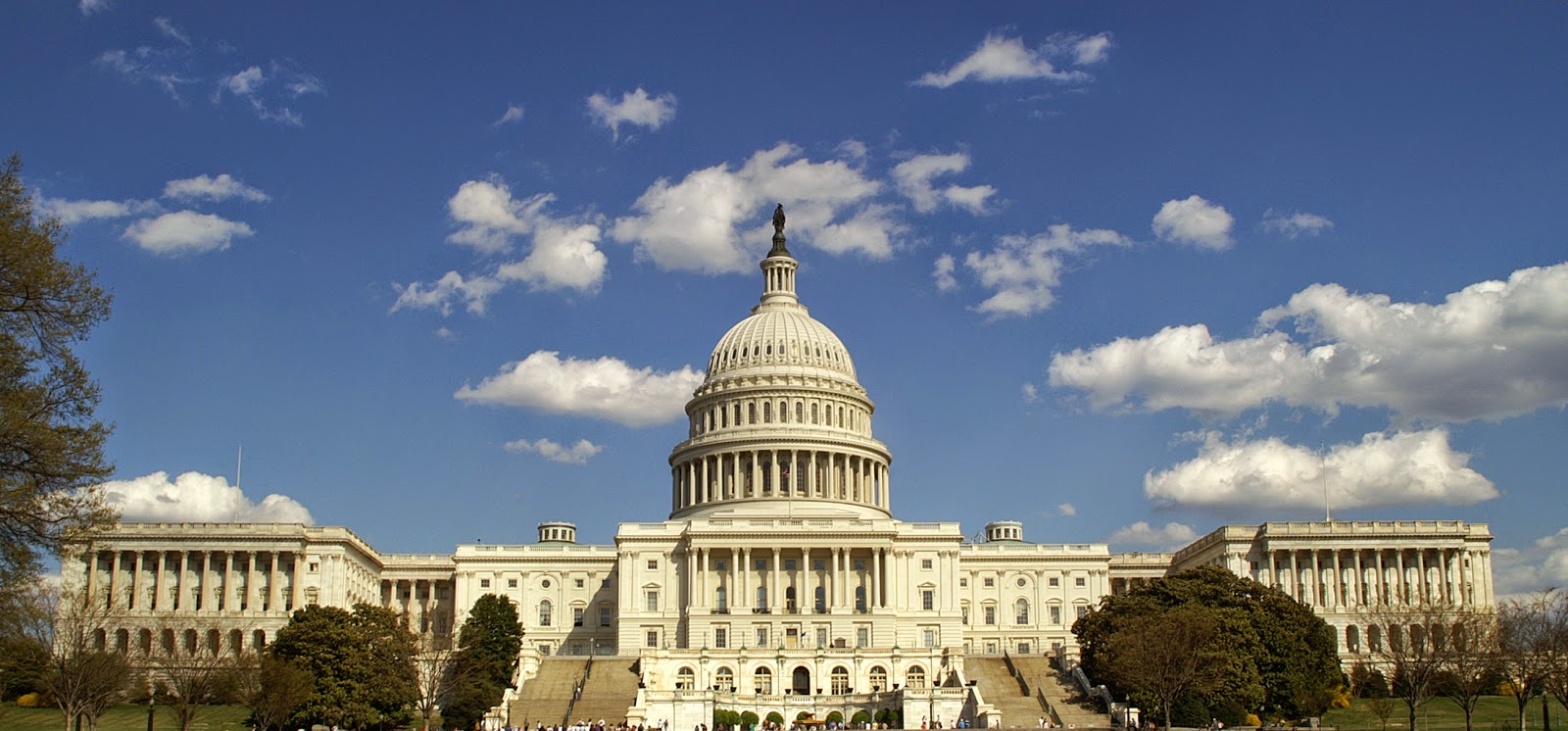
Roll Call: Opinion: David Eldridge: A Look Back at Congress’s Most Memorable Leadership Races

Roll Call: Opinion: David Eldridge: A Look Back at Congress’s Most Interesting Leadership Races

“Pershing, who went on from Roll Call to The Washington Post, where he covers politics, does a great job showing how leadership battles shaped the futures of Gerald Ford, Edward M. Kennedy, Jim Wright and Newt Gingrich, among others.

Here’s Pershing’s 2005 piece in its entirety:
When it comes to Congressional leadership races, they just don’t make ’em like they used to.
While there has been plenty of drama on Capitol Hill over the last few years, there have been few knock-down, drag-out contests for House or Senate leadership posts.
True, the current Republican leaders of the House and Senate both rose to power under dramatic circumstances. Senate Majority Leader Bill Frist (R-Tenn.) won his post after Trent Lott (R-Miss.) stepped down under fire for comments he’d made about the segregationist past of then-Sen. Strom Thurmond (R-S.C.). And in the House, Rep. Dennis Hastert (R-Ill.) ascended to the Speakership following two dramatic resignations, first Speaker Newt Gingrich (R-Ga.) and then Speaker-designate Bob Livingston (R-La.).
Despite the drama, Frist and Hastert won their posts with the broad acclamation of their parties. And on the Democratic side, Sen. Harry Reid (D-Nev.) won the post of Senate Minority Leader without significant challenge, while House Minority Leader Nancy Pelosi (D-Calif.) was elected party leader easily after having previously won a somewhat closer contest for Minority Whip against Rep. Steny Hoyer (D-Md.).
But if the past few years have generally featured snoozers for leadership contests, the last 50 as a whole certainly did not. Since Roll Call sprung to life in 1955, there have been enough coups, multi-ballot marathons and one-vote nailbiters to fill plenty of newsprint.
Here, then, are the 10 best leadership races of the last 50 years in chronological order.
1959: Senate Minority Leader
When Sen. Everett Dirksen (R-Ill.) was elected Minority Whip in 1957, his close relationship with President Dwight Eisenhower made him the de facto leader of his party in the chamber, ahead of Minority Leader William Knowland (R-Calif.).
In 1958, Knowland left the Senate, leaving Dirksen with a chance to win the top job. According to an introduction written by Frank Mackaman in Dirksen’s own memoir, Dirksen faced “considerable opposition from the moderate Republicans” in his Minority Leader campaign against Sen. John Sherman Cooper (R-Ky.).
But Dirksen was able to use his close relationship with Eisenhower to his advantage, and he also mollified various Republican constituencies by handing out committee posts and lower-level leadership titles.
In the end, Dirksen prevailed over Cooper by a 20-to-14 vote. He ended up holding the Minority Leader title for 10 years, making a name for himself as one of the Senate’s most effective leaders. He is now immortalized in the name of one of the Senate’s three office buildings.
1959: House Minority Leader
By 1954, Rep. Charles Halleck (R-Ind.) had already served two brief stints as Majority Leader under Speaker Joseph Martin (R-Mass.) when his party lost power in the House.
Halleck then spent five years as the deputy to Martin, all the while plotting a challenge against his longtime senior partner. In 1959 he pulled the trigger, launching a campaign against Martin for Minority Leader.
Halleck, more energetic and 16 years younger than Martin, was able to convince his colleagues that he could do a better job leading the GOP again in the wake of Democratic gains in the 1958 election.
Halleck ended up beating Martin, 74 to 70. Martin later blamed his loss on plotting by Halleck and Vice President Richard Nixon.
1965: House Minority Leader
After six years in power, Halleck got a taste of his own medicine in the form of a challenge from Rep. Gerald Ford (R-Mich.).
In 1963, Ford had won a somewhat unexpected victory for Conference Chairman against an older candidate, then plotted a similar victory in 1965 against Halleck after another disappointing election for Republicans.
Drawing from the old Halleck playbook, Ford presented himself as more youthful and energetic than his opponent, and he was able to gather the support of enough impatient fellow Republicans — including a young Illinois Congressman named Donald Rumsfeld — to topple Halleck.
Halleck retired three years later. Ford went on to become vice president and then president.
1971: Senate Majority Whip
This contest between two Senate titans, Sens. Robert Byrd (D-W.Va.) and Edward Kennedy (D-Mass.), was partially decided by the deathbed vote of a third legend of the chamber.
In 1969, Kennedy had scored something of an upset by ousting Sen. Russell Long (D-La.) from the post of Whip. Two years later, with his eye on a possible presidential bid, Kennedy was himself blindsided by Byrd.
The West Virginian, whom Roll Call speculated at the time “must be one heck of a poker player,” went into the contest thinking it might be decided by the proxy vote of Sen. Richard Russell (D), who was in the hospital suffering from lung disease.
When the dust settled, Byrd emerged victorious, 31 to 24. Russell’s proxy vote for Byrd may have been his last political act, as he died soon after on the opening day of the 92nd Congress.
1976: House Majority Leader
On Dec. 9, 1976, Roll Call ran a story across its front page with the headline: “Survey Shows Burton Ahead in House Majority Leader Race.”
The story asserted that Rep. Phil Burton (D-Calif.) had a “commanding lead” in the Majority Leader race over Reps. Jim Wright (D-Texas), Richard Bolling (D-Mo.) and John McFall (D-Calif.).
Roll Call was right. Sort of.
On the first ballot, Burton garnered 106 votes, Bolling 81, Wright 77 and McFall 31. McFall dropped out and threw his backers to Wright, allowing the Texan to edge Bolling for second place on the next ballot by two votes.
With the momentum swinging his way and a coalition of moderates and conservatives behind him, Wright edged out the liberal Burton on the third ballot, 148 to 147.
The victory paved the way for Wright to eventually succeed Speaker Tip O’Neill (D-Mass.). In 1989, the Texan was brought down by allegations of impropriety pushed by a cadre of aggressive young conservatives led by Rep. Newt Gingrich (R-Ga.), himself a future Speaker later toppled in part due to ethics concerns.
1984: Senate Majority Leader
Before Sen. Bob Dole (R-Kan.) could make a name for himself as a Senate leader and, eventually, the 1996 GOP presidential nominee, he first had to navigate a hard-fought, five-way race for the chamber’s top job.
With Majority Leader Howard Baker (R-Tenn.) retiring, the race to replace him included GOP Sens. Pete Domenici (N.M.), Dick Lugar (Ind.), James McClure (Idaho), Ted Stevens (Alaska) and Dole.
McClure, a stalwart conservative, was eliminated on the first ballot. Next to go was Domenici, followed by Lugar. On the final vote, Dole was able to outmaneuver Stevens, 28 to 25.
In addition to installing Dole as leader, the race also set off a chain reaction in the committees. The Kansan was succeeded as Finance Committee chairman by Sen. Bob Packwood (R-Ore.), while Lugar took over the gavel of Foreign Relations, postponing the ascension to that post of Sen. Jesse Helms (R-N.C.).
Stevens, who had been Majority Whip before losing to Dole, never ran for leadership again and instead devoted his full attention to committee assignments, including an eventual stint as Appropriations chairman.
1989: House Minority Whip
This race essentially marked the end of one promising leadership career and the launch of another. The victory of Gingrich over Rep. Ed Madigan (R-Ill.) exposed fissures among House Republicans, driving old-school moderates apart from a new breed of conservative lawmakers.
The Whip position opened up when Rep. Dick Cheney (R-Wyo.) was chosen to be Defense secretary by the first Bush administration after the White House’s original choice, John Tower, went down in flames.
Cheney’s departure prompted an unexpected March leadership race between Madigan, who had the support of Minority Leader Bob Michel (R-Ill.), and Gingrich, who had bolstered his standing among conservatives by consistently attacking Wright. As Roll Call put it in a March 16, 1989, headline, “‘Schizophrenic’ GOP Forced to Choose Between Polar Opposites for New Whip.”
Ultimately, in a rebuke to Michel’s moderate approach, Gingrich beat Madigan by two votes, 87 to 85. Madigan lost despite the fact that his campaign was run by two budding expert vote-counters, future Speaker Hastert and future Majority Leader Tom DeLay (R-Texas).
In a notable understatement, after Gingrich’s win, Michel predicted, “It’ll be a more aggressive style on our side, I’m sure.”
1992: House Republican Conference Chairman
While the Conference chairman post was at the time only the third-ranking GOP leadership post, this hard-fought contest between Reps. Dick Armey (R-Texas) and Jerry Lewis (R-Calif.) was another omen of things to come.
Armey beat Lewis 88 to 84 with the ample assistance of a largely united Texas Republican delegation. In a statement after his loss, Lewis said the result made clear that “Texans stick together and Californians do not. Texas’ solid backing and a divided California delegation were the difference in this race.”
Armey’s victory marked yet another blow for conservatives against the moderate wing of the party represented by Michel. On the same day Armey won, the conservative DeLay was also elected Conference Secretary over centrist Rep. Nancy Johnson (Conn.).
Like Stevens following his loss to Byrd, Lewis decided never to run for leadership again. Instead, he, like Stevens, concentrated on moving up the Appropriations Committee ladder, ultimately becoming chairman earlier this year.
1994: Senate Majority Whip
Just as the House Republican leadership got younger and more conservative in the early 1990s, so too did the Senate GOP in the bellwether Whip contest between Sens. Trent Lott (Miss.) and Alan Simpson (Wyo.).
Simpson was the incumbent Whip and a 26-year Senate veteran, facing a challenger who was just completing his first term in the chamber after having held the Republican Whip post in the House.
Lott prevailed on a 27-to-26 vote, despite the fact that Dole and many senior Senate Republicans backed Simpson. The victory paved the way for Lott to become Majority Leader when Dole left the chamber to run for president in 1996.
1994: Senate Minority Leader
On the same day that Lott edged Simpson, Democrats held their own tough leadership fight between Sens. Tom Daschle (S.D.) and Chris Dodd (Conn.).
Daschle began campaigning for the job in early 1994, expecting to face Sen. Jim Sasser (Tenn.). But Sasser lost his re-election bid in November to a young Republican surgeon from Tennessee named Bill Frist, and Democrats lost the majority. So instead of running for Majority Leader against Sasser, Daschle ran for Minority Leader against Dodd. 
 
Both Sen. Wendell Ford (Ky.), the Democratic Whip, and Byrd had backed Sasser and then shifted their allegiance to Dodd. But it wasn’t enough to beat Daschle, who eked out a 24-to-23 victory.
Daschle went on to lead his party in the Senate for 10 years before losing his own re-election battle to former Rep. John Thune (R-S.D.) in 2004. Dodd soothed his wounds by becoming chairman of the Democratic National Committee.
Corrected, 3:08 p.m.: An earlier version of this post misidentified the position involved in the leadership race in 1971.  It was a Senate whip election.” 
The New Democrat
Those are some good Congressional leadership races from both the House and Senate that David Eldridge wrote for Roll Call back in 2005. I’ll start with 2005 because that is one I personally remember and lived through it especially as a Democrat. Because it had happened about a month after President Bush is reelected in November, 2004 and defeated Senator John Kerry the same Secretary of State John Kerry.
But something else happened that night when John Thune defeated the then Senate Democratic Leader the Minority Leader Tom Daschle in the North Dakota Senate race. The number one ranking Democratic member of Congress goes down that night a great night for Congressional Republicans in both the House and Senate and of course for President George W. Bush. And because of the Dashcle loss Senate Democrats who were in the minority facing the fact they would be entering the next Congress still as the minority party, but with four fewer members down from 49-45 seats. Going up against a Republican Senate, a Republican House and a Republican President and having to elect a new Minority Leader.
2005 and in the 107th Congress as Senate Minority Leader is where Harry Reid becomes a big name and one of the most powerful Democrats in the United States. He united the Senate Democratic Caucus behind him and against any partisan legislation that the Republican House Senate over that the Republican Senate wanted to pass. Social Security reform/privatization being a perfect example of that. To go along with the House passed border control only immigration reform bill. Both went down to defeat because Senate Democrats led by Harry Reid were able to block them. Minority Leader Reid becomes Senate Leader Reid in the next Congress when Democrats won back Congress. And Leader Reid has had that title ever since.
Other leadership races that stand out for me are Gerry Ford in 1964 just after LBJ is elected in a landslide as President. With Democrats adding to their huge Democratic majorities in Congress. And Gerry Ford becoming House Minority Leader in the 1965-66 Congress with smaller numbers than the previous Congress. But being able to unite the House Republican Conference to go along with right-wing Southern Democrats in the House and Senate against the Democratic Leadership in the House and Senate and President Johnson when they tried to pass their own partisan agenda.
Bob Dole becoming Senate Leader in 1985 replacing Howard Backer which put Leader Dole in a position he would hold for eleven years as Senate Republican Leader both Leader and as Minority Leader. And a strong presidential contender as a national Republican leader. And 1989 with Newt Gingrich taking over for Dick Cheney as House Minority Whip the second ranking House Republican. And had Newt not obtained that position probably doesn’t become Speaker of the House at least not by 1995 when he got the job.
All of these Congressional leadership races are very interesting at least to me as political junky and a political history junky. And they all deserve blogs and perhaps books written about each one. So trying to cover all of them justly in one blog is difficult. But something that deserves to be written about in deep detail.

http://www.youtube.com/watch?v=15382iZlYMs

Posted in Congress | Tagged , , , , , | Leave a comment

Washington Times: Editorial: Soda, Cigarettes and the Nanny State

American Nanny State

Washington Times: Editorial: Sodas, Cigarettes and the Nanny State

I’m against the nanny state as well because it implies that government or elitists in government know best how to manage individuals lives them the individuals themselves including people they do not know very well. That individuals are basically stupid and too dumb to decide for themselves what to eat, drink and manage their own personal affairs. And we have a long history of nanny state politics going to the Great Depression with alcohol prohibition and perhaps even further than that.

But what separates me from some on the Right who claim to be against big government and the nanny state until they are in favor of it. But then say “this is not big government, but good responsible government looking after the welfare of everyone” is that I’m against big government and the nanny state, period. I do not say I’m against it except when I’m in favor of it. I don’t defend Americans right to drink or smoke, eat junk food why I’m telling Americans who they can sleep with. Or what music they can listen to, or what TV and movies they can watch.

To be against the nanny state you have to be against the nanny state. And that night sound like an obvious statement, but there are people both on the Right when it comes to alcohol, tobacco and junk food to use as examples who claim to be against the nanny state and looking after our individual freedom while at the same time are trying to ban homosexuality, or pornography or other forms of entertainment they personally do not approve of for the good of our general welfare.

There are three options when it comes to the nanny state.

1. You are in favor of it whether you are on the Right or Left.

2. You are against it whether you are on the Right or Left.

3. You are selectively in favor of it and against it whether you are on the Right or Left. You like the nanny state over here while you are against it over there.

But don’t try to convince people of your opposition to big government and the nanny state on one hand while you are embracing it on the other hand.

Posted in Big Government | Tagged , , , , , , , | Leave a comment

Foreign Affairs: Opinion: Omar Al-Nidawi: How PM Nouri Al-Maliki Lost Iraq

Prime Minister Nouri Al-Maliki

Foreign Affairs: Opinion: Omar Al-Nidawi: How Maliki Lost Iraq

It would be easy and perhaps even tempting to blame crisis going on in Northern Iraq and the fact that it is now under control by Islāmic terrorists on George W. Bush and Dick Cheney when they were President and Vice President. But the fact is both President Bush and Vice President Cheney have been out of office for over five years now. And Iraq was fairly stable when they left office with a competent federal government.

George Bush and Dick Cheney deserve a lot of blame for what happened in Iraq and their mishandling of that war during the six years we were over there during their time in office. But the fact is Iraq is now under the control and responsibility of the Maliki Administration which is what Iraq wanted. And when Iraqi troops fail to even bother to try to defend their nation against rebels when they were trained to fight for their country. Its kinda hard to say that is somehow the United States fault or to blame it on one president.

The blame goes to Prime Minister Nouri Al-Maliki and his corrupt dictatorial administration and his failure and unwillingness to unite his country. And what he’s done instead is trying to centralize the power in his own office instead of reach out to the different diverse groups in that country. And has been left with forces that aren’t willing or able to defend and fight for their own country and instead walked away when given the opportunity to defend their country. And as much as the American Neo-Cons want to blame President Obama for the fall of Northern Iraq they should first look at the corrupt Iraqi government that they backed.

Posted in Foreign Affairs | Tagged , , , , , | Leave a comment

National Post: F.H. Buckley: Canadian Conservatives Shouldn’t Look South For Right-Wing Inspiration

The only thing I agree with F.H. Buckley in his piece comparing Canadian Conservatives with American Conservatives is that “Canada shouldn’t look South for right-wing inspiration”. For obvious reasons I believe, but a big one being that a Canadian Conservative is probably to the left of an American Center-Left Liberal Democrat. Canadian Conservatives look more like FDR Progressives than Goldwater Conservatives.
To risk stating the obvious Canadian conservatism even looks different from American conservatism even in the classical conservative sense like Barry Goldwater or Bill Buckley, or today with Senator Rand Paul. So so-called religious conservatism or religious conservatives who look like theocrats to most of the rest of the world would never fly politically to a Canadian country that if anything is more secular than America and if anything believes in a bigger separation of church and state than Americans as a whole outside of our Bible Belt.
Canadian Conservatives to me at least represent the best form of a right-wing movement perhaps in the Western world. Because as much as Canada gets stereotyped as a big government socialist state it really isn’t. Their Federal Government and they do have a Federal system spends less of their country’s Gross Domestic Product than we do. And they tax business less than America does. And they do believe in fiscal responsibility and fiscal conservatism more than American so-called Conservatives. At least in the sense of not taxing and spending and running up big debts and deficits annually. And take a conservative fiscal look across their Federal budget including their defense budget more than American so-called Conservatives do.
There’s really nothing wrong with the Canadian right-wing at least as I see it as an American. They have true Conservatives up there who believe in good government. But part of good government is limited government since there is a limit to the good that government can do for people especially if people aren’t willing to do everything for themselves. And Canada should simply just focus on what works in Canada. As Americans hopefully will get back to what works in America.
Posted in Canada News, The New Democrat | Tagged , , , , , , , , , , , | Leave a comment

The Diplomat: Aurelia George Mulgan: Time to End the Double Standard on Japanese Defense

You would think a large developed country of a hundred-thirty-million of people with an economy of four-trillion dollars which is what Japan is could defend themselves. America is not responsible for the national defense of India a huge democracy in a very tough region in South Asia a country of over a billion people. Or responsible for the national security of Mexico another large democracy with tough security issues of a hundred-ten million people. But we are responsible for the defense of Japan that has the third largest economy in the world and a great developed nation with the resources to defend themselves.

This all goes back to Japan’s past especially World War II when they were an authoritarian state that seek greater power in the world. But those days are gone and not they are one of the greatest countries in the world. A thriving democracy with a democratic constitution where their people have the freedom to govern themselves and where they respect human rights in their country and abroad. They more than have the financial resources to defend themselves. And for when you are not aware of it America has its own problems domestic especially with our debt situation and an economy that is barely growing.

The question is not whether Japan can afford to defend themselves. But whether or not America can afford to defend our huge country and defend other large countries like Japan at the same time. Especially when a country like Japan has the resources to defend themselves.

I would argue that we do not and that this is where you go to cut the debt and deficit when it comes to the defense budget. The national defenses of countries that can defend themselves. Especially instead of taking it out of people who’ve risked their lives and given up their personal health to defend our country.

Posted in Foreign Affairs, The New Democrat | Tagged , , , , , , , , , , | Leave a comment

Economic Policy Journal: Robert Ringer: The Individual Versus the State

I’ve been reading going on for about five years or so now since I started blogging about what is called Laissez-Fair capitalism. Which means government out of the economy.
Well let’s think about that for a minute to examine what that actually means. Gone would be a public welfare state or safety net. Gone would be government regulations. Gone would be taxpayer-funded government subsidies to business’s. Gone would be anti-union and union-busting laws. Because again government would be out of the economy. Remember Libertarians are supposed to be anti-union, but want government out of the economy. Yet they support anti-union union-busting laws. They are trying to have it both ways.
Instead of the “individual versus the state” how about we have the individual working with the state. The state there to protect people from predators. Which is really is what government regulations are supposed to be about. With the individual having complete control over their own personal and economic affairs as long as they aren’t hurting innocent people either personally or economically. And yes that is where government comes to deal with predators. As well as have government there to see that all individuals have the opportunity to succeed in life. Whether they are currently kids in school, or low-skilled adults working or not.
What I’m talking about is liberal capitalism which is different from both social democracy which is built around the central government being there to take care of everyone. Or Laissez-Fair capitalism that gets the government completely out of the economy and lets nature take its course so to speak.
Its liberal capitalism and what Americans have done to take advantage of those opportunities that has built America. Not social democracy that is built around one big central government to take care of everyone. Or Laissez-Fair capitalism with government doing nothing.

Posted in Ayn Rand, The New Democrat | Tagged , , , , , , , , , , , | Leave a comment

Forbes Magazine: George Leef: Liberalism Day: Time For Liberals to Take Back Liberalism

I agree that America needs a return to what I at least call real liberalism or probably what is more known as classical liberalism. And call people who are known as ‘modern liberals’ what they are. Which are leftist collectivists or democratic statists even. People who believe in democracy and tend to be democratic, but where the central or federal state is a lot bigger so it can take care of people regardless of income level for them. Where we would really have a superstate or welfare state to manage a lot of the affairs of Americans. But not just as it relates to the economy, but also what we would be allowed to eat, drink and even how we talk to each other. Where certain political speech they these statists disagree with would not be tolerated.
For the record liberalism is not MSNBC talk, The Nation, the AlterNet, Salon or the more socialist oriented think tanks like the Roosevelt Institute to use as examples. They believe in the things that I just laid out in the first paragraph. Liberals believe in freedom that all people are entitled to it until they do something like hurting innocent people where they no longer deserve their individual freedom economic or personal. Liberals don’t believe in government or business. That is not what our ideology is centered around. We believe in the individual that if the individual is educated they’ll have the tools they need to live in freedom and live a productive life managing their own affairs.
What separates Liberals or classical Liberals even (as long as you aren’t talking about Libertarians) is that Liberals aren’t anti-government. We are anti-big government. That is government that tries to do too much. Trying to do things for the people that they can do for themselves. We believe government can and should and play a role in helping people at the bottom get the tools they need to move up in society and live in freedom as well. Not take care of mentally and physically able body people indefinitely. But support them in the short-term as they are preparing themselves to be self-sufficient.
Libertarians at least today are essentially anti-government and do not have much of if any role for government at all federal or at any level. Liberals truly believe in limited government and limiting to doing what we need it to do. Which is mostly about protecting our freedom. Not running our lives for us and supporting people in the short-term who need it. As they are working their way up to self-sufficiency.

Posted in Forbes Magazine, The New Democrat | Tagged , , , , , , , , , , , , , , , , | Leave a comment

Commentary Magazine: Jonathan S. Tobin: In Defense of the Vice Presidency

It’s rare that I agree with anything written from Commentary Magazine other than their takes on the state of the current Republican Party. But Jonathan S. Tobin makes great points in his article In Defense of the Vice Presidency. That the Vice Presidency is essentially insuring the idea of legitimate government when for whatever reasons the President can no longer full fill his responsibilities as President and must step down from the office.
That is really the main and perhaps only function of the Vice President. And whatever responsibilities is given by the President and how well the Vice President carries out those duties determines how well the function of being ready to be President is carried out. Which is critical for any presidential nominee to select someone who is not only qualified to be Vice President of the United States, but President of the United States as well. Just for when the Vice President has to step into the Presidency even in a short-term basis during the President’s term.
With a Vice President the American people know who they are getting if anything were to happen to the President. Because the Vice President is from the same party and in many cases has similar political beliefs. And a good and active Vice President which is what we’ve had for the most part since Walter Mondale in the Carter Administration. And I would even add Dan Quayle and Dick Cheney to that list whatever you think of them personally and politically. Who both had major roles in their President’s administration and were ready to step into the Presidency if needed.
For me at least it is not a question if whether we should have a Vice President or not. But what exactly should be the Vice President’s duties besides representing the administration oversees and keeping a close eye on Congress to step in and be able to negotiate deals with them for the President. And because of the possibility that the Vice President may at some point become President before the President’s term is over you want the Vice President to have a major role in the administration.
For me that means having the Vice President as the 1st Officer of the Administration or Executive Branch. In on all and able to weigh in on all decisions that the President makes and having all the access to information and reports that the President gets. And being in on all the major presidential meetings. Being a member of all the key presidential councils so the Vice President has the intelligence, knowledge, and experience needed if and where they become President at some point during the President’s term.
Long are the days where the Vice President for the most part is a ceremonial role and just attending funerals and other functions outside of the Executive Branch. And presiding over the U.S. Senate even when a tie vote doesn’t occur as President of the U.S. Senate. Which is a good thing because for the Vice President to be useful to the country that person needs to know what is going on and able to help the President govern the country.

Posted in Role of Government, The New Democrat | Tagged , , , , , , , | Leave a comment

Slate: Magazine: Reihan Salam: NYC Mayor De Blasio’s Welfare Mistake

I guess the Socialist has arrived in New York City to be their mayor in Bill De Blasio. In saying that people on Welfare there need not to go to work or be actively seeking work to receive their public assistance. I’m saying this half-jokingly and I agree with the Mayor that education and job training are important when it comes to people in Welfare who are low-skilled. But not as a replacement to working and looking for work. Because work experience especially people with paper-thin resumes even if they have a résumé is a form of job training.
The fact is we need these things when it comes to Welfare and moving people out of poverty which is what the 1996 Welfare to Work law is about. Moving people from Welfare to the fast food industry or working in other areas of the food service business and making minimum wage is not a success. Because they’ll still be on public assistance as it relates to public housing, food assistance and Medicaid.
And saying to people on Welfare that they “can continue to collect their Welfare and not need to bother to even look for work let alone go to work. And maybe we’ll make educational and job training opportunities available to you. But that won’t be required either because we really just want to take care of people on Welfare. And less interested in moving people off of Welfare”. That doesn’t work either for obvious reasons and the key reason Welfare was reformed in 1996.
The goal of Welfare and public assistance in general is to move people off of public assistance and in to good jobs so they no longer need public assistance at all. That comes from a combination of education and work experience and this can be done at the same time as people on Welfare are improving their skills with a low-end job and improving their skills so they can get themselves a good job.
Welfare to the middle class should be the goal of Welfare. Not Welfare to more Welfare. Or Welfare to independent poverty with no assistance for people to improve their lives.
Posted in Slate Video, The New Democrat | Tagged , , , , , , , , , , , , , , , , , , | Leave a comment

NPR News: Report: Krishnader Calanur: President Obama Seeks $1 Billion to Boost U.S. Military Presence in Europe

I got a crazy idea that may just have people running to the North Pole to escape the summer weather. How about instead of paying Europeans to defend themselves, we have them pay us for their defense? Or here’s a crazier idea, how about Europeans invest in their own defense and national security which would be a big boost to their economies. God knows they need that type of economic growth right now. And they could even buy their defense equipment and other resources from the United States.
I mention these things for a few reasons.
1. Europe or at least the countries we are still responsible for defending are made up of developed democracies. Countries that can afford to take care of themselves. Or work together to defend Greater Europe in coalition. The reasons why Europe’s defense budgets are so much smaller than the United States at least as far as percentage of Gross National Product has to do with the fact that they rely on America for their national defense.
2. Another big reason for President George W. Bush’s National Security Council vision of creating democracy or building democracy in Arabia comes from the vision for Europe with NATO and building democracy in those countries and have an international defense force largely funded by American tax payers to defend democracy in Europe from Russia. A big difference being that America had European allies to help sustain that security including Europeans themselves. Arabia especially with Iraq has been much different where America for the most part has been responsible for the development and security of Iraq.
In case the latest developments in Eurasia in Ukraine and in Arabia with Syria and Iraq and of course the seventeen-trillion-dollar national debt in the United States aren’t obvious enough. There’s a limit to what America can do by itself financially and militarily which means countries that can afford to defend themselves need to do that. And then we need to work with them instead trying to police the world ourself to make the world as safe as it possibly can.
Posted in Barack Obama Presidency, The New Democrat | Tagged , , , , , | Leave a comment