
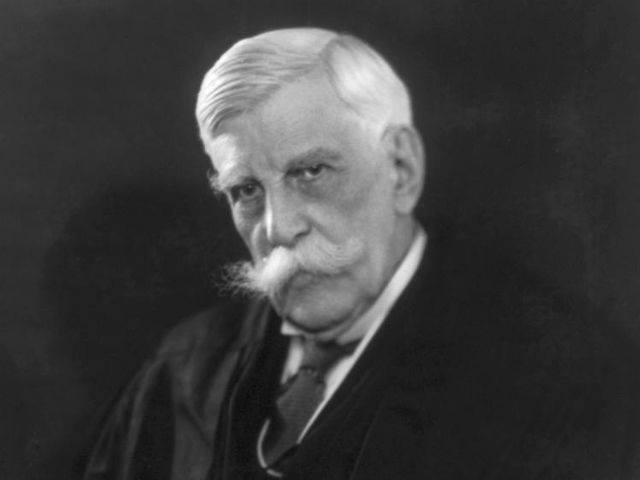
U.S. Chief Justice Oliver Wendell Holmes
I’m not a lawyer, which is probably as obvious as Ayn Rand wasn’t a Socialist, but I bet a good lawyer who is sane, sober and awake at the time, could make a damn good case that the military draft is unconstitutional. Forcing Americans to fight for causes they not only don’t believe in, but didn’t voluntarily sign up for. It is one thing if you decide to join the military and get an assignment to do a mission you don’t believe in. But it is completely another to force people to not only be part of the military, fight for the military and then fight for causes they don’t believe in.
Of course you have to complete missions once you’re already in the military. Because you signed up for that. And soldiers, marines, sailors and airmen, can’t pick and choose what missions they accept, or not. The military couldn’t function properly that way. But to force someone to not only give up their personal and even economic freedom, at least to a certain extent and then yank them away from their family and community, force them to fight for you and fight for a cause they don’t believe in, sounds like a violation of an American’s personal freedom and constitutional rights there.
As far as this case here. Charles Schenck, was a noted Socialist in the United States in the early 20th Century. The Leader of the Socialist Party in America and a solid anti-war activist, which Democratic Socialists at least tend to be. And what he was doing in this case was protesting strongly against a war that he didn’t believe in as someone who wasn’t a member of the U.S. Military. It would be one thing if he was in the military and he was actively and publicly protesting against a war that he agreed to be part of by signing up for the Military. But he was a private citizen here protesting against the World War I draft and the war itself.
And Schenck actively and publicly opposing the World War I draft, would tell people what he thought about it and the war and encourage Americans to oppose the draft as well. This looks like a clear First Amendment case here with an American opposing a war that he was obviously against and had every right to do so. The U.S. Supreme Court, has made plenty of bad rulings over the years and this one is probably not in the top ten. Especially when you’re talking about cases that involved Japanese, German and Italian-Americans, being held in deferment camps during World War II, simply because of their ethnicity. But this is one of their worst First Amendment rulings.

 Derik Schneider
 Ederik Schneider
 Erik Schneider
 FredSchneiderUS
 kireschneider
 The Daily Review
 Rik Schneider
 TheActionBlogUSA
 The New Democrat


 The New Democrat
You must be logged in to post a comment.