Kieran Monroe: Jayne Mansfield on Jack Benny (1956)

Jack Benny Show

Source: Kieran Monroe- Baby Jayne & Big Jack

Source:Kieran Monroe

Wow! And I thought Jack Benny was pretty popular and that the Jack Benny Show was pretty popular. And then I hear that they have to grab the purses of women, including Jayne Mansfield in order to get them to appear on the show. I wonder if they paid the audience just to show up. How they make any money paying people just to come to the show. Jayne Mansfield showing her quick comedic side as an actress on this show. Playing along and doing very well on it. Going toe to toe with perhaps one of the top 5-10 comedians of all-time who inspired many other comedians as well.

Jayne Mansfield was probably at her peak and at the top of her career at this point. Which is a damn shame, because she was only I believe twenty-three years old at this point. And probably should’ve had another twenty-years as a Hollywood star had she took care of herself and laid off heavy drugs including booze. Because her career moderated, but didn’t collapse the way it did in the early and mid 1960s. Leaving her depressed and wondering what was the point in going on. Every comedy and variety show wanted a piece of her. Not just physically, but they also knew she was a very good comedic actress. With an excellent sense of humor.

Jack Benny had Jayne, along with Marilyn Monroe, Diana Dors and Mami Van Doren, who by far in away had the longest career of any of these Hollywood Goddess’s, on his show in the 1950s. Dina Dors had the second longest career of these starlets, with Marilyn burning out in 1962 and Jayne in 1967. They were both in their mid-thirties when they died. Mami is still alive today in her early eighties and Diana died in 1984. But Jack could get basically anyone he wanted on his show. His show was that popular, good and funny. And inspired future variety shows in the future.

Posted in Baby Jayne, Hollywood Goddess, Originals | Tagged , , , , , , , , , , , , , , , | 1 Comment

The Young Turks: Panel- What Will Happen After Senate Minority Leader Harry Reid Retires?

It must be a slow news day if I’m blogging about the retirement of a U.S. Senator. Even Senate Minority Leader Harry Reid, the most powerful Democrat in Congress and most powerful Democrat in Congress since 2005. Leader Harry Reid was President Bush’s biggest headache in Congress in President Bush’s second term. Both as Minority Leader and then as Leader of the Senate in President Bush’s last two years. A bigger headache to President Bush than his Vice President Dick Cheney and his Secretary of Defense Donald Rumsfeld. House Republicans must be throwing a big bash right now, even though a lot of them probably don’t drink, because it violates their religious beliefs. Because Leader Reid was their biggest headache the last ten years or so, not including President Obama. Because Leader Reid cold single-handily kill their agenda and their bills.

As far as who replaces Harry Reid either as Senate Minority Leader or Senate Leader in the next Congress, probably 50-50 odds right now as far as which position the next Democratic Leader will have. My choice would be the current Assistant Minority Leader Dick Durbin, whose been Leader Reid’s top deputy since Harry Reid became Senate Democratic Leader back in 2005. A strong Liberal Democrat pro-personal freedom and civil liberties leader. As well as being in favor of economic opportunity and freedom for struggling Americans. But I’m afraid the panel is right and that Chucky Wall Street will probably be the next Senate Democratic Leader. Because of all the money he raises for Democrats, because of his connections with Wall Street.

Posted in Originals, TYT | Tagged , , , , , , , , , , , , | 1 Comment

CNN Politics: Mark Preston- Can This Democrat Really Beat Hillary Clinton?

Source:CNN Politics

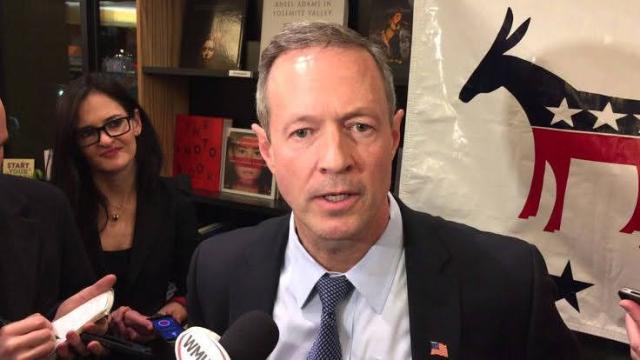
No one is saying that Martin O’Malley is going to win the Democratic nomination for president in 2016. Governor O’Malley knows that he’s a long shot. But so was Governor Jimmy Carter in 1975, Governor Bill Clinton in 1991 and Senator Barack Obama in 2008. Jimmy Carter probably had the least name ID of any of these Democrats and he won the Democratic nomination for president going away in 1976. Bill Clinton had the Democratic nomination locked up by February or March of 1992. With Barack Obama and Hillary Clinton in 2008, it went to June. But Senator Clinton was a well-financed frontrunner in 2007-08 who lost to Senator Obama.

When someone starts off as high as Hillary Clinton for president like she is now, there’s only one way for her to go, which is down. Doesn’t mean she’ll go all the way down, but Democrats have wanted a strong challenger to her since at least the summer of 2014. And with her latest controversy that makes even more sense. And that the fact that she’s not campaigning and has kept quiet about when she’ll officially announced just gives Democrats that itch about wanting an alternative to her even stronger. They want to know where she is and where she is on the issues, right now and what type of campaign she’ll run.

Lack of name ID is certainly a weakness and can be a problem. But if played right it can also be a strength. Because it gives the candidate the opportunity to introduce themselves to the people who they’ll need to vote for them. Tell them all about them self and what they are about, what they’ve done in the past, what they’ll do in the future and why people should vote for them. That is where Jimmy Carter, Bill Clinton and Barack Obama and now Martin O’Malley all were before they became Democratic nominees for president and then won the presidency the same year.

Martin O’Malley has everything that voters I believe especially Democrats at least say they want in a presidential candidate. Youth, energy, outsider, newcomer to the national scene, intelligence, experience, likability, charm, humor and vision. He connects to everyday people very well and also appeals to lets say yuppy Democrats, wine and cheese Democrats who have a tendency to look down at working-class Americans. He’s a Democrat that is liked by women, young people and minorities. Young Democrats and perhaps minorities are, Secretary Clinton’s weakness’s right now. And if Governor O’Malley is successful in getting his name and message out in the next 8-9 months, we’ll have a real Democratic contest in 2016.

Posted in CNN, Originals | Tagged , , , , , , , , , , , , , , , , , , , | Leave a comment

The Nation: George Zornick: ‘Lets Just Get Rid of The Hyde Amendment’

Source:The Nation

I going to get to The Hyde Amendment and why I support that and why I’m against public funding for abortions. But I also want to use this opportunity to explain what freedom of choice or pro-choice means to me as a Liberal. Because a lot of people who call themselves Liberals, like to brag about how pro-choice that they are. Because they believe same-sex marriage should be legal, abortion should be legal. And some of them support marijuana legalization. But when it comes to things like education, gambling, pornography, prostitution, gun ownership and now thanks to Mike Bloomberg, junk food and soft drinks and I’m sure tobacco and perhaps even alcohol is next, “they say big government knows best.” And go out-of-their-way to support the nanny state.

That is not me. Freedom of choice is exactly that. Do you believe in it or not. And if you’re in between, then you believe in limited choice. The right to do things that you approve of, or don’t see as harmful enough that it should be illegal. I’m pro-choice on everything that doesn’t involve hurting innocent people for everyone twenty-one or over. Including all the examples I’ve already mentioned. But where would individual choice and freedom be without personal responsibility for the people who make those choices? It would be very expensive and unaffordable even to the point that we would either have to limit or eliminate choice, or make it come with personal responsibility. Otherwise a lot of innocent people would get stuck with others bad decisions. As far as having to pay for it.

Adults should have the freedom over their own lives. Just as long as they pay for it, or they can get someone else to agree to pay for their choices. Or someone volunteers to do that. Freedom of choice is not the freedom to force others to pay for choices. Once you decide to do something it’s up to you to come up for the funds for it. Unless someone else agrees to do that for you. Otherwise you’re making a choice that can’t afford and won’t be able to follow through on. I’m 98-99% pro-choice on everything again as long as we aren’t hurting any innocent people. And aren’t forcing our costs onto others who have no choice in the matter. And that includes abortion which is why I support The Hyde Amendment. Not because I’m against abortion, but we don’t have the right to pass the cost of our choices onto others.

Posted in New Left, Originals | Tagged , , , , , , , , , , , , , , | Leave a comment

Reason Magazine: Jacob Sullum: ‘Ted Cruz is Right About Taxes’

“If you have not done your taxes yet, do not count on getting help from the Internal Revenue Service in answering any last-minute questions that may arise. The IRS estimates that only half of the anxious and bewildered taxpayers who call the agency this year will get through to a “telephone assistor,” and those who do “could easily wait 30 minutes or more for limited service.”

Those numbers reflect a deeper problem that Ted Cruz tapped into on Monday, when he announced that he is seeking the Republican presidential nomination. Although the Texas senator’s dream of “abolishing the IRS” may be unrealistic, especially given the tax reform plan he favors, he is right to focus on the Internal Revenue Code’s excruciating complexity as a scandal crying out for reform.

“Instead of a tax code that crushes innovation [and] imposes burdens on families struggling to make ends meet,” Cruz said, “imagine a simple flat tax that lets every American file his or her taxes on a postcard.” Flat-tax proponents, including several Republican presidential candidates, have been asking us to imagine a postcard-sized tax return for more than three decades. If it still sounds far-fetched, that is only because we are sadly accustomed to jumping through hoops for the privilege of parting with our money.”

Source:Reason Magazine

Just once I would like to hear someone and its generally Republicans who support some type of flat tax, say, “I’m in favor of a middle class tax hike! Because middle class Americans are under taxed when it comes to the needs of the country and the Federal Government. And its time for middle class hard-working Americans who struggle to just pay their current taxes, to pay more in federal income taxes.” I don’t want to hear them say that because I believe middle class Americans are under taxed. Because the opposite is true, but for them to say that, because that is exactly what a flat tax is. At least as every plan that has been introduced inside or outside of Congress.

Why I say that? Because a flat tax depending on how you do it would be around 15-20% of people’s income. If you’re in the bottom tax rate right now, you’re paying ten-percent in federal income taxes. So now replace the current Progressive Income Tax with a regressive flat tax of anywhere between 15-20% and that would be anywhere between a 50-100% tax increase on someone making 40-50 thousand-dollars a year. Who are those people? Law enforcement, military personal, emergency management officers, teachers, truck drivers, construction workers, autoworkers and millions of other working-class Americans who struggle just to pay their current bills and that includes taxes. You really think they’re looking for a 50-100% tax increase right now to help them out?

I like the idea of tax reform and support it myself, including business tax reform. It is something that we must do as a country to get the type of economic growth that we need to not only get our economy back to pre-Great Recession levels, but to expand it further. But there are right ways to do things and there are wrong ways. I to personally would like to see us scrap the income tax and stop taxing production and creativity. And instead go with what Senator Ben Cardin, one of Senator Ted Cruz’s colleagues calls the Progressive Consumption Tax. A sales tax that would tax basic necessities of life at fairly low rates. But tax luxury items which would have to be defined at higher rates.

We could leave in the corporate tax, but have it much lower than thirty-five-percent, but make it progressive as well. Somewhere between 10-20 percent depending on the size of business and their profits. And scrap a lot of the, well garbage in the tax code. But individual and business to help pay for the lower tax rates. As well as to encourage more economic development in America both domestically and foreign. We could do all of these things without passing a single tax hike on middle class Americans. People that both Democrats and Republicans claim to support. But have different ways of showing it.

Posted in Originals, Reason | Tagged , , , , , , , , , , , , , , , , , , , , , , , | 1 Comment

David Weigel: ‘Martin O’Malley in Iowa’

548271d8682b0d72cf536e1d26c5e99c

Source:David Weigel– former Governor Martin O’Malley (Democrat, Maryland) in Iowa.

“Martin O’Malley in Iowa. Press scrum in Concord, NH.”

From David Weigel

I don’t think there will ever be another John F. Kennedy, Bill Clinton or Barack Obama. These are great politicians and I use the term accurately and positively that don’t come around very often. Which of course that might sound cheesy, but it’s true. Politicians that not only have a strong grasp of the issues and knowledge of the subjects they deal with and are especially interested in, but can communicate them in a way that makes people think: “You know what, that’s very interesting. I’ve thought about that issue myself, just not in that way.” Don’t come around very often.

(If you want to put it in pop culture terms) Rockstar politicians don’t come around very often. Politicians who give people the feeling that the person whose campaigning for their votes also understands how they feel and what they are going through. But is interested in not only helping them out, but also has a plan to do that. As well as having good ideas, whose likable, can make people laugh, intentionally. Martin O’Malley has all of these great qualities.

Governor O’Malley represents the best of Jack Kennedy and Bill Clinton, but without the negatives of Hillary Clinton. You don’t have to worry about Governor O’Malley running just on his name ID. Because frankly he doesn’t have much to run on. Or running straight for the middle and not taking strong positions on key issues. Because he has a track record of making tough decisions.

You don’t have to worry about Governor O’Malley running simply for the women’s vote and simply wanting to be the first female President of the United States. Without any real clear agenda and vision for where he would take the country. And giving people an idea about what a Hillary Clinton Administration would look like. And would she actually be doing the job as President and not her husband Bill Clinton. Whose always wanted to run for President again. Because in case Martin is not a big enough clue, he’s a man. Governor O’Malley is a Democrat who’ll appeal to all factions of the Democratic Party. Just as soon as they discover him, if that happens at all.

Americans are and will be looking for something different in 2016. Democrats and Republicans and most importantly Independents, who’ll decide who the next President of the United States is. And running for President with the message of: “Vote for me because of my last name, resume and oh by the way, I’m a woman.”won’t be good enough.

Americans also aren’t looking for another Bush. Someone who on policy grounds will probably look very similar as President George W. Bush, but perhaps a bit smarter with better experience and better track record. They want someone who tell them like it is, at least how they see things. And tell them where they want to take the country and what their presidency would look like.

Martin O’Malley would be that Democrat. Senator Rand Paul would be that Republican. Not that I’m endorsing Senator Paul for President, but at least he would be different and you would have a pretty good idea of what type of President he would be before he got the job.

Governor O’Malley is someone who believes in both economic and personal freedom. Using government to expand the opportunity, middle class and even upper class. Making government work and not just bigger and making more people dependent on it.

Governor O’Malley is not Far-Left and won’t scare Independents and their wallets away from them. And he’s not Dead-Center and not being able to expire anyone behind him. He’s a Center-Left Progressive Democrat in the Jack Kennedy sense. Who believes in opportunity and freedom for everyone. And deserves a long look from Democrats and Independents as the next President of the United States.

Posted in Democratic Party | Tagged , , , , , , , , , , , , , , , , , | Leave a comment

The American Prospect: Sasha Abramsky: ‘Sharing The Wealth’

Money

Source: The American Prospect

Source:The American Prospect

I’ve been asked several times why I’m a Liberal and what it means to be a Liberal, to define Liberal, define liberalism. And I give the same answers to all of those questions every time I’m asked that to everyone who asks me it. A Liberal is someone who believes in protecting freedom for those who have and still deserve it. Expanding freedom for people who don’t have it, but who deserve and need it. And punishing people when they take freedom away from the innocent. Nothing in there is sharing the wealth or what the one time Governor and U.S. Senator from Louisiana Huey Long said, share the wealth.

I’m not interested as a Liberal in sharing the current economic pie to slice it up and give it to people who don’t have a piece of it, because they didn’t work for it. What I will do is make sure that people who earned their wealth and economic freedom get to keep most of it. And take their share of taxes away from them to fund government priorities that we all rely on. But not to the point that it discourages their productivity in the future. While at the same time instead of sharing the current economic pie, expand it so more people can benefit from the economy and also have their own economic freedom.

Instead of creating a dependent society where more Americans everyday become dependent on government and productive taxpayers to take care of them, or create a Basic National Income, where regardless of whether people are productive or not, or even work at all, are guaranteed a basic income so they don’t have to live in poverty, lets put people who need it back in school. Lets make sure their kids get the education that they need to be successful in life. Lets put people to work at good jobs and give people small business credits so they can start their own business’s and become successful business owners.

Lets expand economic freedom and expand the current economy so more American can benefit from it. And so more Americans will want to get a good education and be productive in the future and live in economic freedom as well. Lets rebuild America and especially target those resources to underserved communities. With both public infrastructure investment and private economic development in underserve areas of the country, both urban, suburban and rural. When you make it harder for people to be successful in America, it becomes harder to be successful in America. And as a result less people become successful and less people even work for it. Because government is taking so much of their productivity away from them.

My approach is much different from creating a National Basic Income where everyone no matter what and what they contribute to the country would be guaranteed of not having to live in poverty and with a middle class income. Or even taxing our natural resources to benefit everyone even if they didn’t work to develop those resources. You don’t need social democracy or democratic socialism to create more economic security in your country. And when you’re the size of America both physically and in population, but you produce the energy resources of much smaller countries, than you really can’t afford to do that. Without really discouraging economic production in your country. So what you do is give your people the tools that they need to be able to create their own wealth. And everyone benefits as a result.
Conservative: Occupy Atlanta Cheers Huey P. Long- Share The Wealth

Posted in New Left, Originals | Tagged , , , , , , , , , , , , , , , , , , , | Leave a comment

Salon: Opinion: Mike Conrad: The Left’s Real Choice in 2016: Why it Doesn’t Need Elizabeth Warren to Run

Progressive Democrat

Progressive Democrat


Salon: Opinion: Mike Conrad: The Left’s Real Choice in 2016: Why it Doesn’t Need Elizabeth Warren to Run

I agree that the Democratic Party needs a strong progressive challenger to Hillary Clinton. At the very least to challenge Hillary for working-class blue-collar voters that use to be the core of the Democratic Party that are now moving to the Republican Party. My preferred choice is former Maryland Governor Martin O’Malley. Who I believe once Democrats get to know him, especially young Democrats they’ll get to like him a lot. And then they look at his record as Mayor of Baltimore and Governor of Maryland, they’ll like him even more. A Democrat not of Washington, but someone whose had to govern and get things done with real results, with real executive experience. Not from Congress who just has to look and sound good and stay out of trouble. But doesn’t really have to govern as long as they are fighting the good fight.

Martin O’Malley, will probably sound like a corporatist or centrist mushy-middle New Democrat to a lot of so-called Progressives. But he isn’t because his whole agenda is about the middle class and empowering more Americans to join it. Through things like infrastructure, education, job training, making government work and not just bigger. These are things that Democrats use to stand for as a party. And not just a faction of the party, but we use to be a party of Democrats Liberals and Progressives who wanted to use government to actually empower people. And not make people dependent on it for the rest of their lives. O’Malley is a JFK Liberal Democrat and someone who knows how to govern and who actually has governed. And not sit in Congress or teach at an Ivy League university.

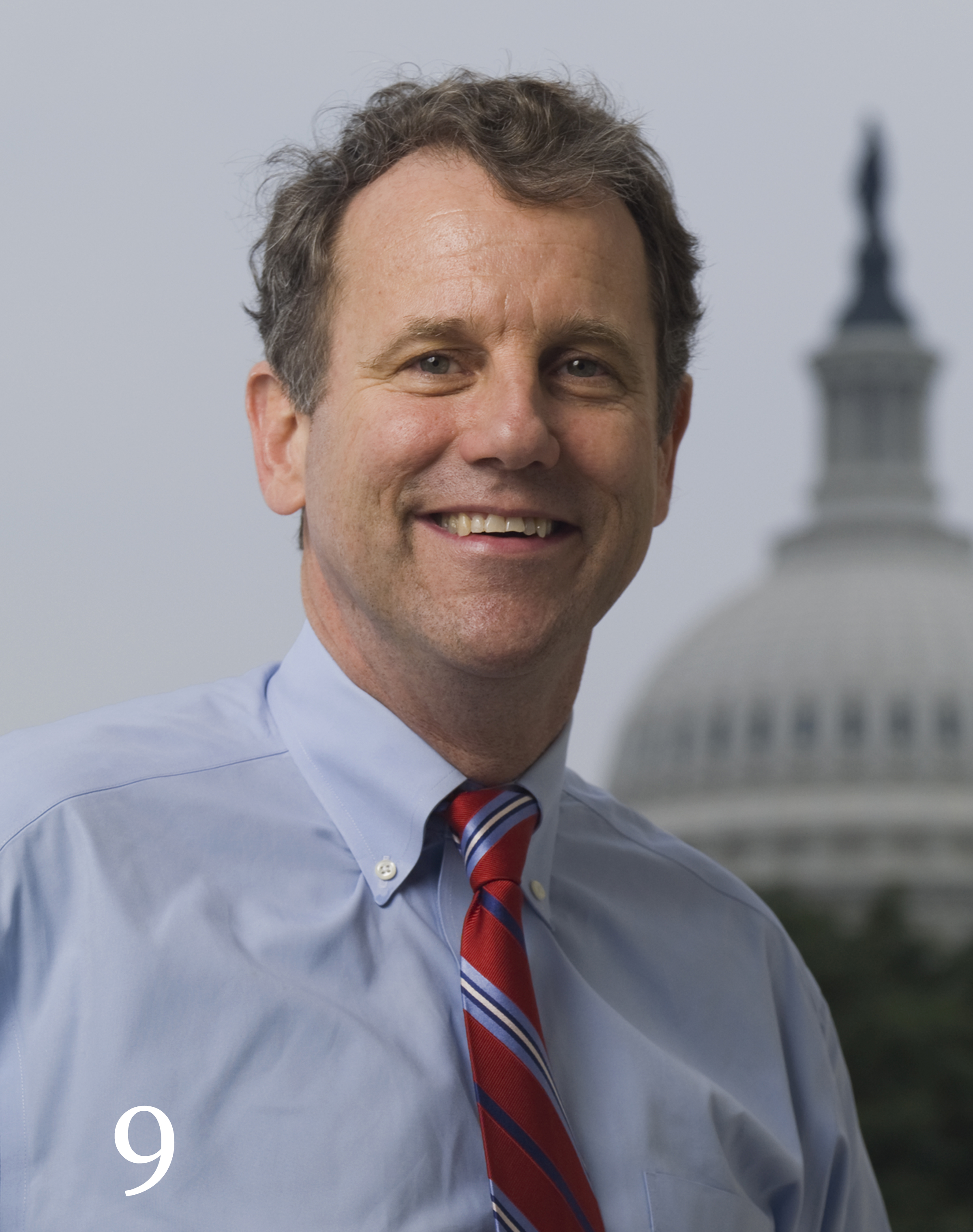
But if Martin O’Malley is not progressive enough for today’s lets say real Progressives and not people who are more socialist in nature, but who call themselves Progressives, you have alternatives as well. And you don’t have to pick a McGovernite who’ll scare the hell out of American business’s and send all of our good jobs oversees as a result. Because they don’t want to get taxed and regulated out of business. Or a Democratic Socialist who’ll do exactly that and make state and local government’s, as well as individuals almost meaningless, because of all the power that will now be in Washington. Someone like Senator Sherrod Brown of Ohio would make a great progressive challenger to Hillary.

If Progressives want to be a real factor in the Democratic Party and hold real leadership positions in the Administration, Congress and at the state level, they need to go back to their roots and go back to what progressivism really is. And not make it democratic socialism under a different name. They need to go back to FDR and LBJ and be about using government to empower people and so the American economy works for everybody. Not make government so big that people essentially don’t have to take responsibility for themselves for anything. Because Uncle Sam is big enough to do practically everything for everybody. Senator Brown is a real Progressive. He would be the Howard Dean of 2016 and someone who could go straight to blue-collar Democrats and Independents for their votes. Be able to compete in the Midwest, Northeast and South for their votes. Because of his appeal to working-class Americans that he’s represented in Ohio in Congress since 1993. And is someone who real Progressives should look at.

Posted in Democratic Party | Tagged , , , , , , , , | Leave a comment

The National Interest: Seyed Hossein Mousavian: How to Fix The Syrian Mess

????????????????????????????????????????????????????????????????????????

Source: The National Interest

Source:The National Interest

I think I found an issue where I agree with Senator John McCain on. Someone who when it comes to foreign policy we rarely agree on anything. It is about Syria where four years ago I believe a NATO no fly zone was a good idea to stop the Assad Regime from murdering its own people, simply because they opposed the Assad Regime and made those feelings public. A no fly zone over Syria or at least parts of it would give the Syrian rebels a fighting chance, literally of taking out the current government there. Or at least bring President Bashar Al-Assad to the negotiating table and negotiate how he would step down from power peacefully.

One of the mistakes that America made in Iraq in 2003, is the same mistake that both America and Europe made in Libya in 2011. Which was to take out the current government including the military without anything to go in and immediately replace the government. So the country could function while they are transitioning and building their new country. So knocking out Bashar in Syria shouldn’t be the ultimate goal at least through military means. But to bring him to the negotiating table to get him to step down from power. And transition to a new government that could and would govern the country responsibly and respect the human rights of their people.

Bashar Al-Assad can’t govern a united Syria now or into the future. He’s lost the ability and credibility to do that. And leaving him in power even to help us take out ISIS there wouldn’t work either. Because he would go back to doing what he’s done before which started the crisis in the first place. All he’s interested in is staying in power at all costs. So what America and Europe could do is to aid the Syrian rebels in the air, but not arm them with lethal weapons. As the Syrian rebels take on the Assad Regime and at least bring Bashar to the negotiating table. But without destroying the government. Especially the military and law enforcement.
ABC News Australia: Inner Workings of Syrian Civil War Explained

Posted in Foreign Affairs, Originals | Tagged , , , , , , , , , , , , , , , , | Leave a comment

The New Republic: Elizabeth Stoker Bruenig: ‘House GOP, White House Budget Overuse The Word Taxpayers’

House GOP, White House Budgets Overuse the Word _Taxpayer_ _ The New RepublicSource: The New Republic– if TNR had their way, Tax Day would be a national holiday that they and other Socialists would celebrate.

You can also see this post at FRS FreeState, on WordPress.

“Earlier this week, House Republicans released their budget for the 2016 fiscal year, “A Balanced Budget for a Stronger America.” There is much to criticize in it, including deep cuts to social spending, questionable accounting, increasingly quixotic Obamacare repeal procedures, and disturbing gestures toward more military spending. But the plan is also an ideological document meant to advance a particular set of beliefs about how government should function, and toward what end. Its composition and slick rollout (including an upbeat YouTube presentation, a BuzzFeed-esque gif set, and a highly navigable website complete with rolling documentation of news coverage) are meant not only to advance certain policy measures, but persuade voters to adopt its ideological point of view.

Which is why its use of the term “taxpayer”—though hardly atypical of political documents—is notable. In the 43-page budget, the word “taxpayer” and its permutations appear 24 times, as often as the word “people.” It’s worthwhile to compare these usages, because the terms are, in a sense, rival ideas. While “people” designates the broadest possible public as the subject of a political project, “taxpayer” advances a considerably narrower vision—and that’s why we should eliminate it from political rhetoric and punditry.

Though addressing people as “taxpayers” is common enough to appear politically neutral, it tends to carry more argumentative weight than it’s typically credited with. The House budget is full of examples of seemingly straightforward deployments of the term which are, upon closer inspection, clearly furthering a particular ideology. “There are too many scenarios these days in which Washington forgets that its power is derived from the ‘consent of the governed,’” the plan reads in one instance of the term’s use. “It forgets that its financial resources come from hard-working American taxpayers who wake up every day, go to work, actively grow our economy and create real opportunity.” In other words, Americans’ taxes are parallel with taxpayers’ consent, suggesting that expenditures that do not correspond to an individual’s will are some kind of affront. The report goes on to argue that

food stamps, public housing assistance, and development grants are judged not on whether they achieve improved health and economic outcomes for the recipients or build a stronger community, but on the size of their budgets. It is time these programs focus on core functions and responsibilities, not just on financial resources. In so doing this budget respects hard-working taxpayers who want to ensure their tax dollars are spent wisely.

Put simply, taxpayers should get what they pay for when it comes to welfare programs, and not be overcharged. But, as the Republican authors of this budget know well, the beneficiaries of welfare programs tend to receive more in benefits than they pay in taxes, because they are in most cases low-income. The “taxpayers” this passage has in mind, therefore, don’t seem to be the recipients of these welfare programs, but rather those who imagine that they personally fund them. By this logic, the public is divided neatly into makers and takers, to borrow the parlance of last election’s Republicans.

Democrats often refer to “taxpayers,” too. At 150 pages, the White House budget proposal for 2016 uses the term 26 times, predictably invoking it when referring to cuts and reductions in services. “The Budget includes initiatives to improve the service we provide to the American public; to leverage the Federal Government’s buying power to bring more value and efficiency to how we use taxpayer dollars…,” President Barack Obama writes in his introductory message. “The Budget includes proposals to consolidate and reorganize Government agencies to make them leaner and more efficient, and it increases the use of evidence and evaluation to ensure that taxpayer dollars are spent wisely on programs that work.”

There are countless examples of this reading of “taxpayer” bleeding out of official rheotric and into mainstream political commentary. Consider Megan McArdle’s recent meditation on prison reform in Bloomberg View, in which she points out that “prison is … very expensive,” and therefore, “while we’re punishing the criminal, we’re also heavily punishing the taxpayer.” Imagining tax payment as a kind of punishment is the upshot to the general use of the term, however innocuously the majority of its speakers may intend it. If money owed in taxes is imagined, as in the budget plan and McArdle’s usage, to belong to the taxpayer, then programs operating off of public revenue do seem to have some obligation to correspond to their funders’ consent, and serving the interests of others does seem unfair. But these are all obfuscations brought on by the term.

The same laws that determine that money deposited into a person’s bank account belongs to that person also determine that taxes owed on that deposit do not. Public revenue is just that: a pool of public money to be used for the good of the public, not 300 million pools of private money each to be used to serve private individuals’ interests. What is in the interest of the public may involve expenditures that can’t be filed in a pay-in-cash-out formula, as the “taxpayer” terminology would suggest. Kids, for example, usually don’t pay taxes whatsoever, but spending on children is a necessary social function. Our roads and public utilities, too, are available to anyone inside our borders, not because they have been purchased, but because strong infrastructure provides for the common good.

Along with wrongly dividing the public into various private interest sets, taxpayer terminology also seems to subtly promote the idea that a person’s share in our democratic governance should depend upon their contribution in taxes. If government should respond to the will of taxpayers because programs are incorrectly supposed to be financed on their dime, then those contributing larger shares would seem to be due greater consideration, like shareholders in a company. (It would also mean that the countless undocumented immigrants who contribute more than $10 billion a year in taxes ought to become voting citizens.) But this view is precisely contrary to the democratic vision invoked in historical verbiage like “consent of the governed,” as it mistakes the source of a person’s rights. Our share in democracy arises not from what we can pay into it, but from the fact that we are persons and personhood confers certain obligations and dues.

Whereas “taxpayers” is strewn throughout political documents, “people” is associated with populist and revolutionary movements, and not for nothing. Power to the people, the evergreen revolutionary slogan trumpeted by popular fronts around the world, has a ring that power to the taxpayers does not precisely because it demands an inclusive view of public goods. The same could be said about the first line of the U.S. Constitution: “We the Taxpayers” would have been an odd construction for a nation born from a revolt against British taxation. So let’s leave “taxpayer” to the IRS and remove it from everyday speech. With every thoughtless repetition of the word, we’re carrying political water.”

From The New Republic

This article from Elizabeth Stoker Bruenig in The New Republic is just another example that TNR is gone and finished and has now become a different current affairs magazine. Another version of the New-Left The Nation or Salon. (To put it nicely)

To suggest that using the term taxpayer is somehow insulting to people who don’t make enough money to pay federal income taxes, is ridiculous. The term taxpayer is generally used for Americans who pay federal income taxes. Most of those Americans tend to be middle-class Americans and even the wealthy, even after all of their tax breaks. It is not used as an insult for people who collect public assistance because they don’t make enough money to support themselves. And in some cases don’t work at all.

Americans who do collect public assistance especially if they are working, do pay taxes. They pay payroll taxes to pay for Social Security, Medicare and Unemployment Insurance. If they drive and own a car even a cheap one, they pay gas taxes to pay for roads and other infrastructure. And they may even pay state and local income taxes even if they are low-income. And if they aren’t working and are on Welfare or Unemployment Insurance, they pay sales taxes and perhaps even gas taxes if they have a car. So even low-income Americans are taxpayers. And even income taxpayers when it comes to payroll taxes. So really except for being a political correctness warrior or something, I don’t see what Elizabeth Bruenig is complaining about here.

You can also see this post at FRS FreeState, on Blogger.

Posted in Originals, TNR | Tagged , , , , , , , , , , , , , , , , | 2 Comments